.webp)
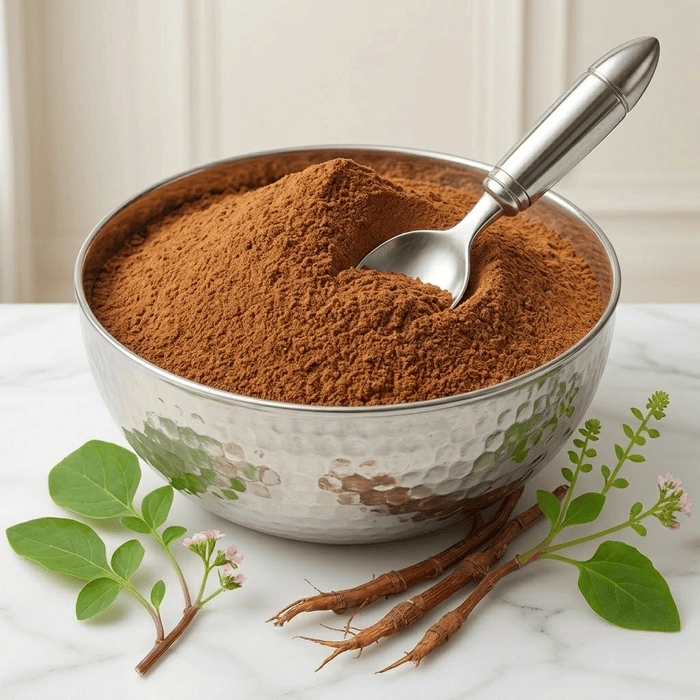
Dalchini Powder: Daalcheeni Powder - Cinnamon Sticks Powder - Cinnamomum zeylanicum
Botanical Name : Cinnamomum verum
Form : Dried Raw Herb - Powder
Vardhman Nutrition Co. is an India-based botanical ingredient manufacturer and global B2B exporter offering carefully processed Dalchini Powder for international commercial applications. The product is prepared from dried cinnamon bark identified as Cinnamomum verum, a botanical associated with Ceylon Cinnamon and True Cinnamon. Our export-oriented supply approach is designed for importers, wholesalers, distributors, food manufacturers, herbal-product companies, nutraceutical businesses, cosmetic manufacturers, private-label brands and other professional buyers seeking India-origin botanical ingredients in commercial quantities.
For international sourcing, consistency of botanical identity, processing, particle size, packaging, documentation and destination-market requirements are important considerations. Vardhman Nutrition Co. supports B2B enquiries with product specifications and commercial supply discussions based on the buyer's application, quantity, packaging preference and country of destination.
Cinnamon bark has long been valued as an aromatic botanical and culinary spice. After suitable harvesting and drying, the bark can be processed into a convenient powdered form for use in food, beverage, spice, traditional herbal and other suitable formulations. The characteristic warm aroma and sweet-spicy sensory profile make cinnamon a versatile ingredient for manufacturers working across different product categories.
International buyers may encounter different commercial names while researching the same botanical category. These include Daalcheeni Powder, Cinnamon Powder, Ceylon Cinnamon Powder, True Cinnamon Powder, Cinnamon Bark Powder, Cinnamomum verum Powder, Cinnamomum verum Bark Powder, Dried Cinnamon Powder, Indian Cinnamon Powder, Cinnamon Spice Powder and Dalchini Herbal Powder.
For professional procurement, the botanical name, plant part and finished form should be clearly identified. This helps importers and manufacturers maintain consistent raw-material records and select material according to their own technical specifications.
The cinnamon material supplied by Vardhman Nutrition Co. is associated with Cinnamomum verum and belongs to the Lauraceae family. The bark is the relevant plant part used for preparing the powdered material. The finished ingredient is obtained after drying and size reduction of suitable bark.
Botanical identification is particularly relevant in international B2B trade because buyers may maintain approved raw-material specifications. Importers can specify the botanical identity, plant part, desired particle size, moisture requirement, packaging format and other quality parameters during the procurement process.
The product can therefore be evaluated not simply as a generic spice, but as an identified botanical raw material intended for commercial applications where the buyer requires a defined source and processing form.
The preparation of powdered cinnamon involves several handling stages designed to convert selected bark into a practical ingredient for manufacturing and distribution. Typical processing may involve selection of suitable raw material, cleaning, sorting, grading, removal of unsuitable material, controlled drying, size reduction, grinding, sieving, foreign-matter control and final quality evaluation.
The processing approach can vary according to the intended product grade, particle-size requirement, application and buyer specification. Buyers requiring a defined mesh or customized powder characteristic can communicate these requirements before commercial order confirmation.
Careful handling is important because the natural aromatic character of cinnamon contributes significantly to its commercial value. Proper drying and suitable packaging also help protect the finished material from unwanted environmental exposure during storage and transportation.
Dalchini Powder for Food Industry applications can include a broad range of food formulations where a warm, sweet and mildly spicy cinnamon profile is desired. Food manufacturers may evaluate the ingredient for bakery mixes, confectionery preparations, desserts, spice blends, processed foods and selected beverage products.
The powdered form provides convenient incorporation into dry and semi-solid formulations. It can be blended with other spices or botanical ingredients and can be used where a uniform distribution of cinnamon flavour is required.
Food processors can determine the appropriate inclusion rate according to their recipe, processing conditions, desired sensory profile and applicable food regulations in the destination market.
Cinnamon is a familiar ingredient within the spice sector because of its distinctive aromatic character. Manufacturers can evaluate powdered bark for seasoning systems, spice blends, culinary mixes and products requiring a sweet-warm flavour note.
The material may be combined with complementary spices according to the formulation objectives of the finished product. Commercial buyers may specify the desired powder fineness where particle distribution is important for blending and processing.
For distributors, the product can also form part of a wider botanical and spice ingredient portfolio intended for food manufacturers and professional ingredient users in international markets.
Cinnamon is widely recognized for its use in bakery and sweet-food formulations. Manufacturers may investigate the powdered material for biscuits, cakes, bakery premixes, dessert preparations, confectionery products and other recipes where a characteristic cinnamon aroma is required.
The ingredient can be incorporated into dry mixes or blended with other formulation components. Product developers should establish the appropriate quantity based on the desired flavour intensity and the sensory characteristics of the finished product.
For international private-label food projects, packaging, labelling and technical requirements can be discussed according to the buyer's commercial program and destination-market regulations.
Powdered cinnamon can also be considered for selected beverage and herbal-drink concepts. Its naturally warm aromatic profile can complement tea blends, spice beverages, traditional drink preparations and other suitable formulations.
Manufacturers developing beverage products can evaluate the ingredient according to flavour requirements, processing conditions and compatibility with other components. Any finished-product claims should be established independently according to applicable regulations.
Cinnamon has a long-standing place in traditional herbal practices, including Ayurveda. Traditional descriptions associate cinnamon with warming and digestive applications and with its characteristic aromatic qualities.
Dalchini Powder for Ayurvedic Products can therefore be considered by manufacturers developing traditional herbal preparations in which cinnamon is an established ingredient. Product developers should formulate and label finished products according to the rules applicable in their intended market.
Traditional use should be distinguished from modern clinical evidence. The presence of a botanical ingredient does not by itself establish that a finished product can diagnose, prevent, treat or cure a disease.
Dalchini Powder for Nutraceutical Industry requirements may involve use of cinnamon as part of botanical blends, functional-food concepts and traditional wellness formulations. Its naturally occurring aromatic and polyphenolic constituents have contributed to continuing scientific interest in the botanical.
Nutraceutical manufacturers may evaluate the ingredient according to their formulation objectives, raw-material specifications and regulatory framework. Where a finished product is marketed with a health-related claim, the claim should be supported and permitted under the laws of the target country.
Vardhman Nutrition Co. can discuss commercial requirements involving quantity, packaging, technical specifications and documentation for suitable B2B procurement programs.
Cinnamon-derived botanical material may also attract interest from cosmetic and personal-care manufacturers developing products containing plant-based ingredients. Depending on the formulation, manufacturers may investigate its aromatic characteristics and naturally occurring botanical constituents.
For buyers searching for Dalchini Powder for Cosmetic Industry applications, product specifications may include particle size, purity, microbiological parameters, packaging and other requirements relevant to the intended cosmetic formulation.
Cosmetic manufacturers should conduct their own formulation compatibility, safety and regulatory evaluation before incorporating the material into a finished product.
The source information describes cinnamon bark as containing a range of naturally occurring aromatic and polyphenolic compounds. These include cinnamaldehyde, eugenol, cinnamic acid, cinnamate, linalool and beta-caryophyllene.
The botanical material is also described as containing procyanidins, quercetin, kaempferol, catechin, epicatechin, tannins, mucilage, fibre and volatile oils. Vitamins and minerals identified in the source include vitamins A, C, K and B6 along with calcium, iron, magnesium, phosphorus, potassium, zinc and manganese.
The composition of a natural botanical ingredient can vary according to cultivation, raw-material characteristics, harvesting, drying, processing and storage conditions. Buyers requiring analytical confirmation should request the relevant batch documentation.
Traditional Ayurvedic descriptions associate cinnamon with pungent and sweet rasa, light and unctuous guna, heating virya and pungent vipaka. These descriptions belong to the traditional framework used to characterize herbs and spices in Ayurveda.
Such traditional classifications may be relevant to manufacturers developing traditional formulations. They should not be presented as equivalent to modern clinical evidence or used as unsupported medical claims for commercial products.
Cinnamon has been investigated for several biological properties, including antioxidant, anti-inflammatory, antimicrobial, antibacterial and antifungal activity. Research has also explored possible antidiabetic, cardioprotective, neuroprotective, hepatoprotective, carminative, digestive and immunomodulatory characteristics.
Scientific research has examined the relationship between cinnamon constituents and oxidative processes, inflammatory pathways, microorganisms and metabolic parameters. However, laboratory findings and preliminary research should not automatically be converted into therapeutic claims for ordinary commercial powder.
The polyphenolic constituents naturally present in cinnamon have contributed to scientific interest surrounding its antioxidant potential. Researchers have examined different cinnamon preparations and isolated constituents in laboratory and experimental settings.
The relevance of such findings depends on the preparation, concentration, experimental model and other study conditions. Commercial product descriptions should therefore remain appropriately aligned with available evidence.
Cinnamon has been studied in connection with glucose metabolism and insulin sensitivity. Research has explored whether certain cinnamon constituents may influence pathways associated with metabolic regulation.
Human research can vary in outcome according to preparation, dosage, population and study design. Manufacturers should therefore avoid presenting cinnamon powder as a treatment for diabetes or another medical condition without appropriate regulatory and scientific support.
Research interest has also extended to cardiovascular-related parameters, including cholesterol and other metabolic indicators. Results can differ among studies, and the characteristics of the cinnamon preparation are relevant when interpreting findings.
Any cardiovascular statement used in a finished commercial product must be evaluated according to the requirements of the relevant destination market.
Cinnamon constituents have been investigated for antimicrobial activity against different microorganisms. Research described in the source includes laboratory studies involving organisms such as Escherichia coli, Salmonella, Staphylococcus aureus and Candida.
These findings provide scientific background for further research and product development, but laboratory antimicrobial activity should not be interpreted as proof that ordinary cinnamon powder acts as a universal antimicrobial treatment or preservative in finished products.
International buyers may request technical information covering botanical identity, plant part, appearance, colour, aroma, taste, particle size, mesh specification, moisture, foreign matter and microbiological parameters.
Depending on the application and destination, buyers may also require information concerning heavy metals, pesticide residues, botanical markers or other analytical parameters. Exact acceptance limits should be agreed according to the buyer's specification and applicable market requirements.
A professional sourcing discussion can therefore cover the complete requirement rather than focusing only on the product name. This helps manufacturers and importers establish a suitable commercial specification before production and dispatch.
Vardhman Nutrition Co. supports commercial sourcing requirements for buyers purchasing cinnamon-based botanical material in larger quantities. Bulk Dalchini Powder can be considered by food manufacturers, spice companies, herbal businesses, nutraceutical manufacturers, pharmaceutical businesses, cosmetic companies, beverage producers, botanical distributors, importers, wholesalers and private-label organizations.
Quantity requirements can be discussed together with particle size, packaging, product specification, documentation and destination. For recurring procurement, buyers can also communicate their expected purchasing schedule so that the commercial supply discussion is structured around their business needs.
As a Dalchini Powder Wholesale Supplier, Vardhman Nutrition Co. supports professional organizations purchasing botanical ingredients for manufacturing, distribution and international trade.
Wholesale procurement may involve regular orders, commercial quantities, customized particle characteristics, export packaging, technical documentation, buyer-specific specifications and contract supply arrangements.
International distributors can discuss their intended market, preferred packaging format and expected quantity before finalizing commercial terms. This approach helps align the product with the distributor's downstream requirements.
Vardhman Nutrition Co. operates as a Dalchini Powder B2B Supplier for international importers, manufacturers, distributors, wholesalers and private-label businesses.
Businesses searching for a Dalchini Powder B2B Manufacturer or Dalchini Powder B2B Exporter can discuss bulk quantities, technical specifications, mesh requirements, packaging, private-label needs, contract supply and export documentation.
The business model is focused on international B2B procurement rather than domestic retail distribution. Buyers can therefore approach the company with commercial sourcing requirements and destination-specific information.
Vardhman Nutrition Co. provides India-origin botanical ingredients for international businesses looking for reliable commercial sourcing. Buyers searching for a Dalchini Powder Manufacturer in India can discuss product specifications, order quantities, packaging and export requirements directly with the company.
The supply network is intended for professional customers that require botanical materials for manufacturing, distribution, private-label operations or other commercial purposes.
Additional procurement searches may include Cinnamon Powder Manufacturer in India, Cinnamon Powder Supplier from India, Cinnamon Powder Exporter from India, Ceylon Cinnamon Powder Supplier, True Cinnamon Powder Supplier, Cinnamon Bark Powder Manufacturer, Cinnamomum verum Powder Supplier, Cinnamomum verum Bark Powder Exporter, Bulk Cinnamon Powder Supplier and Indian Dalchini Powder Supplier.
Vardhman Nutrition Co. is positioned for international B2B sourcing from India. Buyers can communicate their country-specific requirements before order confirmation so that packaging, documentation and product specifications can be considered according to the intended market.
For American importers, Dalchini Powder Export to USA requirements can be discussed with information concerning quantity, application, packaging, documentation and destination.
For European procurement programs, Dalchini Powder Export from India to UK, Europe and Germany requirements can be discussed according to the buyer's technical and regulatory specifications.
Commercial enquiries are also welcomed from importers and distributors operating in the UAE, Australia and South Korea. Destination-specific import requirements should be communicated during the initial enquiry to support appropriate commercial planning.
International brands seeking customized botanical ingredient programs can discuss Dalchini Powder Private Label requirements with Vardhman Nutrition Co. Private-label projects may involve buyer-specific packaging, labelling, quantities and documentation.
A Cinnamon Powder Private Label Supplier arrangement can be considered for suitable commercial programs where the buyer requires customized presentation or supply specifications.
Businesses developing their own branded botanical range can also discuss requirements with a Dalchini Private Label Manufacturer, including packaging format, product quantity, destination and agreed technical parameters.
OEM and customized supply discussions should be based on the actual finished-product requirement and the regulatory framework of the destination country.
Appropriate packaging is important when botanical ingredients are transported across international supply chains. Packaging should protect the powder from moisture, contamination, excessive heat, direct sunlight and unwanted environmental exposure.
The packing format and size can be discussed according to the buyer's requirement, shipment method and storage conditions. Larger commercial orders can be packed in formats suitable for professional handling and transportation.
Buyers requiring customized labels or private-label packaging should communicate artwork, labelling information and destination-market requirements before production or dispatch.
Depending on the product, destination and buyer's requirements, export documentation may include a Certificate of Analysis, Technical Data Sheet, Material Safety Data Sheet where applicable, Certificate of Origin, phytosanitary documentation where applicable, microbiological analysis and other buyer-specific technical documents.
The exact documentation package should be confirmed before order processing because import requirements can differ between countries, industries and individual buyers.
Powdered cinnamon should be maintained in a clean, dry and suitably protected storage environment. Airtight packaging can help reduce exposure to air and moisture, while protection from direct sunlight and excessive heat can help maintain the natural characteristics of the material.
Strong external odours should also be avoided because powdered botanical materials can be sensitive to environmental exposure. Clean handling practices and proper resealing after opening are recommended for maintaining product condition.
Where refrigeration is used, the packaging should be protected against condensation and moisture exposure during removal from cold storage.
The storage life of powdered cinnamon depends on raw-material quality, moisture, packaging material, air exposure, temperature, light, humidity and handling conditions. The source information indicates an indicative range of approximately 12 to 24 months for powdered cinnamon, subject to storage and packaging conditions.
For export orders, the applicable batch specification and product documentation should be followed instead of assuming that every grade and packing format has an identical shelf life.
Changes in aroma, colour, texture or physical appearance may indicate unsuitable storage or deterioration. Unusual odour, mould, insect activity, excessive moisture-related lumping or significant changes in appearance should be investigated through the buyer's quality-control procedures.
India provides an established environment for sourcing botanical herbs and natural plant-based ingredients. An India-based supplier can be relevant for international buyers seeking commercial quantities with defined botanical identity and export-oriented documentation.
Vardhman Nutrition Co. focuses on professional B2B requirements and supports discussions around quantity, application, packaging, technical specifications and destination-market needs. This approach is intended to make procurement more structured for importers and manufacturing businesses.
The company can discuss requirements for food, traditional herbal, nutraceutical, cosmetic and other suitable applications while keeping the final specification aligned with the buyer's intended use.
Different applications may require different technical characteristics. A food manufacturer may prioritize flavour, aroma, particle size and food-related documentation. A herbal manufacturer may place greater emphasis on botanical identity, processing details and analytical parameters.
A distributor may require consistent bulk packing, while a private-label company may require customized packaging and labelling. Clearly communicating the intended use at the enquiry stage allows the commercial discussion to focus on the appropriate product requirements.
To receive relevant commercial information, buyers are encouraged to provide the following details:
Providing these details at the beginning of the discussion can help establish a clearer commercial specification and reduce unnecessary delays during quotation and order planning.
The botanical identity specified for this product is Cinnamomum verum.
The bark is the plant part used to prepare the powdered material.
Yes. Vardhman Nutrition Co. focuses on international B2B sourcing and can discuss commercial requirements with importers, manufacturers, distributors, wholesalers and private-label businesses.
Customized packaging and labelling can be discussed for suitable private-label and commercial supply programs.
Depending on the requirement, buyers may request information covering botanical identity, appearance, colour, aroma, particle size, moisture, foreign matter, microbiological parameters and other agreed technical specifications.
Depending on the product and destination, documents may include COA, TDS, MSDS where applicable, Certificate of Origin, phytosanitary documentation where applicable, microbiological analysis and buyer-specific technical documentation.
Yes. Particle size and mesh requirements can be discussed according to the intended application and agreed product specification.
Yes. The company's positioning for this product is focused on international B2B procurement from India, serving professional buyers rather than domestic retail customers.
If your business is sourcing India-origin cinnamon for food manufacturing, spice formulation, traditional herbal products, nutraceutical development, cosmetic applications, distribution or private-label projects, Vardhman Nutrition Co. can discuss your commercial requirement.
International importers, wholesalers, distributors, manufacturers and brand owners can share the required quantity, destination country, intended application, packaging preference, technical specification and documentation requirements. Our team can then discuss the appropriate supply format for your B2B procurement program.
Vardhman Nutrition Co. is committed to supporting professional international sourcing with India-origin botanical ingredients, clear product identification and export-oriented commercial coordination. Contact our team to discuss your bulk requirement and establish the product specification for your international order.

.webp)



.webp)
.webp)
.webp)
.webp)
.webp)
.webp)
.webp)
.webp)
.webp)
.webp)
.webp)
.webp)