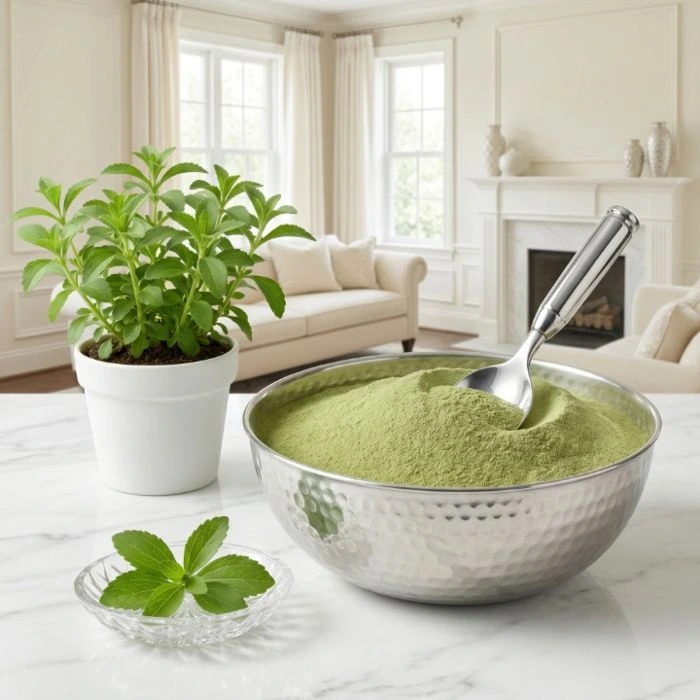
Stevia Leaf Powder Manufacturer, Supplier & Global B2B Exporter from India
Vardhman Nutrition Co. is an India-based Stevia Leaf Powder Manufacturer, Supplier and Global B2B Exporter, supplying Indian-origin botanical leaf ingredients to international commercial buyers. Our supply approach is designed for importers, wholesalers, distributors, food ingredient companies, beverage manufacturers, herbal businesses, nutraceutical brands, cosmetic formulators, botanical processors and private-label companies.
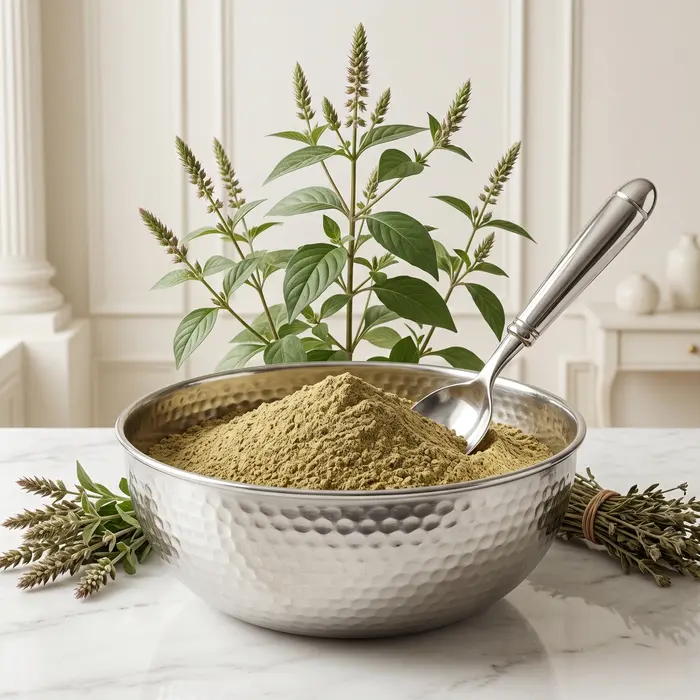
Stevia Leaf Powder is prepared from the dried leaves of Stevia rebaudiana Bertoni, a plant belonging to the Asteraceae family. The leaves naturally contain steviol glycosides, including stevioside and rebaudioside compounds associated with their characteristic sweet taste.
Vardhman Nutrition Co. focuses on Stevia Leaf Powder from India for international B2B sourcing, bulk procurement and further-processing requirements. Buyers can discuss product specifications, particle size, packaging, quantity, intended application and destination-country requirements before commercial confirmation.
Our export-oriented supply network supports enquiries from the USA, UK, Europe, Germany, UAE, Australia, South Korea and other international markets according to applicable product and import regulations.
Indian-Grown Stevia Leaf Material for Overseas Procurement
Stevia leaves are valued as a botanical source of naturally sweet-tasting compounds. After harvesting, suitable leaves can be cleaned, dried and finely milled to produce whole-leaf powder.
Unlike purified steviol glycoside ingredients, whole-leaf material represents the dried botanical leaf itself. This distinction is important for international procurement because the two product categories can have different processing methods, specifications, applications and regulatory requirements.
Commercial buyers may search for the product using terms such as Stevia Leaf Powder, Sweet Leaf Powder, Sweetleaf Powder, Sugar Leaf Powder, Stevia Green Leaf Powder, Dried Stevia Leaf Powder, Natural Stevia Leaf Powder, Stevia Herbal Powder and Indian Stevia Leaf Powder.
For B2B sourcing, the precise product description should be agreed before purchasing so that the buyer receives the material required for the intended manufacturing process.
Understanding the Whole-Leaf Stevia Product
Stevia Leaf Powder is a green botanical powder obtained by drying and grinding the leaves of Stevia rebaudiana Bertoni. The plant's leaves contain naturally occurring steviol glycosides responsible for their characteristic sweet taste.
Common commercial terminology includes:
- Stevia
- Stevia Leaf
- Sweet Leaf
- Sweetleaf
- Sugar Leaf
- Stevia rebaudiana
- Stevia Herbal Powder
- Stevia Green Leaf Powder
- Dried Stevia Leaf Powder
- Natural Stevia Leaf Powder
- Indian Stevia Leaf Powder
The final appearance, aroma, particle size and taste profile may vary according to cultivar, growing conditions, harvesting stage, drying method and milling process.
For companies seeking a Stevia Leaf Powder Supplier from India, specifying the required form at the enquiry stage helps avoid confusion between whole-leaf powder and standardized or purified sweetener products.
Botanical Classification of Stevia rebaudiana
The accepted botanical identity provided for the product is Stevia rebaudiana Bertoni. It belongs to the Asteraceae family, while the leaves are the relevant plant part for whole-leaf powder production.
Product Identity
Botanical Name: Stevia rebaudiana Bertoni
Family: Asteraceae
Plant Part: Leaves
Product Form: Dried leaf powder
Origin: India
Stevia leaf material is processed after harvesting to create a commercially manageable powder. Natural variations in colour, aroma and sweetness characteristics can occur because botanical materials are influenced by cultivation and processing conditions.
International buyers requiring a defined botanical profile can communicate their technical requirements before order finalization.
Steviol Glycosides and Other Naturally Occurring Components
The characteristic sweetness of Stevia leaves is associated primarily with naturally occurring steviol glycosides.
Important compounds include:
- Stevioside
- Rebaudioside A
- Rebaudioside B
- Rebaudioside C
- Rebaudioside D
- Rebaudioside E
- Dulcoside A
- Steviolbioside
- Other steviol glycosides
Whole-leaf material can also contain plant polyphenols, flavonoid-related compounds, dietary fibre and other naturally occurring constituents.
The source material indicates that the composition may vary according to cultivar, growing environment, harvesting stage and processing conditions. Therefore, buyers requiring a specific analytical profile should communicate their requirements and request applicable batch information.
Food Manufacturing Opportunities with Stevia Leaves
The food sector is one of the important areas in which Stevia-related ingredients attract commercial interest because of their sweet-tasting characteristics.
Stevia Leaf Powder for Food Industry applications may be considered by businesses developing suitable botanical and plant-based food formulations.
Potential commercial users include:
- Food ingredient manufacturers
- Functional-food companies
- Plant-based food businesses
- Natural ingredient suppliers
- Food formulation companies
- Specialty ingredient distributors
Depending on the final formulation, manufacturers may explore Stevia leaf material in suitable powdered blends and food-development concepts.
However, whole-leaf powder should not automatically be treated as equivalent to a purified steviol glycoside sweetener. Product type, intended use and destination-country regulatory status should be evaluated before commercial application.
Ingredient Opportunities for Beverage Manufacturers
The beverage sector continues to explore botanical ingredients for product innovation. Stevia Leaf Powder for Beverage Industry applications may be considered for suitable herbal, botanical and plant-based beverage concepts.
Potential commercial users include:
- Beverage manufacturers
- Herbal drink companies
- Functional beverage brands
- Plant-based beverage producers
- Natural ingredient formulators
- Botanical beverage developers
International beverage manufacturers should clearly define whether their project requires whole-leaf powder, a Stevia extract or a purified steviol glycoside ingredient.
This distinction is particularly important when the formulation requires a standardized sweetening component rather than complete botanical leaf material.
Stevia Herbal Powder for Botanical Product Development
Stevia also has relevance for companies developing herbal and botanical products. Stevia Herbal Powder Supplier enquiries may come from companies developing herbal blends, botanical products and plant-derived formulations.
The powdered leaves can be considered where the characteristics of dried Stevia leaf material are required.
Potential users include herbal manufacturers, botanical brands, natural-product companies, herbal tea producers and ingredient distributors.
The final application, labeling and permitted claims should always be determined according to the formulation and regulations of the target country.
Herbal Tea, Infusion and Botanical Blend Development
Dried Stevia leaves can be considered for suitable herbal tea and infusion concepts. Stevia Leaf Powder for Herbal Tea applications may be relevant to manufacturers producing botanical blends and plant-based beverage products.
Potential commercial applications include:
- Herbal tea blends
- Botanical infusions
- Plant-based drink formulations
- Herbal beverage products
- Specialty botanical blends
For blending operations, particle size may influence handling and uniformity. Buyers can therefore specify their preferred mesh or powder grade according to their production process.
Nutraceutical Ingredient Supply for International Formulators
Botanical ingredients are increasingly considered by nutraceutical businesses developing plant-based product concepts. Stevia Leaf Powder for Nutraceutical Industry applications may be considered where whole-leaf Stevia material is suitable for the intended product.
Commercial buyers may request information regarding:
- Botanical identification
- Plant part
- Appearance
- Colour
- Moisture
- Particle size
- Microbiological parameters
- Steviol glycoside profile where applicable
- Processing information
- Country of origin
- Packaging details
For projects requiring standardized steviol glycoside concentration, buyers should specifically identify the required extract or purified product instead of assuming that whole-leaf powder has an equivalent composition.
Cosmetic and Personal-Care Ingredient Possibilities
Stevia leaf material may also be evaluated by businesses developing botanical and plant-based personal-care products.
Stevia Leaf Powder for Cosmetic Industry applications can be considered for suitable cosmetic formulations where dried botanical leaf material is required.
Potential commercial users include:
- Herbal cosmetic manufacturers
- Natural personal-care brands
- Botanical formulation companies
- Plant-based beauty businesses
- Private-label manufacturers
- Natural ingredient distributors
Cosmetic manufacturers should evaluate the suitability of the ingredient according to their formulation, technical specifications, intended use, labeling requirements and destination-market regulations.
Stevia Leaf Powder for Further Processing
Some international businesses purchase botanical powders as intermediate raw materials for their own manufacturing operations.
Stevia Leaf Powder for Further Processing can be relevant to companies involved in:
- Botanical extraction
- Ingredient development
- Powder blending
- Herbal formulation
- Research and development
- Natural ingredient manufacturing
- Botanical product development
This sourcing model allows international manufacturers to obtain Indian-origin dried leaf material and conduct additional processing according to their own production specifications.
Where extraction or standardization is planned, buyers should clearly communicate the intended processing route so that the appropriate raw-material specification can be considered.
Commercial Processing of Stevia Leaves in India
Careful post-harvest handling is important for maintaining the natural characteristics of dried botanical leaves.
A commercial preparation route may include:
- Selection of suitable Stevia leaves
- Harvesting at an appropriate stage
- Removal of unwanted plant material
- Cleaning and sorting
- Controlled drying
- Moisture management
- Grinding
- Sieving
- Quality inspection
- Bulk packaging
Processing conditions can vary according to the intended grade and application.
As a Stevia Leaf Powder Manufacturer in India, Vardhman Nutrition Co. focuses on appropriate handling, processing and packaging for international B2B procurement.
Quality Parameters for Global Buyers
International manufacturers often require clear raw-material specifications before approving a botanical ingredient supplier.
Depending on the application, evaluation may include:
- Botanical identification
- Plant-part verification
- Appearance
- Colour
- Aroma
- Particle size
- Moisture
- Foreign matter
- Microbiological parameters
- Steviol glycoside profile where specifically required
- Packaging integrity
A Stevia Botanical Ingredient Supplier should be able to distinguish whole-leaf powder from purified steviol glycoside products.
This is important because purified steviol glycosides are produced through extraction and purification, whereas whole-leaf Stevia is the dried botanical leaf in powdered form.
Bulk Stevia Leaf Powder Supplier for B2B Procurement
Vardhman Nutrition Co. supplies Bulk Stevia Leaf Powder from India for international commercial buyers.
Our supply model is suitable for companies requiring botanical material for manufacturing, distribution, formulation or further processing.
We welcome enquiries from:
- Importers
- Wholesalers
- Distributors
- Food ingredient companies
- Beverage manufacturers
- Herbal businesses
- Nutraceutical brands
- Cosmetic manufacturers
- Botanical processors
- Private-label companies
Businesses searching for a Bulk Stevia Leaf Powder Supplier, Stevia Leaf Powder Bulk Supplier, Indian Stevia Leaf Powder Supplier, Stevia Leaf Supplier from India or Dried Stevia Leaf Powder Supplier can share their commercial requirements.
Wholesale Stevia Leaf Powder Supply from India
As a Stevia Leaf Powder Wholesale Supplier in India, Vardhman Nutrition Co. focuses on commercial B2B orders rather than domestic retail sales.
International businesses searching for Stevia Leaf Powder Wholesale can source Indian-origin botanical material for formulation, manufacturing, distribution and further processing.
Relevant procurement terminology may include:
- Stevia Leaf Powder Wholesale Supplier
- Stevia Leaf Powder Bulk Supplier
- Stevia Leaf Powder Supplier from India
- Indian Stevia Leaf Powder Supplier
- Stevia Herbal Powder Supplier
- Dried Stevia Leaf Powder Supplier
- Stevia rebaudiana Leaf Powder Supplier
- Natural Stevia Leaf Powder Exporter
- Botanical Leaf Powder Supplier from India
These variations reflect the different search terms used by international buyers when sourcing botanical raw materials.
Stevia Leaf Powder Manufacturer and Exporter in India
Vardhman Nutrition Co. operates as a Stevia Leaf Powder Manufacturer and Exporter in India, supporting overseas businesses requiring Indian-origin botanical ingredients.
Our B2B supply approach is intended for companies seeking bulk material, wholesale procurement, export packaging, private-label sourcing and further-processing support.
Buyers looking for a Stevia rebaudiana Leaf Powder Exporter, Natural Stevia Leaf Powder Supplier, Green Stevia Leaf Powder Exporter or Herbal Leaf Powder Exporter from India can provide their required specifications for commercial discussion.
International Stevia Supply to USA
Businesses looking for Stevia Leaf Powder Export to USA can enquire with Vardhman Nutrition Co. regarding Indian-origin botanical material.
US-based importers, food ingredient companies, herbal businesses, beverage manufacturers and botanical distributors can communicate their intended application, quantity, packaging and applicable product requirements.
The final suitability and regulatory status should be confirmed according to the intended US product category.
Stevia Leaf Powder Export to UK and Europe
International businesses in the UK and European markets can explore Indian Stevia leaf material for suitable food, herbal, botanical and ingredient-development applications.
For Stevia Leaf Powder Export to UK and Stevia Leaf Powder Export to Europe, buyers can provide destination-specific specifications, packaging requirements and intended product applications.
Stevia Leaf Powder Export to Germany
German ingredient buyers and importers searching for a Stevia Leaf Powder Supplier from India can discuss their requirements with our export team.
The enquiry can include quantity, powder specification, intended application, packaging preference and destination information.
Stevia Leaf Powder Export to UAE
UAE-based importers, wholesalers and ingredient distributors can enquire for Bulk Stevia Leaf Powder from India for commercial sourcing and further processing.
Packaging and documentation requirements can be discussed according to the shipment and destination conditions.
Stevia Leaf Powder Export to Australia and South Korea
Businesses in Australia and South Korea can explore Indian-origin Stevia leaf material according to their intended application and local import requirements.
Vardhman Nutrition Co. supports international enquiries for Stevia Leaf Powder Export to Australia and Stevia Leaf Powder Export to South Korea based on commercial specifications.
B2B Stevia Procurement for International Businesses
Our Stevia Leaf Powder B2B Supplier model is designed around the needs of commercial buyers.
We can discuss requirements involving:
- Bulk procurement
- Wholesale orders
- Regular sourcing
- Export packaging
- Customized specifications
- Botanical ingredient supply
- Private-label requirements
- Further-processing needs
Commercial terms depend on order quantity, specification, packaging, destination and other agreed requirements.
Private Label and OEM Stevia Supply
International brands may purchase botanical ingredients for their own branded products. Stevia Leaf Powder Private Label requirements can be discussed according to packaging format, product grade, order volume, labeling information, target market and destination.
Private-label sourcing may be relevant for:
- Herbal brands
- Food companies
- Beverage businesses
- Nutraceutical manufacturers
- Botanical distributors
- Natural ingredient companies
OEM and customized supply requirements can be evaluated according to the final product format and buyer specifications.
Packaging for Bulk International Shipments
Appropriate packaging helps protect powdered botanical material during storage, handling and international transportation.
Packaging discussions may include:
- Bulk shipment requirements
- Packaging material
- Order volume
- Destination country
- Shipping method
- Label information
- Storage conditions
For international procurement, packaging should be selected according to the characteristics of the material, transportation conditions and buyer requirements.
Storage and Product Integrity
Stevia Leaf Powder should generally be stored in a clean, dry and well-ventilated environment.
The product should be protected from:
- Excess moisture
- Direct sunlight
- Contamination
- Excessive heat
- Unsuitable storage conditions
Keeping the package properly sealed can help reduce unnecessary exposure to humidity and external contamination.
International buyers should follow the storage instructions applicable to the supplied product grade and packaging.
Shelf-Life and Signs of Product Deterioration
The shelf life of Stevia Leaf Powder depends on packaging quality, processing methods and storage conditions. For commercial procurement, the applicable shelf-life information should be confirmed for the specific supplied grade and batch rather than assuming a universal period.
Potential signs of deterioration in stored powder may include:
- Formation of unusual lumps
- Significant colour changes
- Stale or abnormal odor
- Noticeable changes in taste characteristics
- Visible mold
- Moisture contamination
Proper packaging, controlled storage and appropriate handling are therefore important for maintaining product quality during the supply period.
Commercial Advantages of Indian Stevia Leaf Powder
Indian-origin botanical ingredients are relevant to international companies seeking plant-based raw materials for formulation and further processing.
For businesses sourcing Stevia Leaf Powder from India, important commercial considerations can include:
- Botanical identity
- Indian origin
- Whole-leaf product specification
- Bulk availability
- Particle-size requirements
- Packaging options
- B2B procurement
- Export support
- Customized sourcing
- International shipment preparation
The suitability of the material ultimately depends on the buyer's formulation and destination-market requirements.
Why International Buyers Choose Vardhman Nutrition Co.
Vardhman Nutrition Co. combines Indian botanical sourcing with an international B2B supply approach.
When sourcing Stevia Leaf Powder from India, buyers can discuss:
- India-based botanical sourcing
- Bulk commercial supply
- Export-oriented packaging
- Product-specific procurement support
- Quality-conscious handling
- International buyer communication
- Customized requirements
- Private-label sourcing
- Further-processing requirements
- Long-term B2B supply arrangements
Our objective is to serve companies searching for a dependable Stevia Leaf Powder Manufacturer in India, Stevia Leaf Powder Supplier from India and Stevia Leaf Powder Exporter from India.
Buy Stevia Leaf Powder in Bulk from India
Businesses looking to Buy Stevia Leaf Powder in Bulk can contact Vardhman Nutrition Co. with their commercial requirements.
We welcome enquiries from importers, wholesalers, distributors, food ingredient manufacturers, beverage companies, herbal businesses, nutraceutical brands, cosmetic manufacturers and botanical processors.
For a quotation, buyers should ideally provide:
- Required quantity
- Product specification
- Desired particle size
- Packaging preference
- Destination country
- Intended application
- Private-label requirement, if applicable
- Shipping preference
This information allows the export team to understand the procurement requirement and discuss suitable options.
Frequently Asked Questions About Stevia Leaf Powder
What is Stevia Leaf Powder?
Stevia Leaf Powder is a dried and finely processed botanical material prepared from the leaves of Stevia rebaudiana Bertoni.
What is the botanical name of Stevia?
The botanical name is Stevia rebaudiana Bertoni, and the plant belongs to the Asteraceae family.
What gives Stevia its characteristic sweetness?
The characteristic sweetness is primarily associated with naturally occurring steviol glycosides such as stevioside and rebaudioside compounds.
Is whole-leaf Stevia Powder the same as purified steviol glycosides?
No. Whole-leaf powder consists of dried and milled Stevia leaves, whereas purified steviol glycosides are obtained through extraction and purification. They are different commercial materials.
What are the common names for this product?
Commercial terminology includes Stevia Leaf Powder, Sweet Leaf Powder, Sweetleaf Powder, Sugar Leaf Powder, Stevia Green Leaf Powder, Stevia Herbal Powder, Dried Stevia Leaf Powder and Natural Stevia Leaf Powder.
Do you supply Bulk Stevia Leaf Powder?
Yes. Vardhman Nutrition Co. supplies Bulk Stevia Leaf Powder for international B2B procurement, manufacturing, distribution and further processing.
Who can purchase Stevia Leaf Powder?
Importers, wholesalers, distributors, food ingredient companies, beverage manufacturers, herbal businesses, nutraceutical brands, cosmetic companies and botanical processors can enquire for commercial sourcing.
Can buyers request a specific particle size?
Yes. Buyers can communicate their required mesh or particle size before order confirmation according to the intended application.
Do you offer Private Label Stevia Leaf Powder?
Private-label requirements can be discussed according to packaging, labeling, quantity, target market and buyer specifications.
Do you export Stevia Leaf Powder from India?
Yes. Vardhman Nutrition Co. focuses on international B2B export supply of Indian-origin botanical ingredients.
Contact Us for Stevia Leaf Powder Bulk Export from India
Vardhman Nutrition Co. welcomes enquiries for Stevia Leaf Powder Bulk Supply, wholesale procurement, B2B export, private-label sourcing and further-processing requirements.
Businesses searching for a Stevia Leaf Powder Manufacturer in India, Stevia Leaf Powder Supplier from India, Stevia Leaf Powder Exporter from India, Stevia Leaf Powder Manufacturer and Exporter, Stevia Leaf Powder Wholesale Supplier, Stevia Leaf Powder B2B Supplier, Stevia Leaf Powder B2B Exporter, Stevia Leaf Powder Bulk Export, Stevia rebaudiana Leaf Powder Supplier, Stevia rebaudiana Leaf Powder Exporter, Dried Stevia Leaf Powder Supplier, Natural Stevia Leaf Powder Supplier, Stevia Herbal Powder Supplier, Green Stevia Leaf Powder Exporter, Stevia Botanical Ingredient Supplier or Botanical Leaf Powder Supplier from India can contact Vardhman Nutrition Co.
Share your required quantity, product specification, particle size, packaging preference, intended application and destination country to request a quotation for international B2B procurement.
Product Information Disclaimer
This page describes Stevia Leaf Powder as a botanical raw material and provides information about its commercial applications, naturally occurring constituents and general product characteristics. Whole-leaf Stevia powder should not automatically be considered equivalent to purified steviol glycoside sweeteners. Traditional uses, research findings and product characteristics should not be interpreted as medical advice or guaranteed health outcomes. Final formulation, labeling, claims, permitted use and regulatory compliance remain the responsibility of the finished-product manufacturer and must comply with the applicable laws and requirements of the destination market.
.webp)



.webp)
.webp)
.webp)
.webp)
.webp)
.webp)
.webp)
.webp)
.webp)
.webp)
.webp)
.webp)
.webp)