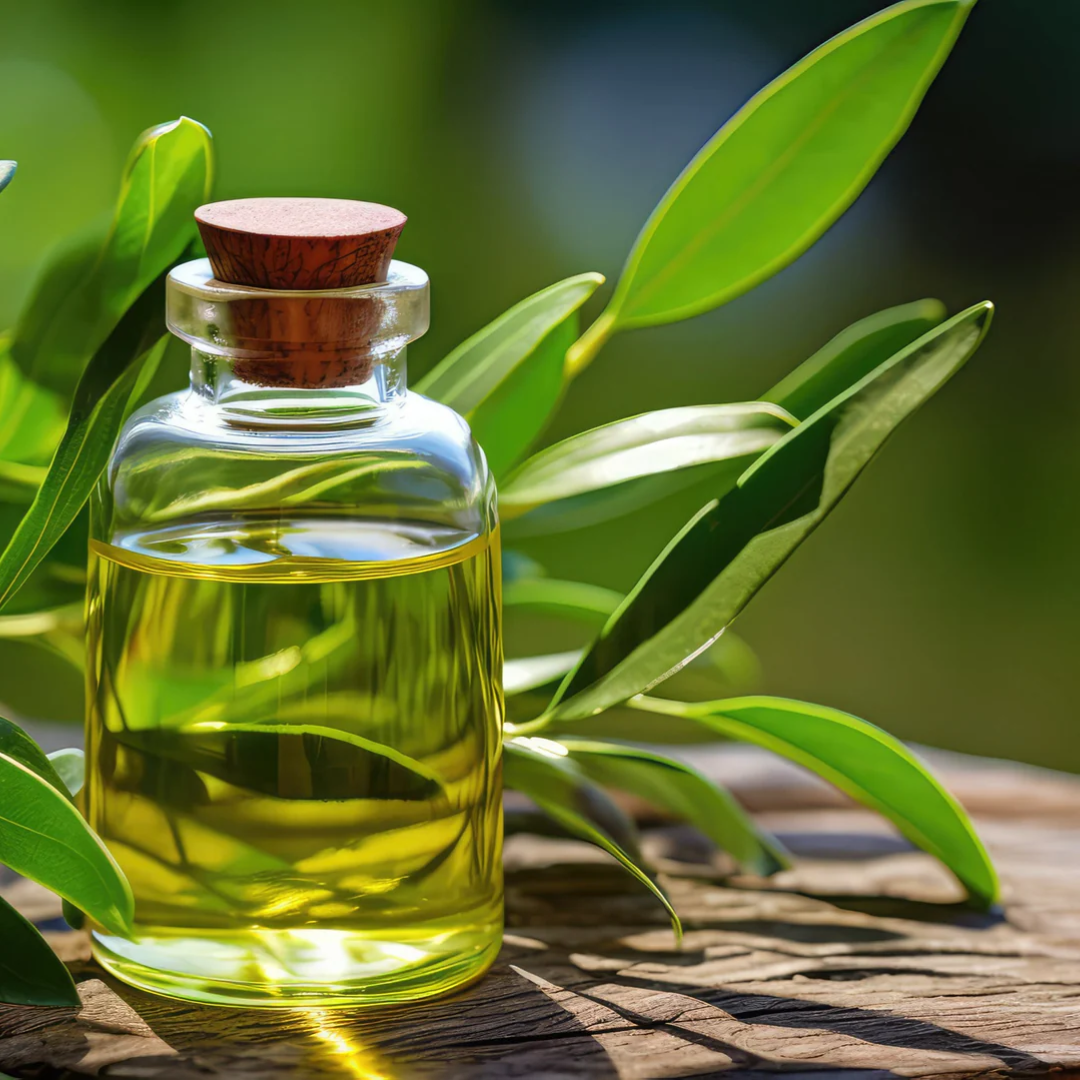
Botanical Name - Melaleuca Alternifolia
Common Medhod of Extraction: Steam distillation
Parts Used: leaves and terminal branches
Note Classification: top/middle
Aroma : fresh, medicinal, camphoraceous, and herbaceous
Extraction : Tea tree oil is generally extracted by means of steam distillation method.
Chemical Composition : Tea tree oil's chemical composition mainly features terpinen-4-ol (30–45%) as the primary antimicrobial agent, along with γ-terpinene (10–28%), p-cymene (5–12%), 1,8-cineole (1–15%), and minor compounds like α-terpinene for added antioxidant and aromatic properties.
Tea tree oil, extracted from Melaleuca alternifolia leaves, is a potent essential oil with major components like terpinen-4-ol (30–45%) for antimicrobial effects, γ-terpinene (10–28%) for antioxidants, and others like p-cymene; it's used for acne, fungal treatments, and cleaning, but dilute it and patch-test to avoid skin irritation.
Tea Tree Essential Oil, extracted from the leaves of Melaleuca alternifolia, possesses a range of notable properties: physically, it appears as a colorless to pale yellow liquid with a fresh, camphor-like aroma, is insoluble in water but soluble in oils and alcohol, and is lightweight and volatile; chemically, it is dominated by terpinen-4-ol (30–45%, offering strong antimicrobial effects), γ-terpinene (10–28%, providing antioxidant benefits), and p-cymene, while remaining stable if stored away from heat and light; therapeutically, it exhibits antibacterial, antifungal, and anti-inflammatory qualities, making it effective for treating acne, wounds, infections, and as a natural cleaner; and for safety, it is highly concentrated and must be diluted (e.g., 1–2% in a carrier oil) to prevent skin irritation, with users advised to perform a patch-test and avoid internal use.
Tea Tree Essential Oil, extracted from Melaleuca alternifolia, is widely used for its potent antimicrobial, antifungal, and anti-inflammatory properties in various applications: in skin care, it treats acne, minor cuts, wounds, insect bites, and dandruff when diluted to reduce inflammation and prevent infection; for health and wellness, it combats fungal issues like athlete's foot, aids respiratory problems through steam inhalation, and supports oral hygiene in diluted forms (though not for ingestion); in hair care, it's added to shampoos to address scalp irritation and seborrheic dermatitis; for household purposes, it serves as a natural disinfectant in cleaners to eliminate bacteria, mold, and odors on surfaces or in laundry; and in aromatherapy, it's diffused to promote relaxation, reduce stress, and alleviate minor allergies. Always dilute it (e.g., 1–2% in a carrier oil), perform a patch test, avoid eye contact, and consult a professional if pregnant or sensitive, as undiluted use can cause irritation.
Tea Tree Essential Oil, extracted from Melaleuca alternifolia, is celebrated for its versatile therapeutic properties, primarily due to active compounds like terpinen-4-ol. Its key benefits include strong antibacterial effects that help combat skin infections and wounds by inhibiting bacterial growth; antifungal properties for treating conditions like athlete's foot and yeast infections; antiviral potential against viruses such as herpes simplex; anti-inflammatory actions that soothe irritation from acne, eczema, or insect bites; and antioxidant capabilities that protect against oxidative damage, promoting skin health and overall wellness. Supported by studies in journals like Phytotherapy Research and Mycoses, these properties make it ideal for topical applications, aromatherapy, and natural disinfection when diluted (e.g., 1–2% in a carrier oil). However, always perform a patch test, avoid eye contact or ingestion to prevent irritation or toxicity, and consult a healthcare professional, especially if pregnant or sensitive, as it's not a substitute for medical treatment—feel free to ask for more details
Lemon, Rosemary, Lavender, Eucalyptus, Cinnamon, Clove, Thyme, and Geranium.
Tea Tree Essential Oil, from Melaleuca alternifolia, offers antibacterial, antifungal, anti-inflammatory, and antioxidant benefits for skincare and health; dilute and patch test before use.
Always dilute to avoid skin irritation; avoid ingestion, eyes, and use on children, pregnant women; patch test first; discontinue if allergic; consult a professional.