Basil Essential Oil Manufacturer & Bulk Exporter from India – B2B Supply
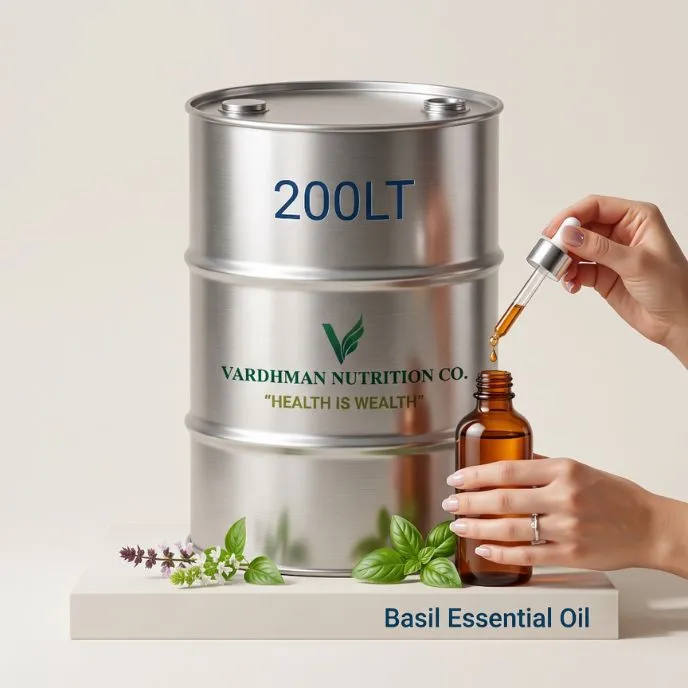
Vardhman Nutrition Co. is a reliable Basil Essential Oil Manufacturer in India and international Basil Oil Exporter, supplying Natural Basil Essential Oil to B2B buyers, importers, wholesalers, distributors, manufacturers, formulators, and private-label companies worldwide.
Basil Essential Oil is an aromatic botanical oil obtained from Ocimum basilicum, commonly known as Sweet Basil or Royal Basil. The oil is especially recognized for its fresh, sweet, herbal, and mildly spicy fragrance. It is widely used across fragrance, cosmetics, personal care, aromatherapy, wellness, herbal, and other commercial applications.
Our Natural Basil Essential Oil, Pure Basil Oil, Steam Distilled Basil Oil, Bulk Basil Oil, and Wholesale Basil Essential Oil are supplied for international commercial sourcing requirements. Product specifications, packaging, documentation, samples, and export requirements can be discussed according to individual buyer needs.
1. What Is Basil Essential Oil?
Basil Essential Oil is a concentrated aromatic oil obtained from the leaves and flowering tops of the Ocimum basilicum plant. It belongs to the Lamiaceae family and is commonly associated with Sweet Basil.
The plant has a long history of use in traditional herbal practices and is widely cultivated in different parts of the world. Its aromatic oil is valued for its distinctive herbal and fresh fragrance.
Today, Basil Essential Oil is commercially used in aromatherapy, perfumery, cosmetics, personal care, household products, herbal formulations, and other botanical product categories.
2. Botanical Origin of Basil Oil
Basil belongs to the Ocimum genus within the Lamiaceae family. The plant is recognized for its aromatic leaves and flowering tops containing naturally occurring volatile compounds.
Different cultivation regions and plant varieties can produce oils with different aromatic and chemical profiles. Growing conditions, soil, climate, harvesting stage, and processing methods can all influence the characteristics of the finished oil.
For commercial buyers, botanical identity and product specifications are important considerations when selecting Basil Essential Oil for a particular application.
3. Natural Aroma and Fragrance Profile
One of the key characteristics of Natural Basil Essential Oil is its fresh, sweet, herbal, and mildly spicy aroma.
Its distinctive fragrance can add a refreshing green and aromatic character to fragrance compositions. Basil Oil may also be blended with other essential oils to develop customized aromatic profiles.
It can complement oils such as Lavender, Lemongrass, Peppermint, Lemon, Rosemary, and other botanical oils depending on the desired formulation.
4. Steam Distilled Basil Essential Oil
Vardhman Nutrition Co. supplies Steam Distilled Basil Essential Oil for international B2B applications.
Steam distillation is a commonly used extraction method for obtaining volatile aromatic oils from suitable botanical material. During distillation, steam passes through prepared basil plant material and carries volatile aromatic compounds into a condenser.
The vapour is cooled and converted into liquid form. The essential oil is then separated from the water phase, filtered where required, tested according to applicable specifications, and packed for commercial supply.
5. Basil Essential Oil Extraction Process
The general production process may include the following stages:
- Harvesting: Suitable basil leaves and flowering tops are collected.
- Cleaning: Plant material is cleaned to remove unwanted foreign matter.
- Preparation: Botanical material is prepared for efficient distillation.
- Steam Generation: Water is heated to generate steam.
- Steam Distillation: Steam passes through the plant material and carries volatile compounds.
- Vaporization: Aromatic compounds move with steam in vapour form.
- Condensation: Vapour is cooled and converted into liquid.
- Separation: Essential oil is separated from the water phase.
- Filtration: Oil may be filtered to remove remaining particles.
- Quality Testing: Finished product can be evaluated according to applicable specifications.
- Packaging: Oil is packed in suitable containers for storage and distribution.
The extraction process can influence aroma, composition, and physical characteristics of the finished Basil Essential Oil.
6. Natural Chemical Constituents of Basil Oil
Basil Essential Oil contains naturally occurring aromatic compounds. Depending on the botanical variety and chemotype, its composition can differ.
Commonly reported constituents may include:
- Linalool
- Eugenol
- Estragole (Methyl Chavicol)
- 1,8-Cineole
- Camphor
- Geraniol
- Beta-Caryophyllene
- Limonene
- Terpineol
- Other naturally occurring terpenes and aromatic compounds
The actual chemical profile can vary according to plant variety, geography, climate, cultivation practices, harvesting conditions, and extraction method.
For commercial requirements, a batch-specific GC-MS report can provide detailed information about the oil's chemical composition.
7. Different Basil Oil Chemotypes
Basil Essential Oil can occur in different chemotypes with variations in dominant naturally occurring compounds.
Examples may include linalool-rich, eugenol-rich, and estragole-rich profiles. These differences can influence the aroma and chemical characteristics of the oil.
Commercial buyers should select the appropriate Basil Oil specification according to their intended application, formulation requirements, and destination-market standards.
8. Physical and Aromatic Properties of Basil Essential Oil
Typical characteristics of Basil Essential Oil may include:
- Color: Pale yellow to light green
- Aroma: Fresh, sweet, herbal, mildly spicy
- Fragrance Note: Middle note
- Consistency: Light and fluid
- Volatility: Moderate to high
- Water Solubility: Insoluble in water
- Oil Compatibility: Suitable for blending with appropriate oils
- Alcohol Compatibility: Generally soluble in alcohol
- Oxidation: May gradually oxidize when exposed to air and light
Actual physical and chemical values may vary between batches and should be confirmed through the applicable product specification and technical documentation.
9. Basil Essential Oil for Aromatherapy
Basil Essential Oil is widely used in aromatherapy and wellness products because of its fresh and distinctive aromatic profile.
Commercial applications may include:
- Diffuser blends
- Aromatic compositions
- Massage formulations
- Spa products
- Room fragrances
- Wellness products
- Natural aromatic blends
For finished commercial products, appropriate dilution, formulation, labeling, safety requirements, and destination-market regulations should be considered.
10. Applications in Cosmetics and Personal Care
Basil Oil can be incorporated into cosmetic and personal-care formulations where a fresh botanical fragrance is desired.
Potential applications include:
- Creams
- Lotions
- Face-care products
- Body-care products
- Soaps
- Body washes
- Shampoos
- Conditioners
- Hair-care products
- Deodorants
- Massage oils
- Natural personal-care products
The suitable concentration and compatibility should be evaluated according to the finished formulation and applicable cosmetic regulations.
11. Basil Oil in Perfumery and Fragrance
The herbal and mildly spicy fragrance of Basil Essential Oil makes it useful in fragrance and perfumery applications.
It may be used in perfume compositions, body sprays, scented products, soaps, candles, room fresheners, and other aromatic products.
Basil Oil can be combined with floral, citrus, herbal, mint-like, and other essential oils to create distinctive fragrance profiles.
12. Herbal and Wellness Product Applications
Basil has a long association with traditional herbal and wellness practices.
Basil Essential Oil may be used as a botanical ingredient in natural wellness products, herbal formulations, aromatic preparations, and other botanical product categories.
Vardhman Nutrition Co. focuses on commercial B2B supply rather than therapeutic claims. Finished-product manufacturers should independently evaluate formulation suitability, safety, labeling, and destination-market regulations.
13. Basil Oil for Household and Insect-Repellent Products
Basil Essential Oil may also be incorporated into selected household and aromatic product formulations.
Potential applications include:
- Natural room sprays
- Air fresheners
- Household fragrance products
- Scented candles
- Outdoor aromatic products
- Natural insect-repellent formulations
- Mosquito-repellent product formulations
For insect-repellent products, formulation, concentration, product claims, labeling, and regulatory requirements should be determined according to the target market.
14. Commercial Applications Across Industries
Basil Essential Oil can serve a range of commercial industries, including:
- Aromatherapy
- Cosmetics
- Personal care
- Perfumery
- Fragrance manufacturing
- Soap manufacturing
- Hair-care products
- Herbal products
- Wellness products
- Household fragrance
- Natural product manufacturing
- Private-label products
- Other commercial formulations
Suitability depends on the intended application, product specification, formulation requirements, and destination-market standards.
15. Bulk Basil Essential Oil for B2B Buyers
Vardhman Nutrition Co. supplies Bulk Basil Essential Oil for international B2B buyers requiring commercial quantities.
The supply model is designed for manufacturing, formulation, distribution, resale, and private-label requirements.
We work with:
- Importers
- Wholesalers
- Distributors
- Cosmetic manufacturers
- Fragrance companies
- Personal-care manufacturers
- Aromatherapy businesses
- Nutraceutical brands
- Herbal product manufacturers
- Private-label companies
Buyers can discuss required quantities, packaging, product specifications, samples, documentation, and shipment requirements according to their sourcing needs.
16. Wholesale Basil Essential Oil from India
Our Wholesale Basil Essential Oil supply is intended for commercial buyers sourcing from India for manufacturing, distribution, resale, formulation, and private-label applications.
International buyers can discuss:
- Required quantity
- Packaging format
- Product specifications
- Sample requirements
- Technical documentation
- Shipment requirements
- Export quotations
The objective is to provide dependable B2B sourcing support for businesses requiring consistent botanical oil supply.
17. Basil Essential Oil Manufacturer in India
As a Basil Essential Oil Manufacturer in India, Vardhman Nutrition Co. focuses on supplying natural botanical oils for international B2B applications.
Our export-oriented approach supports sourcing requirements across cosmetics, personal care, fragrance, aromatherapy, wellness, herbal products, and other commercial applications.
We focus on buyer requirements, agreed specifications, bulk quantities, appropriate packaging, and professional export coordination.
18. Basil Oil Exporter Serving Global Markets
Vardhman Nutrition Co. is an international Basil Oil Exporter from India, serving B2B sourcing requirements across global markets.
Our target export markets include:
- USA
- UK
- Europe
- Germany
- UAE
- Australia
- South Korea
Export requirements can differ from one destination to another. Packaging, product specifications, documentation, labeling, and shipment arrangements can therefore be discussed according to the buyer's destination country and requirements.
19. Quality and Product Consistency
For international B2B buyers, product consistency is an important part of commercial sourcing.
Botanical source, raw-material quality, extraction process, storage conditions, handling, and packaging can influence the characteristics of Basil Essential Oil.
Vardhman Nutrition Co. focuses on agreed commercial specifications and relevant product information to support dependable international sourcing.
20. Technical Documentation for B2B Buyers
Depending on the product, application, customer requirements, and destination market, technical documentation may include:
- Certificate of Analysis (COA)
- GC-MS Report
- Safety Data Sheet (SDS/MSDS)
- Technical Data Sheet (TDS)
- Allergen Statement
- IFRA-related documentation, where applicable
Documentation availability depends on the specific product and commercial requirement. Buyers can discuss required documents before placing an export order.
21. Packaging, Storage and Handling
Proper packaging and storage can help maintain the quality and aromatic characteristics of Basil Essential Oil.
General storage recommendations include:
- Keep containers tightly sealed.
- Store in a cool and dry environment.
- Protect the oil from direct sunlight.
- Avoid excessive heat.
- Minimize unnecessary exposure to air.
- Protect from moisture.
- Use suitable containers.
- Follow applicable product safety and storage documentation.
Export packaging can be discussed according to quantity, destination, transportation method, and buyer requirements.
22. Shelf Life and Product Stability
The shelf life and stability of Basil Essential Oil can depend on product quality, packaging, temperature, oxygen exposure, light, and storage conditions.
Storing essential oil in a cool, dry, and protected environment can help maintain its quality. Essential oils may gradually oxidize when exposed to air and light, making properly sealed packaging and suitable storage important.
Specific shelf-life information should always be confirmed through the applicable product documentation and batch specifications.
23. Why Choose Vardhman Nutrition Co.?
International buyers can consider Vardhman Nutrition Co. for:
- India-based Basil Essential Oil manufacturing
- International Basil Oil export supply
- Natural and Steam Distilled Basil Oil
- Pure Basil Essential Oil supply
- Bulk and wholesale quantities
- Export-oriented B2B sourcing
- Supply for importers, wholesalers, distributors, and manufacturers
- Packaging and shipment coordination
- Technical documentation support
- International sourcing assistance
- Commercial quality focus
- Long-term B2B business relationships
Our focus is to support international buyers with professional communication and dependable commercial sourcing from India.
24. Basil Essential Oil for International B2B Sourcing
If your business is looking to source Basil Essential Oil from India for commercial production, formulation, distribution, resale, or private-label manufacturing, Vardhman Nutrition Co. can discuss your requirements.
We work with importers, wholesalers, distributors, manufacturers, fragrance companies, cosmetic businesses, aromatherapy brands, and private-label companies.
Available product categories may include Natural Basil Oil, Pure Basil Oil, Steam Distilled Basil Oil, Bulk Basil Essential Oil, and Wholesale Basil Oil.
International buyers can share their required quantity, intended application, packaging preference, documentation requirements, sample requirements, and destination country.
Our focus is on reliable commercial sourcing and professional B2B export supply.
25. Buy Basil Essential Oil in Bulk from India
Looking to Buy Basil Essential Oil in Bulk from India?
Vardhman Nutrition Co. supplies Natural Basil Essential Oil, Pure Basil Oil, Steam Distilled Basil Oil, Bulk Basil Essential Oil, and Wholesale Basil Essential Oil for international B2B customers.
Importers, wholesalers, distributors, manufacturers, fragrance companies, cosmetic manufacturers, aromatherapy businesses, and private-label companies can share their sourcing requirements.
Request Your Basil Oil Export Quotation
To receive suitable product and export information, share:
- Required quantity
- Packaging preference
- Destination country
- Intended application
- Product specifications
- Documentation requirements
- Sample requirements
Our team can assist with product details, technical documentation, packaging options, sample discussions, shipment requirements, and commercial export quotations.
Contact Vardhman Nutrition Co. today for your Bulk Basil Essential Oil Export Inquiry from India.
We aim to build reliable, transparent, and long-term B2B partnerships with international buyers seeking dependable Basil Essential Oil supply from India.








.webp)
.webp)
.webp)
.webp)