Sandalwood Essential Oil Manufacturer, Bulk Supplier & Exporter from India
Sandalwood Essential Oil is a premium botanical oil recognized around the world for its warm, smooth, woody and long-lasting aromatic character. Derived from sandalwood, traditionally identified as Santalum album, this valuable essential oil has a long association with perfumery, fragrance, cosmetics, personal care, aromatherapy, wellness products, incense and traditional botanical practices.
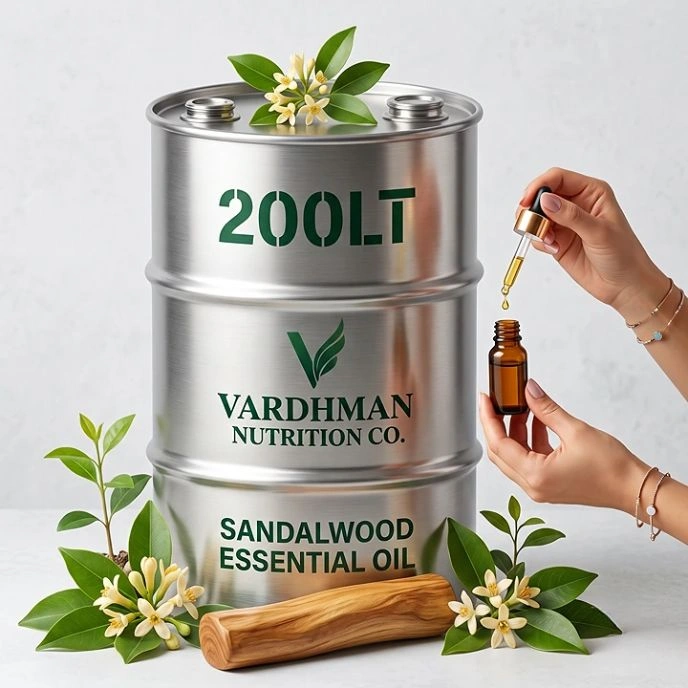
Vardhman Nutrition Co. is an India-based Sandalwood Essential Oil Manufacturer, Bulk Supplier and Exporter, supplying Natural Sandalwood Essential Oil to international B2B customers. Our supply is intended for importers, wholesalers, distributors, fragrance manufacturers, cosmetic companies, personal care brands, aromatherapy businesses, herbal product manufacturers and private label companies.
The distinctive fragrance of Sandalwood Oil makes it particularly valuable for products that require a rich, refined and persistent woody note. It can be incorporated into fragrance compositions, premium personal care products, aromatic blends, wellness formulations and other suitable commercial applications.
As an export-focused Sandalwood Oil Supplier from India, Vardhman Nutrition Co. focuses on bulk sourcing requirements, suitable packaging, technical documentation and export-oriented supply support. We work with international buyers across the USA, UK, Europe, Germany, UAE, Australia, South Korea and other global destinations.
What Is Sandalwood Essential Oil?
Sandalwood Essential Oil is a concentrated aromatic oil obtained from suitable sandalwood botanical material. It is valued primarily for its characteristic fragrance and its versatility as a botanical ingredient.
The aroma of Natural Sandalwood Essential Oil is commonly described as warm, woody, creamy, smooth, rich, soft, balsamic and long-lasting.
This unique combination gives sandalwood a distinctive position within the essential oil and fragrance industry.
Unlike many essential oils that are primarily associated with bright, fresh, citrus, herbal or floral notes, Sandalwood Oil is generally appreciated for its deeper aromatic character. This makes it particularly useful in base-oriented fragrance compositions.
For commercial manufacturers, Sandalwood Essential Oil can be evaluated according to botanical identity, aroma profile, chemical composition, intended application, concentration, packaging and regulatory requirements.
Botanical Name and Source of Sandalwood Oil
The botanical name traditionally associated with Indian sandalwood is Santalum album. It belongs to the Santalaceae family.
Sandalwood is a distinctive botanical resource because its aromatic value is closely associated with mature wood and heartwood material. The quality and aromatic profile of sandalwood-derived oil can be influenced by the source of the botanical material, maturity, processing conditions and storage.
For international B2B purchasing, confirming the botanical identity and product specification is important before commercial procurement.
Vardhman Nutrition Co. supplies Sandalwood Essential Oil for commercial customers who require a natural botanical aromatic ingredient for manufacturing, formulation, distribution or private label applications.
What Makes Sandalwood Oil Different?
Sandalwood Essential Oil stands apart from many other essential oils because of its rich and persistent fragrance.
Many essential oils are recognized for bright, fresh, citrus, herbal or floral notes. Sandalwood, by comparison, is commonly associated with a deeper aromatic character.
This makes it especially useful in products where the fragrance needs warmth and depth.
- Smooth woody foundation
- Greater depth in fragrance blends
- Warm sensory impression
- Refined natural aroma
- Long-lasting fragrance characteristics
- Compatibility with numerous aromatic compositions
For perfumers and fragrance formulators, these characteristics make Sandalwood Oil an important botanical material for developing sophisticated fragrance profiles.
Sandalwood Essential Oil for Perfumery
One of the most important commercial applications of Sandalwood Essential Oil is the perfume industry.
Sandalwood Oil is frequently valued as a base-note material because of its warm, smooth and persistent character. In fragrance development, base notes help provide depth and can remain noticeable after lighter aromatic notes have faded.
Sandalwood Oil can therefore be evaluated for:
- Base-note compositions
- Fine perfumes
- Botanical fragrances
- Natural perfume blends
- Fragrance concentrates
- Traditional fragrance products
- Luxury personal fragrances
- Custom perfume formulations
The oil can provide warmth and depth to fragrance blends and can help create a rounded aromatic character.
Because fragrance preferences differ between products and markets, the appropriate inclusion level should be established through professional formulation and sensory testing.
Sandalwood Oil as a Fragrance Ingredient
The fragrance industry requires ingredients that can contribute recognizable character while working harmoniously with other materials.
Sandalwood Essential Oil can serve as a valuable aromatic component in fragrance compositions because of its warm and smooth sensory profile.
- Fine fragrance products
- Home fragrance
- Scented candles
- Incense products
- Fragrance oils
- Room fragrance formulations
- Personal fragrance products
- Botanical fragrance blends
The oil's distinctive character means that even a relatively small amount can influence the overall fragrance profile. Professional formulators should therefore determine the appropriate concentration according to the desired sensory result and applicable safety requirements.
Sandalwood Essential Oil for Fine Perfumery
Fine perfumery is one of the most recognized commercial applications for sandalwood.
Perfumers use woody materials to create depth, structure and balance within fragrance compositions. Sandalwood's smooth aromatic character makes it suitable for sophisticated perfume concepts.
- Eau de parfum
- Eau de toilette
- Natural perfume
- Luxury fragrance
- Botanical perfume
- Attar-inspired products
- Fragrance oils
- Premium scent compositions
Sandalwood can also be combined with floral ingredients, citrus materials, spices, resins and other woods.
Sandalwood Oil as a Base-Note Ingredient
A base note forms an important part of many fragrance compositions because it can remain noticeable after lighter aromatic notes have diminished.
Sandalwood Essential Oil is valued for its warm and persistent character and can therefore be considered in base-note fragrance development.
- Perfume concentrates
- Fine fragrances
- Body fragrances
- Fragrance blends
- Aromatic oils
- Personal fragrance products
Sandalwood Essential Oil for Cosmetics
The cosmetic industry uses Sandalwood Oil in products where botanical ingredients and refined fragrance profiles are desired.
- Facial creams
- Body lotions
- Skin-care oils
- Cleansers
- Botanical creams
- Soaps
- Premium personal care products
- Aromatic cosmetic formulations
Sandalwood Oil may contribute to both the sensory identity and botanical positioning of a product.
Cosmetic manufacturers should determine the suitable concentration and regulatory status according to the intended product and target market.
Sandalwood Oil for Skin-Care Products
Sandalwood has traditionally been associated with skin-care and botanical wellness practices. Modern formulators may explore Sandalwood Essential Oil in products designed around botanical and aromatic concepts.
- Facial oils
- Botanical serums
- Skin-care blends
- Body oils
- Cleansing products
- Premium skin-care formulations
- Natural personal care products
When used in topical formulations, Sandalwood Essential Oil should be appropriately diluted and evaluated for compatibility with the complete formulation.
Sandalwood Essential Oil for Personal Care
Personal care manufacturers often seek ingredients that provide a distinctive sensory experience. The smooth woody aroma of Sandalwood Essential Oil can be suitable for a wide range of personal care products.
- Body lotions
- Bath products
- Body oils
- Soaps
- Body washes
- Massage products
- Botanical grooming products
- Premium personal care formulations
Sandalwood can help create a warm and sophisticated aromatic identity, particularly in products positioned around natural or premium ingredients.
Sandalwood Oil in Soap Manufacturing
Sandalwood is a well-known fragrance concept for soaps and bathing products.
- Herbal soaps
- Botanical soaps
- Premium bathing bars
- Natural soaps
- Specialty fragrance soaps
- Aromatic cleansing products
Its woody fragrance can be combined with other botanical oils and aromatic materials to create customized fragrance profiles.
Manufacturers should assess fragrance stability and compatibility with the soap base before full-scale production.
Sandalwood Oil for Hair-Care Formulations
Sandalwood Essential Oil can also be explored in selected hair-care and scalp-care formulations.
- Hair oils
- Herbal hair-care blends
- Botanical scalp products
- Aromatic hair treatments
- Natural grooming products
- Specialty hair-care formulations
The warm aroma of sandalwood can provide a distinctive sensory profile to finished hair-care products.
Sandalwood Essential Oil for Aromatherapy
Sandalwood is strongly associated with aromatherapy and wellness because of its rich and relaxing aromatic character.
It can be incorporated into suitable:
- Diffuser blends
- Massage oils
- Aromatic formulations
- Spa products
- Wellness blends
- Meditation products
- Relaxation-oriented fragrance products
For aromatherapy products, proper dilution and application-specific safety considerations should always be followed.
Sandalwood Oil for Meditation and Yoga
Sandalwood has a long cultural association with meditation, yoga and spiritual practices.
Its warm woody fragrance is often selected for products designed to create a peaceful and focused aromatic environment.
- Meditation oils
- Yoga fragrance blends
- Incense products
- Spiritual aromatic products
- Wellness products
- Prayer-related fragrance products
- Botanical aromatic blends
Sandalwood Essential Oil for Spa Products
Spa and wellness businesses often use aromatic ingredients to create a distinctive sensory environment.
- Massage oils
- Spa oils
- Body-care products
- Bath formulations
- Aromatic room blends
- Wellness products
- Relaxation products
Its rich woody aroma can complement other botanical ingredients used in spa and wellness formulations.
Sandalwood Oil for Incense and Fragrance Products
Sandalwood is traditionally associated with incense and aromatic products.
- Incense sticks
- Incense cones
- Fragrance blends
- Scented candles
- Home fragrance
- Spiritual fragrance products
- Aromatic products
Manufacturers may use Sandalwood Oil as part of a broader fragrance system to create a warm and recognizable aromatic character.
Sandalwood Essential Oil in Home Fragrance
The woody character of sandalwood is also suitable for selected home-fragrance concepts.
- Room fragrance
- Scented candles
- Reed diffuser blends
- Home aromatic products
- Fragrance sprays
- Decorative fragrance products
The performance of Sandalwood Oil in these products should be assessed according to the selected base, fragrance concentration and product format.
Traditional Importance of Sandalwood
Sandalwood has been valued for generations in Indian cultural and traditional practices.
- Ayurveda
- Traditional wellness
- Meditation
- Yoga
- Prayer
- Religious ceremonies
- Spiritual practices
- Traditional fragrance preparation
This cultural importance contributes to the strong market recognition of sandalwood as a premium botanical ingredient.
Traditional use and modern product claims should be considered separately. Finished-product manufacturers should ensure that any health or therapeutic claims meet the requirements of their target market.
Natural Constituents of Sandalwood Oil
Sandalwood Essential Oil contains naturally occurring volatile constituents that contribute to its distinctive aroma. The oil is particularly associated with sesquiterpenes and sesquiterpene alcohols.
Important constituents associated with sandalwood oil include:
- Alpha-santalol
- Beta-santalol
- Santalenes
- Santalic acid-related compounds
- Other naturally occurring sesquiterpene constituents
The exact chemical profile can vary according to botanical source, material maturity, extraction process, processing conditions and storage.
For B2B buyers, laboratory analysis such as GC-MS can provide useful information regarding the composition of a particular batch.
Alpha-Santalol in Sandalwood Essential Oil
Alpha-santalol is one of the major compounds associated with sandalwood oil and contributes significantly to its characteristic aromatic profile.
Because chemical composition can vary between botanical materials and batches, buyers should evaluate the actual specification and analytical report associated with the supplied product rather than relying solely on general composition figures.
Beta-Santalol and Other Aromatic Compounds
Beta-santalol is another important constituent associated with sandalwood oil. Along with alpha-santalol and other naturally occurring compounds, it contributes to the overall woody and creamy aroma of sandalwood.
The combined chemical profile influences the sensory characteristics and technical identity of the oil.
Physical Characteristics of Sandalwood Essential Oil
| Property | Typical Description |
|---|---|
| Product Name | Sandalwood Essential Oil |
| Botanical Name | Santalum album |
| Product Type | Natural botanical essential oil |
| Appearance | Pale yellow to golden-yellow liquid |
| Aroma | Warm, woody, creamy and smooth |
| Fragrance Character | Rich, soft and persistent |
| Texture | Relatively rich and viscous |
| Main Applications | Fragrance, perfumery, cosmetics, personal care and wellness |
| Supply Form | Liquid |
| Market | International B2B and bulk supply |
Actual specifications may vary according to the particular product, botanical material, batch and processing method. Buyers should refer to the applicable technical specification before commercial use.
Quality Evaluation of Sandalwood Essential Oil
Professional buyers generally evaluate essential oils using multiple quality parameters rather than relying only on appearance or aroma.
- Botanical identity
- Product purity
- Aroma profile
- Appearance
- Chemical composition
- Batch consistency
- Packaging
- Storage conditions
- Technical documentation
Analytical testing may be used to help evaluate chemical composition and product authenticity.
For international B2B procurement, clear specifications and documentation can help manufacturers qualify a raw material before using it in commercial production.
Sandalwood Essential Oil Extraction Process
Sandalwood Essential Oil is obtained from suitable sandalwood material through an appropriate extraction process. Steam distillation is traditionally associated with sandalwood oil production.
Selection of Suitable Material
Suitable sandalwood botanical material is selected according to the required product characteristics and manufacturing specifications.
Preparation of Sandalwood
The material is prepared into suitable pieces, chips or other forms to facilitate extraction.
Loading of the Distillation Unit
The prepared sandalwood material is placed into an appropriate distillation chamber.
Steam Application
Steam is introduced through the botanical material to release volatile aromatic constituents.
Vapor Collection
The volatile components are carried with the steam and directed toward a condensation system.
Condensation
The vapor is cooled and converted into a liquid mixture.
Oil-Water Separation
The essential oil is separated from the aqueous phase using suitable separation equipment.
Filtration
The recovered oil may undergo filtration to remove unwanted particles.
Quality Testing
The final oil can be evaluated for relevant physical, sensory and analytical parameters.
Packaging
After quality evaluation, the finished oil is filled into suitable containers designed for storage and transportation.
Bulk Sandalwood Essential Oil Supplier
Vardhman Nutrition Co. supplies Bulk Sandalwood Essential Oil to international B2B customers.
Our commercial supply model is suitable for companies requiring larger quantities for manufacturing, distribution, formulation or private label production.
- Importers
- Wholesalers
- Distributors
- Traders
- Cosmetic manufacturers
- Personal care brands
- Perfume companies
- Fragrance manufacturers
- Aromatherapy businesses
- Wellness companies
- Herbal product manufacturers
- Private label companies
- Contract manufacturers
Wholesale Sandalwood Oil from India
Businesses sourcing Wholesale Sandalwood Oil from India may require reliable supply, suitable documentation and packaging in addition to the product itself.
Vardhman Nutrition Co. supports international buyers seeking commercial quantities for wholesale distribution, manufacturing, cosmetic formulation, personal care production, perfumery, fragrance development, aromatherapy and private label products.
Sandalwood Essential Oil Manufacturer in India
As a Sandalwood Essential Oil Manufacturer in India, Vardhman Nutrition Co. focuses on B2B supply for international customers.
- Natural botanical sourcing
- Product consistency
- Controlled processing
- Bulk availability
- Appropriate packaging
- Technical information
- Export support
- Long-term commercial relationships
Sandalwood Essential Oil Exporter from India
Vardhman Nutrition Co. is an export-focused Sandalwood Essential Oil Exporter from India serving international B2B markets.
Our export-oriented supply supports buyers across:
- United States
- United Kingdom
- European markets
- Germany
- United Arab Emirates
- Australia
- South Korea
- Other international destinations
Sandalwood Oil for International Importers
International importers sourcing botanical oils generally require clear commercial information before placing an order.
For Sandalwood Oil procurement, buyers may need to specify:
- Required quantity
- Product grade
- Intended application
- Packaging format
- Destination country
- Sample requirements
- Documentation requirements
- Shipping preferences
Sandalwood Oil for Distributors and Wholesalers
Distributors and wholesalers can source Sandalwood Essential Oil for resale or supply to downstream manufacturers.
- Essential oil distributors
- Cosmetic raw material distributors
- Fragrance ingredient suppliers
- Herbal product suppliers
- Personal care ingredient traders
- Wellness product distributors
Private Label Sandalwood Essential Oil
Private label businesses can use bulk Sandalwood Essential Oil as a raw material for their own branded products.
- Bulk oil
- Customized packaging
- Label specifications
- Product documentation
- Commercial quantities
- OEM supply
- Contract manufacturing support
Private label requirements differ by market, so buyers should provide complete project details before commercial planning.
Export Packaging for Sandalwood Essential Oil
Appropriate packaging is important for maintaining essential oil quality during storage and transportation.
Depending on order size and customer requirements, suitable packaging may include:
- Aluminium bottles
- Aluminium containers
- Export-grade drums
- Bulk industrial packaging
- Customized packaging
Technical Documentation for B2B Buyers
International buyers may require technical documentation to qualify an essential oil before commercial use.
- Certificate of Analysis (COA)
- GC-MS Report
- Safety Data Sheet (SDS/MSDS)
- Technical Data Sheet (TDS)
- Allergen Statement
- IFRA-related documentation where applicable
- Product Specification
- Other relevant technical or export documents
Documentation availability depends on the specific product, batch, application and buyer requirements.
Storage Guidelines for Sandalwood Essential Oil
Proper storage helps maintain the quality and aromatic characteristics of essential oils.
- Store in a cool and dry location.
- Protect the oil from direct sunlight.
- Keep the container tightly sealed.
- Avoid unnecessary exposure to air.
- Minimize excessive heat.
- Use suitable storage containers.
- Keep the product in appropriate warehouse conditions.
- Follow product-specific storage recommendations.
Shelf Life of Sandalwood Oil
Sandalwood Essential Oil is generally considered relatively stable because of its composition and aromatic characteristics.
However, the usable life of a particular product depends on:
- Initial product quality
- Packaging
- Temperature
- Light exposure
- Air exposure
- Storage conditions
- Handling practices
The fragrance of sandalwood may develop a deeper and more mature character over time. For commercial use, buyers should follow the manufacturer's product specification and recommended storage conditions.
Safety and Responsible Handling
Sandalwood Essential Oil is a concentrated botanical material and should be handled appropriately.
- Follow the relevant SDS/MSDS.
- Avoid unnecessary direct skin contact.
- Use appropriate protective equipment.
- Keep containers tightly closed.
- Use suitable dilution for topical formulations.
- Conduct formulation compatibility testing.
- Follow applicable regulations.
- Store the product securely.
Finished-product manufacturers are responsible for evaluating the safety and regulatory compliance of their own formulations.
Why Choose Vardhman Nutrition Co.?
Vardhman Nutrition Co. is focused on providing reliable botanical oil sourcing for international B2B customers.
India-Based Manufacturer and Supplier
We provide Sandalwood Essential Oil from India for commercial international markets.
Bulk and Wholesale Supply
Our business model is designed for importers, distributors, wholesalers and manufacturers requiring commercial quantities.
Export-Oriented Supply
We focus on international B2B sourcing and support overseas customers with export-oriented supply arrangements.
Multiple Industry Applications
Our Sandalwood Oil can be evaluated for perfumery, fragrance, cosmetics, personal care, aromatherapy, wellness, incense and other suitable commercial applications.
Technical Documentation
Relevant product and technical documentation can be provided according to customer and product requirements.
Suitable Packaging
Packaging solutions can be discussed according to order quantity, destination and shipping requirements.
Long-Term B2B Approach
We aim to develop long-term business relationships with importers, distributors, manufacturers and private label customers.
Buy Sandalwood Essential Oil in Bulk from India
If your business is looking to Buy Sandalwood Essential Oil in Bulk from India, Vardhman Nutrition Co. can support your commercial sourcing requirements.
Our Natural Sandalwood Essential Oil is intended for international B2B applications across fragrance, perfumery, cosmetics, personal care, aromatherapy, wellness and other suitable industries.
For a commercial enquiry, buyers can provide:
- Required quantity
- Product specifications
- Intended application
- Packaging preference
- Destination country
- Technical documentation requirements
- Sample requirements, if applicable
Frequently Asked Questions About Sandalwood Essential Oil
What is Sandalwood Essential Oil?
Sandalwood Essential Oil is a botanical aromatic oil obtained from suitable sandalwood material and valued for its warm, smooth, creamy and woody fragrance.
What is the botanical name of Sandalwood?
The traditional Indian sandalwood species is scientifically known as Santalum album.
What does Sandalwood Essential Oil smell like?
It generally has a warm, deep, woody, creamy, smooth, rich and balsamic aroma.
Why is Sandalwood Oil used in perfumes?
Its persistent woody character makes it suitable for base-note fragrance compositions and premium perfume formulations.
Is Sandalwood Essential Oil used in cosmetics?
Yes. It can be evaluated for suitable cosmetic and personal care formulations, subject to the formulation requirements and regulations of the intended market.
Can Sandalwood Oil be used in aromatherapy?
Sandalwood Oil is commonly associated with aromatic and wellness applications and can be incorporated into suitable aromatic blends.
Can Sandalwood Oil be used in incense?
Yes. Its traditional woody fragrance makes it suitable for selected incense and spiritual fragrance products.
Do you supply Sandalwood Essential Oil in bulk?
Yes. Vardhman Nutrition Co. supplies Sandalwood Essential Oil in bulk for international B2B buyers.
Do you supply wholesale Sandalwood Oil?
Yes. Wholesale supply is available for importers, distributors, wholesalers and manufacturers according to commercial requirements.
Can international buyers import Sandalwood Essential Oil from India?
International buyers can enquire about commercial supply according to their destination-country requirements, product specifications, documentation and applicable regulations.
Do you provide COA?
Relevant Certificate of Analysis documentation can be provided according to the product and customer requirements.
Do you provide GC-MS reports?
GC-MS documentation may be available according to the specific product, batch and commercial requirement.
Can you provide SDS/MSDS and TDS?
Yes. Relevant safety and technical documents can be provided where applicable.
Do you offer private label Sandalwood Oil?
Private label, OEM and customized supply requirements can be discussed based on product, quantity, packaging and destination-market requirements.
How should Sandalwood Essential Oil be stored?
It should generally be stored tightly sealed in a cool, dry place away from direct sunlight and excessive heat.
Which industries use Sandalwood Essential Oil?
Major applications include perfumery, fragrance, cosmetics, personal care, aromatherapy, wellness, spa products, incense, soap manufacturing and other suitable botanical formulations.
Contact Us for Bulk Sandalwood Essential Oil
If you are searching for a dependable Sandalwood Essential Oil Manufacturer, Bulk Supplier and Exporter from India, Vardhman Nutrition Co. can support your international B2B sourcing requirements.
We supply Natural Sandalwood Essential Oil for importers, wholesalers, distributors, manufacturers, fragrance companies, perfume brands, cosmetic manufacturers, personal care businesses, aromatherapy companies, wellness brands and private label businesses.
For a quotation or product enquiry, share your required quantity, intended application, packaging preference, destination country and technical documentation requirements.
Our team can discuss the relevant product specifications, bulk supply options, packaging and export requirements according to your business needs.
Vardhman Nutrition Co. – Reliable Natural Sandalwood Essential Oil Supply from India for Global B2B Markets.
.webp)
.webp)
.webp)

.webp)