Botanical Name: Cymbopogon citratus
Family: Poaceae (Gramineae)
Parts Used: Grass (Fresh Grass)
Extraction Method: Steam Distillation
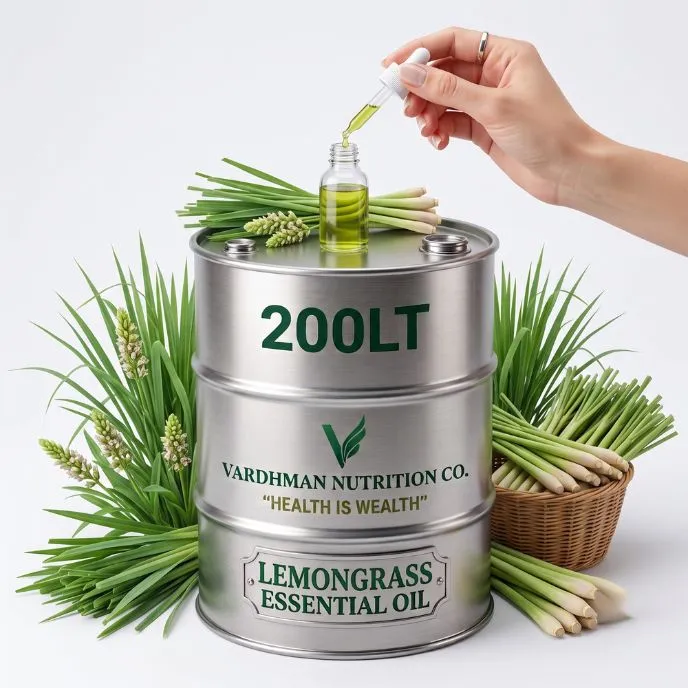
Vardhman Nutrition Co. is a trusted Lemongrass Essential Oil Manufacturer in India and global Lemongrass Essential Oil Exporter. We supply high-quality 100% Pure Natural Lemongrass Essential Oil to international B2B buyers, importers, wholesalers, distributors, cosmetic manufacturers, pharmaceutical companies, nutraceutical brands, aromatherapy businesses, and private label companies.
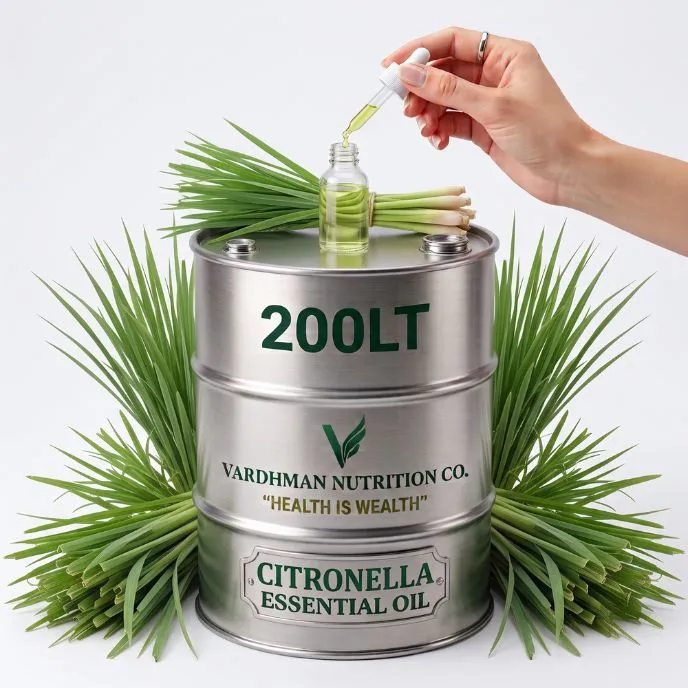
Lemongrass Essential Oil is a natural and aromatic essential oil obtained from the leaves and stems of the Cymbopogon citratus plant. It is known for its fresh, intense, and lemon-like aroma. It is used in a wide range of commercial, cosmetic, fragrance, wellness, and industrial products.
Our Natural Lemongrass Essential Oil is available in Bulk and Wholesale quantities according to customers' commercial requirements. Our Steam Distilled Lemongrass Essential Oil is suitable for B2B buyers looking for a reliable supply of Export Quality Lemongrass Essential Oil from India.
As an experienced Lemongrass Essential Oil B2B Supplier, Vardhman Nutrition Co. provides bulk and wholesale supply solutions for international markets.
We can work with the following B2B customers:
If you want to Buy Bulk Lemongrass Essential Oil from India, we can assist with commercial supply according to your required quantity, packaging, and product specifications.
Our 100% Pure Natural Lemongrass Essential Oil is obtained through the Steam Distillation process with the objective of maintaining its natural aroma and quality.
In this process, volatile oil compounds are extracted from prepared lemongrass plant material using steam. The essential oil is then separated through condensation and separation processes and may undergo quality testing as required.
Lemongrass Essential Oil is generally light yellow to golden yellow in color and has an intense, fresh, lemon-like aroma with a slightly grassy character.
Lemongrass Essential Oil contains various natural aromatic compounds. According to source information, these mainly include Citral, Neral, Geranial, Myrcene, Geraniol, Limonene, and Linalool, among others.
The presence of these natural compounds contributes to its distinctive citrus-like aroma and functional characteristics.
Commercial Lemongrass Essential Oil is used across various industries. Its fresh and citrus-like fragrance makes it useful for fragrance and personal care formulations.
It can be used in various formulations, including:
Lemongrass Essential Oil for Aromatherapy is used in diffusers, room fragrances, massage blends, spa applications, and wellness formulations. Its fresh aroma is also used to provide a refreshing fragrance to indoor environments.
Due to its distinctive citrus fragrance, Lemongrass Essential Oil is used in perfumes, fragrance blends, soaps, and other scented products.
It can also be used as a natural fragrance component in detergents, cleaning products, and deodorizing formulations.
Lemongrass Essential Oil is used in various herbal, wellness, and natural product formulations. Its traditional uses are also mentioned in Ayurveda, Unani medicine, and traditional folk practices.
Vardhman Nutrition Co. supplies Bulk Lemongrass Essential Oil and Wholesale Lemongrass Essential Oil to international buyers.
For B2B buyers, product quality, consistency, packaging, documentation, quantity, and timely shipment are important factors when purchasing in bulk. Therefore, our supply approach is designed with commercial and export requirements in mind.
If your business wants to Buy Lemongrass Essential Oil in Bulk, you can contact us with your required quantity, application, packaging requirements, and destination market for a commercial quotation.
Vardhman Nutrition Co. is a Lemongrass Essential Oil Exporter from India, focused on supplying bulk quantities to international B2B buyers.
Our export-oriented business model is designed to address the requirements of international importers, distributors, wholesalers, and manufacturers.
Our international supply is available for major markets including:
Bulk quantities, packaging requirements, and export documentation can be handled according to customer requirements.
Product documentation is important for B2B and international buyers. Depending on the product specification and customer requirements, the following technical documents may be available:
The availability of documentation may depend on product specifications, applications, and customer requirements.
GC-MS (Gas Chromatography-Mass Spectrometry) analysis can be used to verify the chemical composition and purity of Lemongrass Essential Oil.
This type of testing can help B2B buyers understand the product specification and relevant quality parameters.
Proper packaging and storage are important for maintaining the quality of essential oil. According to source information, it should be stored away from direct sunlight and excessive heat in a cool and dry place. The container should also be properly closed after use.
For international bulk supply, packaging requirements can be determined according to the customer's quantity, destination, and application.
Under proper storage conditions, the shelf life of Lemongrass Essential Oil is generally stated to be 1 to 3 years. Prolonged exposure to excessive heat, light, and oxygen may affect the quality and aroma of the oil.
Therefore, it is important to store bulk product under appropriate temperature- and light-controlled conditions.
Key reasons to choose Vardhman Nutrition Co. as your Lemongrass Essential Oil Supplier in India include:
If you are looking for a Natural Lemongrass Essential Oil Supplier, Bulk Lemongrass Essential Oil Manufacturer, or Lemongrass Essential Oil Exporter from India, Vardhman Nutrition Co. can assist with your commercial and international supply requirements.
We supply Bulk and Wholesale Lemongrass Essential Oil to importers, wholesalers, distributors, cosmetic manufacturers, pharmaceutical companies, nutraceutical brands, aromatherapy businesses, and private label companies.
Contact Vardhman Nutrition Co. for bulk quantities, product specifications, samples, technical documentation, packaging options, and export quotations for Lemongrass Essential Oil.

.webp)
.webp)
.webp)
.webp)