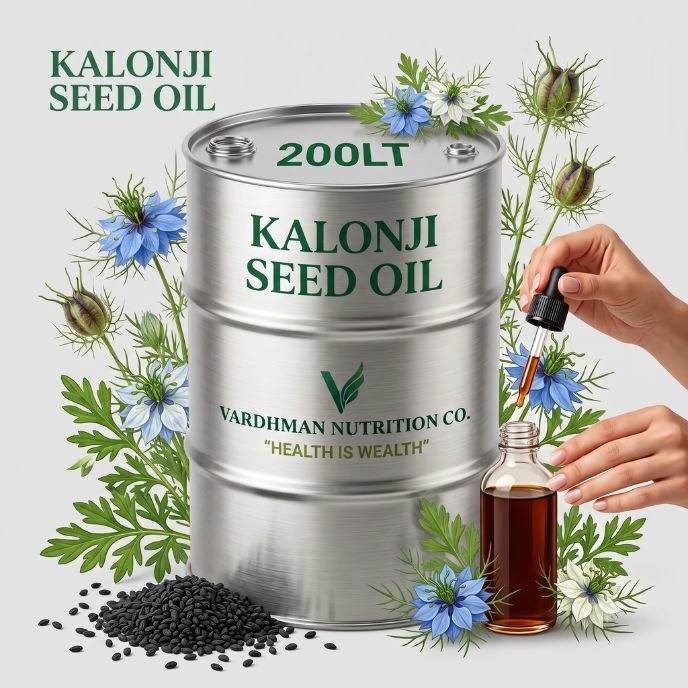
Kalonji Seed Oil Manufacturer & Global B2B Exporter from India
Kalonji Seed Oil is a natural botanical seed oil obtained from the seeds of Nigella sativa. It is also widely identified by names such as Black Seed Oil, Black Cumin Seed Oil and Nigella Sativa Seed Oil. As a plant-derived ingredient, Kalonji Seed Oil is suitable for a variety of commercial formulations and natural product applications.
Vardhman Nutrition Co. is an India-based Kalonji Seed Oil Manufacturer, Bulk Supplier and Global B2B Exporter, supplying natural vegetable oils, Cold Pressed Virgin Seed Oils and botanical ingredients for international markets. Our business is focused primarily on international B2B bulk supply and export requirements.
We supply Kalonji Seed Oil for businesses such as importers, distributors, wholesalers, cosmetic manufacturers, personal care companies, soap manufacturers, herbal product businesses, private-label brands, OEM companies and international trading organizations. Product quantity, specifications, packaging, documentation and intended application can be discussed according to individual sourcing requirements.
Kalonji Seed Oil: A Botanical Ingredient for Commercial Formulation
Kalonji Seed Oil is derived from the seeds of Nigella sativa, making it a natural vegetable seed oil with a botanical origin. The seeds are the principal plant material used for obtaining the oil.
The product is commonly associated with the names Kalonji Oil, Black Seed Oil, Black Cumin Seed Oil and Nigella Sativa Seed Oil. For commercial procurement, buyers should select the appropriate product specifications according to the intended application, formulation requirements and destination-market regulations.
For manufacturers, the value of Kalonji Seed Oil lies in its versatility as a botanical oil ingredient. Depending on the final formulation, it can be considered for skincare products, haircare preparations, personal care products, soaps, herbal formulations, natural products and selected wellness-oriented product lines.
This makes Kalonji Seed Oil relevant to companies developing plant-based and botanical product ranges for international markets.
Botanical Background of Nigella sativa
The botanical name of Kalonji is Nigella sativa, a flowering plant belonging to the Ranunculaceae family. The seeds of the plant are used as the source material for producing Kalonji Seed Oil.
Botanical Profile
- Product Name: Kalonji Seed Oil
- Botanical Name: Nigella sativa
- Plant Family: Ranunculaceae
- Plant Part Used: Seeds
- Product Type: Natural Vegetable Seed Oil
- Common Extraction Method: Cold Pressed
- Origin: India
- Common Names: Kalonji Oil, Black Seed Oil, Black Cumin Seed Oil and Nigella Sativa Seed Oil
The exact appearance, processing parameters and technical characteristics may vary according to the particular product grade and processing specifications. Commercial buyers should confirm the required specification before placing an order.
Cold Pressed Kalonji Seed Oil from India
Cold Pressed Kalonji Seed Oil is obtained from selected Kalonji seeds through a mechanical extraction approach. Cold pressing is commonly used for natural seed oils where retaining the characteristic properties of the seed-derived oil is an important consideration.
The extraction method is an important factor for buyers evaluating natural vegetable oils because different processing approaches may be selected according to the intended application and technical requirements.
Vardhman Nutrition Co. offers Kalonji Seed Oil as part of its broader Cold Pressed Virgin Seed Oils portfolio for international B2B buyers seeking plant-based oils from India.
The final product specification, extraction parameters and suitability should be evaluated according to the intended formulation and destination-market requirements.
Where Kalonji Seed Oil Fits in the Natural Oil Industry
Kalonji Seed Oil can be considered as a botanical ingredient across several product-development categories. Its natural seed origin makes it suitable for businesses working with plant-based oils and botanical formulations.
Potential commercial sectors include:
- Cosmetics
- Personal care
- Skincare
- Haircare
- Soap manufacturing
- Herbal formulations
- Botanical products
- Natural product manufacturing
- Wellness-oriented formulations
- Oil-based personal care products
Manufacturers can evaluate Kalonji Seed Oil alongside other vegetable oils and botanical ingredients when developing finished products.
The appropriate inclusion level and formulation compatibility should be determined through product development, testing and applicable regulatory requirements.
Characteristics That Make Kalonji Oil Commercially Relevant
Kalonji Seed Oil is a plant-derived vegetable seed oil with applications across multiple commercial sectors. It can be sourced for businesses looking for botanical ingredients with a recognizable seed-based identity.
Important product characteristics include:
- Natural plant-derived origin
- Obtained from selected Kalonji seeds
- Botanical source of Nigella sativa
- Cold pressed extraction option
- Origin from India
- Suitable for selected cosmetic formulations
- Suitable for personal care products
- Applicable to skincare formulations
- Applicable to haircare products
- Suitable for soap manufacturing
- Used in herbal and botanical formulations
- Suitable for natural and wellness-oriented products
- Available for B2B bulk procurement
- Suitable for international sourcing
- Private-label supply possibilities
- OEM sourcing possibilities
These characteristics make Kalonji Seed Oil a useful ingredient for manufacturers and brands developing botanical product ranges. However, the exact product grade and formulation compatibility should always be confirmed for the intended application.
Opportunities for Cosmetic Manufacturers
Cosmetic manufacturers can incorporate suitable Kalonji Seed Oil into different oil-based and botanical formulations.
Potential applications include:
- Skin care oils
- Body oils
- Hair oils
- Massage oil formulations
- Creams
- Lotions
- Natural cosmetics
- Botanical formulations
- Personal care products
- Oil-based cosmetic products
Kalonji Seed Oil may also be combined with other plant oils and botanical ingredients according to the formulation strategy of the manufacturer.
For commercial product development, formulators should determine the appropriate inclusion level through testing and ensure that the finished formulation meets the applicable regulations of the intended market.
Skin and Body Care Product Development
The natural botanical identity of Kalonji Seed Oil allows it to be considered for a range of skin and body-care formulations.
Potential product categories include:
- Botanical skin oils
- Body oils
- Moisturizing formulations
- Creams
- Lotions
- Massage oils
- Natural skincare products
- Botanical personal care products
For brands developing natural and botanical skincare ranges, Kalonji Seed Oil can be evaluated as one of the vegetable oil ingredients within a broader formulation.
The final use should be determined according to product specifications, formulation compatibility, intended market and applicable regulatory requirements.
Haircare and Scalp-Care Formulations
Kalonji Seed Oil also has commercial relevance for manufacturers producing botanical haircare products.
Potential applications include:
- Hair oils
- Hair oil blends
- Scalp-care formulations
- Herbal hair products
- Botanical haircare products
- Natural haircare formulations
- Personal care oil blends
Manufacturers may combine Kalonji Seed Oil with other plant oils or botanical ingredients to create formulation-specific products.
For international brands, the final formulation should be evaluated for compatibility, stability, labeling requirements and destination-market regulations before commercial production.
Kalonji Oil for Natural Soap Manufacturing
Kalonji Seed Oil can be used as a botanical vegetable oil ingredient in suitable soap and personal care formulations.
Possible applications include:
- Natural soaps
- Herbal soaps
- Botanical soaps
- Personal care soaps
- Handmade soaps
- Specialty soap formulations
- Liquid cleansing products
- Other suitable soap formulations
Soap manufacturers can formulate Kalonji Seed Oil with other vegetable oils according to the characteristics and requirements of the finished product.
The quantity and proportion used should be established by the manufacturer based on the formulation process and desired product specifications.
Herbal and Botanical Product Manufacturing
Kalonji Seed Oil can be considered for selected herbal, natural and botanical preparations. Its seed-derived botanical identity makes it suitable for businesses developing plant-based product ranges.
Potential applications include:
- Herbal oil formulations
- Botanical oil blends
- Natural oil preparations
- Traditional oil products
- Massage oil preparations
- Botanical personal care products
- Herbal cosmetic formulations
- Natural wellness products
For commercial production, buyers should verify product specifications and ensure that the proposed application complies with the regulatory requirements of the destination market.
Natural and Wellness-Oriented Product Lines
The growing interest in botanical and plant-based products creates opportunities for natural seed oils such as Kalonji Seed Oil.
It can be considered for selected:
- Natural oil blends
- Botanical formulations
- Herbal cosmetic products
- Natural personal care products
- Wellness formulations
- Plant-based products
- Herbal haircare products
- Natural skincare products
Manufacturers can evaluate Kalonji Seed Oil according to the intended finished product and formulation requirements.
Rather than treating the oil as a single-purpose ingredient, businesses can consider it across different botanical product categories depending on their formulation strategy.
Bulk Kalonji Seed Oil Supplier from India
Vardhman Nutrition Co. supplies Bulk Kalonji Seed Oil from India for international B2B customers and commercial manufacturers.
Our potential buyer groups include:
- Kalonji oil importers
- Black Seed Oil importers
- Vegetable oil importers
- Bulk oil buyers
- Cosmetic manufacturers
- Personal care manufacturers
- Soap manufacturers
- Skincare brands
- Haircare companies
- Herbal product manufacturers
- Natural product companies
- Private-label brands
- OEM companies
- Distributors
- Wholesalers
- International trading companies
Bulk supply requirements can be evaluated according to order quantity, packaging, product specifications, intended application and destination country.
Wholesale Kalonji Seed Oil for International Buyers
International businesses looking for Wholesale Kalonji Seed Oil can discuss commercial procurement requirements with Vardhman Nutrition Co.
B2B sourcing solutions may include:
- Commercial bulk orders
- Wholesale procurement
- Regular supply requirements
- Export-oriented packaging
- Customized packaging
- Product samples
- Private-label projects
- OEM requirements
- Technical documentation
- Export documentation support
Each enquiry can be evaluated individually according to the buyer's product requirements, order quantity and destination-market specifications.
This approach is useful for importers, distributors and manufacturers looking for a long-term sourcing partner rather than a one-time retail purchase.
Private Label Kalonji Seed Oil for International Brands
Companies planning to introduce natural oil products under their own brand can discuss Private Label Kalonji Seed Oil sourcing.
Private-label requirements may involve:
- Product quantity
- Packaging size
- Bulk packaging
- Label requirements
- Product specifications
- Customized packaging
- Export destination
- Technical documentation
- Long-term sourcing requirements
Private-label supply depends on order quantity, packaging, labeling and destination-market requirements.
For brands entering the natural oil market, private-label sourcing can provide an option to develop products under their own commercial identity while sourcing the botanical oil from India.
OEM Kalonji Seed Oil Sourcing Solutions
Businesses with customized product requirements can discuss OEM Kalonji Seed Oil supply according to their project specifications.
Potential OEM requirements may include:
- Product specifications
- Bulk quantity
- Packaging
- Labeling
- Customized requirements
- Technical documentation
- Export destination
- Long-term procurement
OEM feasibility depends on the specific project, product requirements and commercial conditions. Buyers are encouraged to provide complete information about their intended application and destination market for evaluation.
Packaging for Bulk Kalonji Seed Oil Export
Packaging is an important part of international B2B oil supply. The appropriate packaging can be selected according to product quantity, transportation conditions, product requirements and buyer specifications.
Potential packaging solutions include:
- Aluminium containers
- Suitable bottles
- HDPE containers
- Export-grade drums
- Bulk industrial packaging
- Customized packaging solutions
Private-label customers can also discuss customized labeling and packaging requirements before order confirmation.
The final packaging format should be selected according to the product specification, shipment size, handling requirements and destination-country expectations.
Quality Information and Buyer Documentation
For international buyers, product consistency and technical information are important considerations when sourcing natural vegetable oils.
Depending on the product batch, grade and buyer requirements, relevant documentation may include:
- COA – Certificate of Analysis
- SDS/MSDS – Safety Data Sheet
- TDS – Technical Data Sheet
- Product Specification Sheet
- Technical information
- Allergen Statement, where applicable
- Other relevant product documents
- Export documentation, where applicable
The availability of specific documents should be confirmed according to the particular product grade, batch, intended application and destination-market requirements.
Kalonji Seed Oil Manufacturer in India
Vardhman Nutrition Co. is an India-based manufacturer and global B2B supplier of Essential Oils, Cold Pressed Virgin Seed Oils and Botanical Herbs.
Our Kalonji Seed Oil is available for international businesses seeking natural botanical seed oil from India for commercial and manufacturing applications.
Our sourcing approach focuses on:
- Product consistency
- Suitable packaging
- Bulk B2B supply
- Technical information
- Export documentation
- International communication
- Long-term sourcing requirements
International buyers can provide their required quantity, specifications, packaging preferences, intended application and destination country for commercial discussion.
Kalonji Seed Oil Exporter from India
As a Kalonji Seed Oil Exporter from India, Vardhman Nutrition Co. provides bulk sourcing solutions for international importers, distributors, wholesalers and manufacturers.
Our export-oriented business serves international markets including:
- USA
- UK
- Germany
- Europe
- UAE
- Australia
- South Korea
- Other international markets
Shipment arrangements can be discussed according to product quantity, packaging, documentation and destination requirements.
Our primary focus is international B2B sourcing and bulk export from India rather than domestic retail supply.
Who Can Source Kalonji Seed Oil from India?
Kalonji Seed Oil from India can be considered by companies involved in natural oils, cosmetics, personal care, herbal products and botanical manufacturing.
Our international B2B buyer categories include:
- Importers
- Distributors
- Wholesalers
- Cosmetic manufacturers
- Personal care companies
- Soap manufacturers
- Herbal product manufacturers
- Natural product companies
- Private-label companies
- OEM businesses
- Trading companies
Whether the requirement is for samples, trial quantities or regular bulk procurement, buyers can share their commercial requirements for evaluation.
Why Source Kalonji Seed Oil from Vardhman Nutrition Co.?
Choosing a suitable supplier is an important part of international natural oil procurement. Vardhman Nutrition Co. provides an India-based sourcing option for businesses looking for Kalonji Seed Oil and other natural botanical oils.
India-Based Manufacturing and Supply
Buyers can source Kalonji Seed Oil from an India-based manufacturer and global B2B supplier.
Cold Pressed Virgin Seed Oil Portfolio
Kalonji Seed Oil is included within a broader portfolio of natural Cold Pressed Virgin Seed Oils.
Bulk B2B Procurement
Commercial and wholesale quantities can be discussed for importers, distributors, manufacturers and wholesalers.
Export-Oriented Packaging
Packaging solutions can be discussed according to order size, transportation requirements and destination-market specifications.
Private Label and OEM Options
Customized private-label and OEM sourcing requirements can be discussed according to specific project requirements.
Technical Documentation
Relevant technical documentation can be discussed according to product specifications and buyer requirements.
International B2B Focus
The business model is focused on international B2B sourcing and bulk export from India.
Buying Bulk Kalonji Seed Oil from India
Businesses looking to buy Bulk Kalonji Seed Oil from India can contact Vardhman Nutrition Co. with their commercial sourcing requirements.
Kalonji Seed Oil can be considered by companies operating in:
- Cosmetics
- Skincare
- Haircare
- Personal care
- Soap manufacturing
- Herbal formulations
- Natural products
- Wellness products
- Botanical formulations
- Private-label products
- OEM projects
For a commercial quotation, international buyers should provide:
- Required quantity
- Product specifications
- Packaging preference
- Destination country
- Intended application
- Private-label or OEM requirements, if applicable
Providing these details helps suppliers evaluate the appropriate commercial sourcing requirements and discuss available options.
Frequently Asked Questions About Kalonji Seed Oil
What is Kalonji Seed Oil?
Kalonji Seed Oil is a natural vegetable seed oil obtained from Nigella sativa, commonly known as Kalonji or Black Seed.
What is the botanical name of Kalonji?
The botanical name is Nigella sativa.
Which part of the plant is used for the oil?
The seeds of the Nigella sativa plant are used to produce Kalonji Seed Oil.
What are the common names of Kalonji Seed Oil?
It is commonly known as Black Seed Oil, Black Cumin Seed Oil and Nigella Sativa Seed Oil.
Is Kalonji Seed Oil cold pressed?
Cold pressing is a common mechanical extraction approach for natural seed oils. The exact extraction method and product specification should be confirmed for the specific product supplied.
Is Kalonji Seed Oil suitable for cosmetics?
Suitable Kalonji Seed Oil can be incorporated into selected skincare, haircare, body-care, massage oil, soap and personal care formulations.
Can Kalonji Seed Oil be used in haircare?
Yes. It can be considered for selected hair oil, haircare and scalp-care formulations according to the requirements of the finished product.
Can Kalonji Seed Oil be used in soap manufacturing?
Yes. Suitable Kalonji Seed Oil can be incorporated into soap and personal care formulations together with other vegetable oils.
Is bulk Kalonji Seed Oil available?
Yes. Bulk and wholesale Kalonji Seed Oil supply can be discussed for international B2B buyers according to commercial requirements.
Can international buyers source Kalonji Seed Oil from India?
Yes. Vardhman Nutrition Co. provides international B2B sourcing and bulk supply solutions for businesses looking to source Kalonji Seed Oil from India.
Is Private Label Kalonji Seed Oil available?
Private-label supply can be discussed according to product quantity, packaging, labeling, specifications and destination-market requirements.
Can OEM Kalonji Seed Oil supply be arranged?
OEM requirements can be discussed according to product specifications, quantity, packaging, labeling and intended market.
Which documents can be provided for Kalonji Seed Oil?
Depending on the product batch and buyer requirements, documents such as COA, SDS/MSDS, TDS and Product Specification Sheet may be available.
How can international buyers request a quotation?
Buyers can provide the required quantity, product specifications, packaging preference, destination country and intended application to discuss commercial supply and quotation requirements.
Request a Bulk Kalonji Seed Oil Quotation
If you are looking to buy Kalonji Seed Oil in bulk from India, Vardhman Nutrition Co. welcomes enquiries from international importers, distributors, wholesalers, manufacturers, cosmetic companies, personal care businesses, soap manufacturers, herbal product companies, natural product businesses, private-label brands, OEM companies and trading organizations.
For a detailed commercial enquiry, please share:
- Required quantity
- Product specifications
- Packaging requirement
- Destination country
- Intended application
- Private-label or OEM requirements, if applicable
Our team can discuss product specifications, packaging, documentation and commercial supply options according to your requirements.
Vardhman Nutrition Co. – Kalonji Seed Oil Manufacturer, Bulk Supplier & Global B2B Exporter from India | Cold Pressed Virgin Seed Oils








.webp)
.webp)
.webp)


.webp)