Ginger Essential Oil Manufacturer, Bulk Supplier & Exporter from India
Ginger Essential Oil
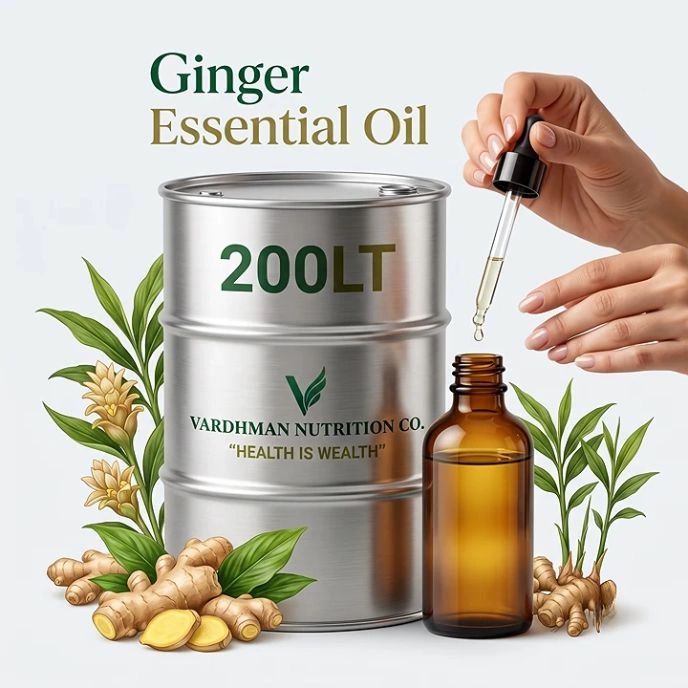
Ginger Essential Oil is a natural aromatic oil obtained from the rhizomes of the ginger plant, botanically identified as Zingiber officinale and belonging to the Zingiberaceae family. Known for its characteristic warm, spicy, fresh and earthy aroma, Ginger Essential Oil is widely considered a versatile botanical ingredient for cosmetic, personal care, aromatherapy, fragrance, perfumery, wellness and selected food-related applications.
Vardhman Nutrition Co. is a Ginger Essential Oil Manufacturer, Bulk Supplier and Exporter from India, serving international B2B customers with natural botanical oils for commercial and industrial applications. We work with importers, wholesalers, distributors, manufacturers, private label companies, cosmetic businesses, personal care brands, fragrance manufacturers and other professional buyers.
Our Natural Ginger Essential Oil is supplied with a focus on consistent aromatic characteristics and commercial sourcing requirements. Depending on the application, buyers can discuss bulk quantity, packaging, specifications, technical documentation and destination-country requirements.
As an export-focused Ginger Oil Supplier from India, Vardhman Nutrition Co. supports international sourcing requirements for customers across the USA, UK, Europe, Germany, UAE, Australia, South Korea and other global markets.
What is Ginger Essential Oil?
Ginger Essential Oil is an aromatic botanical oil derived from the rhizomes of Zingiber officinale. Ginger rhizomes are naturally rich in volatile aromatic constituents that contribute to the oil's recognizable spicy and warm fragrance.
Unlike ordinary ginger used as a culinary spice, essential oil represents the concentrated volatile aromatic fraction obtained through an appropriate extraction process. Its strong and distinctive aroma makes it useful as an ingredient in formulations where a natural ginger character is desired.
The oil is generally associated with a warm, spicy, fresh, earthy and slightly woody fragrance profile. This combination allows Ginger Essential Oil to be used across several industries, particularly those working with natural aromatic ingredients.
For commercial buyers, the exact physical characteristics and chemical composition may vary according to the botanical source, raw material quality, processing conditions and individual batch.
Ginger Essential Oil Botanical Information
Understanding the botanical identity of an essential oil is important for professional ingredient sourcing.
| Botanical Parameter | Information |
|---|---|
| Common Name | Ginger |
| Product Name | Ginger Essential Oil |
| Botanical Name | Zingiber officinale |
| Botanical Family | Zingiberaceae |
| Plant Part Used | Rhizome |
| Product Category | Essential Oil |
| Appearance | Pale Yellow to Golden Yellow |
| Aroma | Warm, Spicy, Fresh and Earthy |
| Supply Type | Bulk, Wholesale and B2B |
Ginger has been recognized as an important aromatic botanical for centuries and is associated with traditional botanical practices in different regions. Today, Ginger Essential Oil is valued primarily as a natural aromatic ingredient for modern commercial formulations.
The botanical source, processing method and product specifications can influence the final aroma and composition of the oil. Buyers requiring detailed product information can request the relevant technical specifications and batch documentation.
Natural Ginger Essential Oil
Natural Ginger Essential Oil is appreciated for its strong botanical identity and characteristic spicy aroma. The oil can provide a recognizable ginger note to fragrance compositions, personal care products, aromatherapy blends and other suitable formulations.
At Vardhman Nutrition Co., we focus on supplying Ginger Essential Oil for professional B2B applications. Commercial customers may require different specifications depending on their manufacturing process and end-product category.
Our Ginger Oil can be considered by businesses looking for:
- Natural botanical oil
- Ginger-derived aromatic ingredient
- Bulk essential oil supply
- Wholesale Ginger Oil
- Cosmetic ingredient supply
- Aromatherapy ingredient
- Fragrance and perfumery ingredient
- Private label essential oil supply
- Export-oriented sourcing from India
For commercial enquiries, product requirements can be evaluated according to the customer's intended application, quantity, packaging and destination market.
Key Characteristics of Ginger Essential Oil
Ginger Essential Oil has a distinctive aromatic identity that separates it from many other essential oils.
Its commonly recognized characteristics include:
- Warm aromatic profile
- Spicy fragrance
- Fresh ginger-like character
- Earthy undertones
- Slightly woody nuances
- Rich and noticeable aroma
- Botanical fragrance identity
- Versatile blending potential
- Suitability for various aromatic formulations
The exact fragrance intensity and composition can vary according to the ginger source, extraction conditions and batch.
For manufacturers, this makes batch consistency and appropriate product documentation important considerations when selecting a Ginger Essential Oil Supplier.
Ginger Essential Oil Uses
Ginger Essential Oil has applications in several commercial sectors. Its warm and spicy aroma allows manufacturers to incorporate it into different types of formulations.
Common commercial applications include:
- Cosmetics
- Personal care products
- Aromatherapy
- Wellness products
- Massage oils
- Spa products
- Perfumes
- Fragrances
- Soaps
- Hair-care formulations
- Skin-care formulations
- Herbal products
- Natural product formulations
- Selected food-related applications
- Private label products
The suitability of Ginger Essential Oil depends on the intended application, formulation requirements, product grade and regulations applicable in the destination market.
Ginger Essential Oil for Cosmetics
The distinctive aroma of Ginger Essential Oil makes it a useful botanical ingredient for selected cosmetic formulations.
Cosmetic manufacturers may consider Ginger Oil for products such as:
- Creams
- Lotions
- Body oils
- Facial oils
- Cleansers
- Soaps
- Body-care products
- Botanical cosmetic formulations
- Massage preparations
Ginger Essential Oil can contribute a warm and spicy aromatic character to cosmetic products and can be combined with other suitable essential oils or fragrance ingredients.
Manufacturers should determine the appropriate concentration and formulation compatibility according to the specific finished product.
Ginger Oil for Personal Care Products
The personal care industry uses natural aromatic ingredients to develop products with distinctive fragrance profiles. Ginger Oil can be incorporated into suitable personal care formulations where a warm botanical aroma is required.
Potential applications include:
- Body washes
- Bath products
- Soaps
- Massage oils
- Body oils
- Natural cleansers
- Hair oils
- Shampoos
- Scalp-care formulations
- Botanical personal care products
For commercial manufacturing, the oil should be evaluated according to the formulation, intended use and regulatory requirements of the target market.
Ginger Essential Oil for Aromatherapy
Ginger Essential Oil for Aromatherapy is valued for its warm, spicy and invigorating aromatic character. It can be used as part of aromatic blends designed for diffusers, massage preparations, spa products and wellness applications.
Aromatherapy businesses may use Ginger Oil in:
- Essential oil blends
- Diffuser formulations
- Massage oils
- Spa products
- Wellness blends
- Bath preparations
- Aromatic compositions
Ginger Essential Oil can also be blended with other botanical oils to develop customized fragrance profiles.
For businesses purchasing Bulk Ginger Essential Oil, specifications, packaging and quantity can be discussed according to commercial requirements.
Ginger Essential Oil for Perfume and Fragrance
Ginger's warm and spicy aroma makes its essential oil suitable for fragrance-oriented applications.
Perfume and fragrance manufacturers may use Ginger Essential Oil in:
- Men's perfumes
- Unisex fragrances
- Colognes
- Natural perfumes
- Fragrance blends
- Personal care fragrances
- Soap fragrances
- Botanical fragrance compositions
Its spicy character can add warmth and depth to fragrance formulations and can be combined with floral, citrus, woody and other aromatic ingredients.
For fragrance applications, manufacturers should evaluate the oil according to their formulation requirements and applicable fragrance regulations.
Ginger Oil for Soap Manufacturing
Natural essential oils are commonly used to add fragrance to soaps and bath products. Ginger Essential Oil can provide a recognizable warm and spicy botanical aroma to suitable soap formulations.
It may be considered for:
- Handmade soaps
- Botanical soaps
- Natural soaps
- Body cleansers
- Bath products
- Liquid soap formulations
- Spa products
Manufacturers can select suitable packaging and supply quantities according to their production requirements.
Ginger Essential Oil for Hair Care
Ginger Oil may be incorporated into selected hair-care and scalp-care formulations as a botanical aromatic ingredient.
Potential applications include:
- Hair oils
- Herbal shampoos
- Scalp-care products
- Hair serums
- Botanical conditioners
- Massage oils
- Personal care formulations
The final suitability of the oil should be determined by the manufacturer based on formulation compatibility, concentration and applicable regulations.
Ginger Essential Oil for Food-Related Applications
Ginger is a well-known aromatic botanical used in food and beverage products. Ginger Essential Oil may be relevant to selected food flavour and aroma applications, provided the appropriate product grade and regulatory requirements are met.
Potential applications may include:
- Selected beverages
- Herbal tea products
- Confectionery
- Bakery products
- Flavour formulations
- Food aroma applications
- Botanical food products
Food manufacturers should confirm the appropriate grade, permitted use, specifications and regulatory requirements for their target market before using Ginger Essential Oil in food products.
Ginger Essential Oil for Wellness Products
Ginger's recognizable warm and spicy aroma has made it a popular ingredient in wellness-oriented formulations.
It can be considered for:
- Wellness oils
- Massage blends
- Spa preparations
- Aromatherapy products
- Bath products
- Herbal wellness formulations
- Natural aromatic blends
For commercial products, manufacturers should ensure that the intended application and product claims comply with the regulations of the destination market.
Natural Constituents of Ginger Essential Oil
The chemical composition of Ginger Essential Oil consists of naturally occurring volatile compounds. The relative concentration of these constituents may vary depending on botanical origin, raw material, extraction method and batch.
Commonly associated constituents may include:
- Zingiberene
- Beta-Sesquiphellandrene
- Alpha-Curcumene
- Beta-Bisabolene
- Camphene
- Limonene
- Cineole
- Linalool
- Borneol
- Phellandrene
- Farnesene
Ginger-derived materials may also contain other naturally occurring compounds, while the exact composition of the essential oil should be determined through appropriate analytical testing.
For buyers requiring detailed chemical information, a GC-MS report can provide useful information about the volatile constituents present in a particular batch.
Physical Properties of Ginger Essential Oil
The general physical characteristics of Ginger Essential Oil may include:
Color
Usually pale yellow to golden yellow.
Odor
Warm, spicy, fresh, earthy and characteristic of ginger.
Appearance
Clear to slightly varying liquid depending on product characteristics.
Aroma Strength
Moderate to strong, with a distinctive spicy botanical profile.
Plant Source
Ginger rhizome.
Botanical Name
Zingiber officinale.
Actual specifications such as density, refractive index, optical rotation and other analytical parameters should be confirmed through the applicable product specification or Certificate of Analysis.
Ginger Essential Oil Extraction Process
The quality of an essential oil depends partly on the quality of its raw material and the extraction process used to obtain the volatile aromatic fraction.
Ginger Essential Oil is commonly produced using steam distillation.
1. Selection of Ginger Rhizomes
Suitable ginger rhizomes are selected as the raw botanical material. Mature and properly handled rhizomes are preferred for commercial processing.
2. Cleaning of Raw Material
The rhizomes are cleaned to remove soil, foreign matter and unwanted impurities.
3. Cutting and Preparation
The cleaned ginger is suitably cut or prepared before entering the distillation system. This helps expose the botanical material during processing.
4. Steam Distillation
The prepared ginger material is placed inside the distillation chamber. Steam is passed through the plant material, allowing volatile aromatic components to move with the steam.
5. Condensation
The steam and volatile oil vapours pass into a condenser, where they are cooled and converted into liquid form.
6. Oil Separation
The condensed liquid contains water and essential oil. A suitable separation process is used to collect the essential oil.
7. Filtration
The extracted oil may be filtered as required to obtain a clean commercial product.
8. Final Storage
After processing, Ginger Essential Oil is transferred into suitable, tightly closed containers and stored under appropriate conditions to protect its quality.
Ginger Essential Oil Quality Control
For international B2B buyers, product quality and consistency are important parts of the sourcing process.
Important quality considerations may include:
- Correct botanical identity
- Raw material quality
- Appearance
- Aroma profile
- Chemical composition
- Batch consistency
- Physical specifications
- Appropriate packaging
- Storage conditions
- Technical documentation
Vardhman Nutrition Co. focuses on supplying Ginger Essential Oil according to commercial product requirements and supporting buyers with relevant technical information where applicable.
Ginger Essential Oil COA and Technical Documents
Professional buyers may require technical documentation before purchasing essential oils for manufacturing or distribution.
Depending on the product, batch and application, relevant documentation may include:
- Certificate of Analysis (COA)
- GC-MS Report
- Safety Data Sheet (SDS/MSDS)
- Technical Data Sheet (TDS)
- Allergen Statement
- IFRA-related documentation, where applicable
- Other product-specific documents
Document availability depends on the particular product, batch, intended application and customer requirements.
Bulk Ginger Essential Oil Supplier from India
Vardhman Nutrition Co. supplies Bulk Ginger Essential Oil to international B2B customers seeking commercial quantities from India.
Our supply model is suitable for:
- Importers
- Wholesalers
- Distributors
- Traders
- Cosmetic manufacturers
- Personal care manufacturers
- Aromatherapy businesses
- Perfume manufacturers
- Fragrance companies
- Herbal product manufacturers
- Food ingredient businesses
- Private label brands
- Contract manufacturers
Businesses can discuss their required quantity, specifications, packaging and destination country for commercial sourcing.
Wholesale Ginger Essential Oil
Wholesale Ginger Essential Oil is suitable for companies that purchase essential oils for resale, distribution, manufacturing or formulation.
Wholesale buyers may require:
- Regular supply
- Bulk quantities
- Suitable export packaging
- Product specifications
- Technical documents
- Commercial quotations
- Shipment coordination
- Customized supply arrangements
Vardhman Nutrition Co. works with international buyers seeking an India-based source for Ginger Essential Oil and other botanical ingredients.
Ginger Essential Oil Manufacturer in India
As a Ginger Essential Oil Manufacturer in India, Vardhman Nutrition Co. focuses on supplying natural botanical oils for international commercial applications.
Our approach is centered around:
- Product consistency
- Natural botanical sourcing
- Commercial bulk supply
- Export-oriented packaging
- Technical documentation support
- B2B communication
- International shipment coordination
Buyers can share their product requirements so that suitable supply options can be evaluated according to quantity, application and destination market.
Ginger Essential Oil Exporter from India
India is an important source of botanical ingredients and natural products for international markets. Vardhman Nutrition Co. serves overseas businesses seeking Ginger Essential Oil from India for commercial use.
We support enquiries from:
- USA
- UK
- Germany
- Europe
- UAE
- Australia
- South Korea
- Other international markets
Export requirements can differ from one country to another. Therefore, buyers should provide their destination country along with product specifications and intended application when requesting a quotation.
Ginger Oil for Importers and Distributors
Importers and distributors require suppliers capable of supporting commercial quantities, suitable packaging and repeat purchasing requirements.
Our Ginger Oil Wholesale Supply can be considered for businesses involved in:
- Essential oil distribution
- Botanical ingredient trading
- Cosmetic raw material distribution
- Personal care manufacturing
- Aromatherapy product manufacturing
- Fragrance ingredient supply
- Herbal product manufacturing
- Private label products
For regular sourcing, buyers can discuss expected order volumes and preferred packaging formats.
Private Label Ginger Essential Oil
Private label businesses may require essential oils under their own brand name and packaging specifications.
Depending on the project, private label and OEM requirements may include:
- Bulk Ginger Essential Oil
- Customized packaging
- Product labeling
- Brand-specific requirements
- Different order quantities
- Technical documentation
- Export packaging
- International shipment arrangements
Buyers interested in Private Label Ginger Essential Oil can provide their quantity, packaging format, label requirements and destination country for commercial evaluation.
Ginger Essential Oil Export Packaging
Proper packaging is important for the safe storage, handling and transportation of essential oils.
Depending on the order quantity and customer requirements, packaging options may include:
- Aluminium bottles
- Aluminium containers
- Export-grade drums
- Bulk industrial containers
- Customized packaging
Packaging selection can depend on product quantity, transportation requirements, storage conditions and buyer specifications.
Ginger Essential Oil Storage
Proper storage can help preserve the quality and characteristic aroma of Ginger Essential Oil.
Recommended storage practices include:
- Keep containers tightly closed.
- Store in a cool and dry location.
- Protect from direct sunlight.
- Avoid unnecessary exposure to heat.
- Minimize prolonged exposure to air.
- Use suitable containers for essential oil storage.
- Protect the product from excessive humidity.
- Follow the recommended storage conditions provided with the product.
For bulk inventory, suitable storage conditions are particularly important because repeated exposure to air, heat and light may affect the quality of aromatic oils over time.
Ginger Essential Oil Shelf Life
The shelf life of Ginger Essential Oil depends on several factors, including its composition, packaging and storage environment.
Important factors include:
- Temperature
- Light exposure
- Oxygen exposure
- Container quality
- Moisture
- Storage conditions
- Frequency of opening
Possible signs of deterioration may include:
- Significant aroma changes
- Unusual or stale odor
- Noticeable darkening
- Increased viscosity
- Changes in overall appearance
For commercial use, buyers should follow the manufacturer's recommended shelf-life and storage information provided for the specific batch or product.
Why Choose Vardhman Nutrition Co.?
Selecting the right supplier is important when sourcing essential oils for international manufacturing and distribution.
Vardhman Nutrition Co. provides an export-oriented B2B sourcing approach for Ginger Essential Oil.
Our Key Supply Advantages
- India-based Ginger Essential Oil Manufacturer
- Bulk Ginger Essential Oil Supplier
- Wholesale Ginger Oil supply
- International B2B export focus
- Natural botanical oil sourcing
- Support for importers and distributors
- Cosmetic and personal care supply
- Aromatherapy and wellness applications
- Fragrance and perfumery applications
- Selected food-related applications
- Private label and OEM requirements
- Suitable export packaging
- Technical documentation support
- International shipment coordination
- Commercial sourcing assistance
Our goal is to build reliable long-term B2B relationships with businesses seeking natural essential oils and botanical ingredients from India.
How to Buy Ginger Essential Oil in Bulk from India
If you are planning to buy Ginger Essential Oil in bulk from India, providing your complete requirement can help in preparing a suitable commercial response.
Please share:
- Required quantity
- Intended application
- Product specifications
- Packaging requirement
- Destination country
- Required technical documents
- Sample requirement, if applicable
- Private label requirement, if applicable
After receiving these details, supply requirements can be evaluated according to your application and destination market.
This process is suitable for importers, wholesalers, distributors, manufacturers and private label businesses looking for Bulk Ginger Essential Oil from India.
Ginger Essential Oil for Global B2B Buyers
International businesses increasingly source botanical ingredients from reliable suppliers that can support both product and export requirements.
Vardhman Nutrition Co. works with buyers looking for Ginger Essential Oil for:
- Manufacturing
- Wholesale distribution
- Ingredient trading
- Cosmetics
- Personal care
- Aromatherapy
- Fragrance
- Perfumery
- Herbal products
- Wellness products
- Private label manufacturing
Our international B2B supply approach allows buyers to discuss their specific quantity, packaging, documentation and destination requirements before placing an order.
Frequently Asked Questions About Ginger Essential Oil
What is Ginger Essential Oil?
Ginger Essential Oil is a natural aromatic oil derived from the rhizomes of Zingiber officinale. It is recognized for its warm, spicy, fresh and earthy aroma.
What is the botanical name of Ginger Essential Oil?
The botanical source is Zingiber officinale, which belongs to the Zingiberaceae family.
What does Ginger Essential Oil smell like?
It generally has a warm, spicy, fresh and earthy aroma with distinctive ginger-like characteristics.
What is Ginger Essential Oil used for?
It can be used in suitable cosmetic, personal care, aromatherapy, wellness, fragrance, perfume, soap, herbal and selected food-related applications.
Is Ginger Essential Oil available in bulk?
Yes. Bulk and wholesale quantities can be supplied for international B2B requirements, subject to product specifications, quantity, packaging and destination.
Where can I buy Ginger Essential Oil in bulk?
International buyers can contact Vardhman Nutrition Co. for commercial sourcing of Ginger Essential Oil from India.
Do you supply Ginger Essential Oil to international buyers?
Yes. Vardhman Nutrition Co. focuses on international B2B supply and export requirements for overseas customers.
Can Ginger Essential Oil be used in cosmetics?
Ginger Essential Oil may be used in suitable cosmetic and personal care formulations, depending on the formulation, concentration and applicable regulations.
Can Ginger Essential Oil be used in aromatherapy?
Yes. Its warm and spicy aromatic profile makes it suitable for selected aromatherapy and wellness formulations.
Can you supply Ginger Oil for private label?
Private label, OEM and customized supply requirements can be discussed according to quantity, packaging, labeling, specifications and destination.
Do you provide COA and GC-MS?
Relevant documentation such as COA, GC-MS, SDS/MSDS and TDS may be available depending on the product, batch and customer requirements.
What details are required for a quotation?
Buyers should ideally provide the required quantity, intended application, packaging preference, destination country and required specifications. Sample and documentation requirements can also be mentioned.
Contact a Ginger Essential Oil Manufacturer from India
Looking for a Ginger Essential Oil Manufacturer, Bulk Supplier and Exporter from India?
Vardhman Nutrition Co. supplies Natural Ginger Essential Oil for international B2B customers involved in manufacturing, wholesale distribution, formulation, fragrance, cosmetics, personal care, aromatherapy and private label businesses.
Whether you are an importer, wholesaler, distributor, manufacturer or private label company, you can contact us with your Ginger Essential Oil requirement.
For a Commercial Enquiry, Share:
- Product: Ginger Essential Oil
- Required Quantity
- Destination Country
- Intended Application
- Packaging Preference
- Product Specifications
- Technical Documentation Requirements
- Sample Requirement, if applicable
We can evaluate your requirement and discuss suitable bulk supply and export options.
Choose Vardhman Nutrition Co. for Bulk Ginger Essential Oil
Vardhman Nutrition Co. is an India-based Ginger Essential Oil Manufacturer, Supplier and Exporter focused on international B2B sourcing.
We support businesses looking for Pure Ginger Essential Oil, Natural Ginger Oil, Bulk Ginger Essential Oil, Wholesale Ginger Oil and Private Label Ginger Essential Oil from India.
Contact Vardhman Nutrition Co. today for Ginger Essential Oil bulk supply, wholesale enquiries and international export requirements.






.webp)
.webp)
.webp)
.webp)