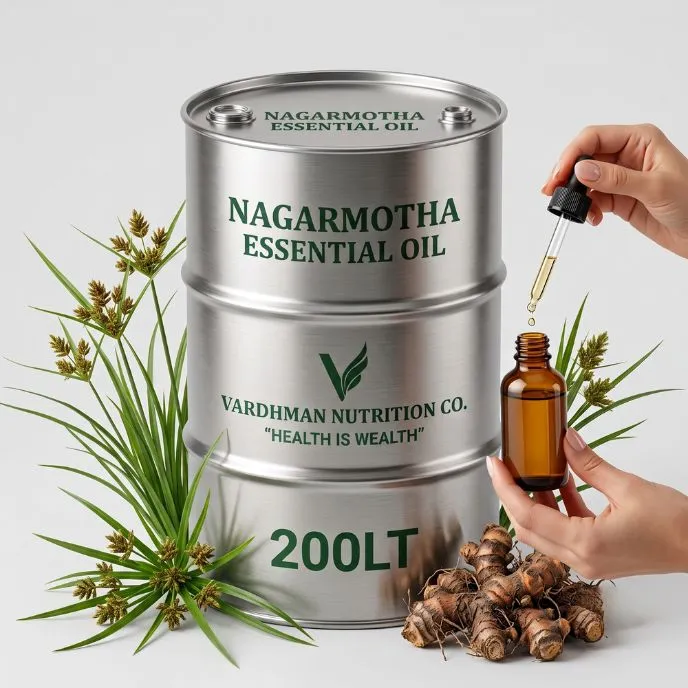
Nagarmotha Essential Oil – Cypriol Oil Manufacturer & Global B2B Supplier from India
Nagarmotha Essential Oil, widely known in international fragrance markets as Cypriol Oil, is a distinctive botanical oil obtained from the roots and rhizomes of Cyperus scariosus. Recognized for its deep earthy, woody, smoky and subtly sweet aroma, Nagarmotha Oil is valued by perfume manufacturers, cosmetic formulators, incense producers, aromatherapy businesses and herbal product companies.
Vardhman Nutrition Co. supplies Natural Nagarmotha Essential Oil from India for international B2B requirements, including bulk supply, wholesale orders, private label projects and commercial manufacturing applications. Our supply is intended for importers, distributors, wholesalers, fragrance houses, cosmetic manufacturers, wellness companies and other businesses sourcing botanical essential oils from India.
Discover the Botanical Source of Cypriol Oil
Nagarmotha belongs to the Cyperaceae family and is botanically identified as Cyperus scariosus. Unlike many essential oils that are primarily obtained from leaves or flowers, Nagarmotha Oil is associated with the plant's roots and rhizomes, which contain the aromatic compounds responsible for its characteristic fragrance.
The plant is traditionally found in moist and marshy environments in different parts of India. Regions associated with its cultivation and collection include Uttar Pradesh, Madhya Pradesh, Bihar, West Bengal, Assam and Rajasthan.
The underground botanical material is carefully selected and processed before essential oil extraction. This root-derived origin contributes to the rich, grounded character that makes Nagarmotha Essential Oil particularly useful in fragrance and aromatic formulations.
Nagarmotha Root Oil: Origin, Plant and Raw Material
The quality of Cypriol Oil begins with its botanical raw material. Mature roots and rhizomes are selected, cleaned and prepared for extraction. Proper handling of the raw material helps retain the natural aromatic profile of the finished oil.
Nagarmotha has a long association with traditional Indian botanical practices and Ayurveda, where the plant is known as Musta or Mustak. Today, its essential oil is also commercially valued outside traditional applications, especially in perfumery, cosmetics, incense and fragrance manufacturing.
For B2B buyers, the source and processing of the botanical material are important because variations in raw material can influence aroma, colour and overall oil characteristics.
The Distinctive Fragrance Profile of Nagarmotha Oil
One of the strongest characteristics of Nagarmotha Essential Oil is its complex fragrance. The aroma is generally described as earthy, woody, smoky and slightly spicy, with herbal and subtly sweet nuances.
- Earthy
- Woody
- Smoky
- Slightly spicy
- Herbal
- Subtly sweet
- Deep and grounding
This combination gives Cypriol Oil an interesting position within natural perfumery. It can contribute depth to fragrance compositions while also working well with other woody, earthy and aromatic materials.
What Gives Nagarmotha Essential Oil Its Unique Character?
The distinctive profile of Nagarmotha Oil is associated with its naturally occurring aromatic constituents. The composition can vary according to botanical origin, growing conditions, raw-material maturity, processing conditions and extraction parameters.
Its aromatic character is commonly associated with compounds such as:
- Cyperene
- Cyperone
- Cyperotundone
- Cyperol
- Mustakone
- Rotundene
- Patchoulenone
- Valencene
- Alpha-Copaene
- Beta-Selinene
- Delta-Cadinene
- Gamma-Muurolene
- Caryophyllene Oxide
- Patchoulol
- Alpha-Gurjunene
- Limonene
- Camphene
- Alpha-Pinene
- Beta-Pinene
These constituents contribute to the characteristic fragrance profile of Cypriol Essential Oil.
Key Aromatic Compounds in Cypriol Essential Oil
Nagarmotha Oil contains naturally occurring sesquiterpenes, terpenoids and other aromatic compounds. Among the constituents frequently associated with its profile are cyperene, cyperone, cyperotundone, cyperol and mustakone.
The presence and relative proportions of these compounds can influence the fragrance quality and sensory character of different batches. For commercial buyers, analytical documentation such as GC-MS, where applicable, can provide useful information about the chemical profile of a supplied batch.
Nagarmotha Oil: Appearance, Aroma and Technical Profile
Nagarmotha Essential Oil generally ranges from light yellow to deep amber in appearance. Its aroma is characteristically earthy, woody, smoky and slightly spicy, with a subtle sweet undertone.
| Parameter | Typical Description |
|---|---|
| Botanical Name | Cyperus scariosus |
| Botanical Family | Cyperaceae |
| Plant Part | Roots and Rhizomes |
| Appearance | Light Yellow to Deep Amber |
| Aroma | Earthy, Woody, Smoky, Spicy, Slightly Sweet |
| Viscosity | Light to Medium |
| Solubility | Insoluble in Water; Compatible with Alcohol and Oils |
| Density | Approximately 0.95–1.005 |
| Refractive Index | Approximately 1.498–1.512 |
| Flash Point | Generally Above 100°C |
| Extraction | Steam Distillation |
Specifications can vary according to the botanical material, processing conditions and batch. Buyers requiring exact specifications should request the relevant technical documentation for the intended batch.
Why Fragrance Makers Choose Nagarmotha Oil
Cypriol Oil has a particularly strong place in natural and botanical fragrance development because of its deep aromatic character.
It can be incorporated into fragrance compositions where manufacturers want to introduce:
- Woody depth
- Earthy complexity
- Smoky nuances
- Warm aromatic character
- Fragrance persistence
- A natural botanical dimension
Nagarmotha Oil can also be combined with other essential oils and aromatic materials to develop more complex fragrance profiles.
Cypriol Oil in Luxury Perfume Formulations
Nagarmotha Essential Oil is used by fragrance developers in a variety of perfume concepts. Its rich woody-earthy character can complement both traditional and contemporary fragrance compositions.
Potential applications include:
- Fine perfumes
- Natural fragrances
- Woody perfumes
- Oriental-style fragrance compositions
- Oud-inspired formulations
- Unisex perfumes
- Botanical fragrance blends
- Attars and aromatic compositions
Building Long-Lasting Fragrance Blends with Nagarmotha
One of the commercially interesting characteristics of Nagarmotha Oil is its usefulness in fragrance structures where longevity and depth are desired.
Cypriol Oil can be combined with materials such as:
- Sandalwood
- Patchouli
- Vetiver
- Lavender
- Geranium
- Oud-related fragrance materials
- Other woody essential oils
- Earthy botanical extracts
The resulting fragrance profile depends on the formulation ratio and the characteristics of the other ingredients used. For perfume manufacturers, Nagarmotha Oil can therefore serve as a useful natural ingredient for developing layered and sophisticated fragrance systems.
Nagarmotha Oil for Cosmetics and Beauty Products
Natural essential oils are widely used as aromatic ingredients in cosmetic and personal-care formulations. Nagarmotha Essential Oil can be considered for products where a woody, earthy botanical aroma is desired.
Potential applications include:
- Creams
- Lotions
- Body oils
- Facial-care formulations
- Botanical skincare products
- Natural personal-care products
- Bath preparations
Cosmetic manufacturers should evaluate the oil according to their formulation requirements, intended application, concentration and applicable regulatory standards.
Formulating Hair and Scalp Care Products with Cypriol Oil
Nagarmotha Oil is also used in botanical hair-care concepts, particularly formulations designed around traditional herbal ingredients and aromatic oils.
It may be incorporated into:
- Hair oils
- Scalp-care oils
- Herbal hair preparations
- Botanical shampoos
- Hair masks
- Massage oils
- Natural personal-care products
Its earthy aroma can also contribute to the overall sensory profile of herbal hair products. Any cosmetic or personal-care formulation should be evaluated for appropriate usage levels and compatibility with the complete formulation.
Nagarmotha Oil in Skin-Care Formulations
Cypriol Oil can be incorporated into selected botanical skincare products where an earthy aromatic profile is preferred.
It may be used in formulations such as:
- Botanical body oils
- Massage blends
- Herbal creams
- Natural lotions
- Aromatic skincare products
- Spa formulations
Traditional uses and laboratory research have explored various properties of Nagarmotha constituents, including antimicrobial, antioxidant and anti-inflammatory activity. However, such research should not be interpreted as proof of a medical benefit for every finished cosmetic product.
Aromatherapy and Relaxation Uses of Nagarmotha Oil
Nagarmotha Essential Oil has a deep, grounding fragrance that makes it suitable for aromatic wellness applications.
- Essential oil diffusers
- Aromatherapy blends
- Meditation environments
- Yoga spaces
- Personal aromatic blends
- Bath oils
- Relaxation products
- Wellness formulations
Its woody and earthy character is often selected when formulators want to create a calm, warm and grounded aromatic atmosphere.
Nagarmotha Oil for Spa, Massage and Wellness Products
Spa and wellness manufacturers can incorporate Cypriol Oil into aromatic massage and relaxation concepts.
When appropriately diluted in a suitable carrier oil, it may be included in:
- Massage oils
- Spa blends
- Body oils
- Bath preparations
- Aromatherapy products
- Wellness gift sets
- Relaxation-oriented fragrance blends
The finished product should always be formulated according to the intended application and relevant safety requirements.
Traditional Botanical Applications of Nagarmotha
Nagarmotha has a longstanding place in traditional Indian botanical practices. The plant is traditionally known as Musta/Mustak in Ayurveda.
Traditional applications have included botanical preparations associated with digestive wellness, aromatic use and general herbal practices.
Modern commercial interest in Nagarmotha extends beyond traditional applications into fragrance, cosmetics, personal care, incense and wellness manufacturing.
Cypriol Oil in Incense, Dhoop and Home Fragrance
The strong woody and smoky character of Nagarmotha Essential Oil makes it suitable for aromatic products designed for home and ambient fragrance.
Commercial applications can include:
- Incense
- Dhoop
- Incense sticks
- Cones
- Candles
- Home fragrance products
- Air freshening products
- Aromatic blends
It can also be combined with other woody and resinous materials to create richer incense profiles.
Nagarmotha Essential Oil for Soap and Bath Products
Soap and bath-product manufacturers may use Nagarmotha Oil when a warm botanical fragrance is required.
Potential applications include:
- Handmade soaps
- Botanical soaps
- Bath oils
- Bath salts
- Shower products
- Body washes
- Aromatic bath preparations
Its fragrance can add an earthy and woody dimension to natural and herbal product concepts.
Natural Insect-Repellent and Deodorizing Applications
Nagarmotha Oil has also attracted interest for aromatic products designed around natural insect-deterrent and deodorizing concepts.
Its strong botanical aroma can be incorporated into selected:
- Natural insect-repellent formulations
- Outdoor aromatic products
- Air fresheners
- Deodorizing blends
- Botanical household products
Research has investigated Nagarmotha and its constituents for insect-related and antimicrobial applications, but finished-product performance depends on the formulation and application method.
How Nagarmotha Roots Are Processed into Essential Oil
The production of Natural Nagarmotha Essential Oil involves several important stages. Proper processing helps maintain the characteristic aromatic profile of the botanical material.
Selection and Preparation of Nagarmotha Roots
Suitable roots and rhizomes are selected and cleaned to remove unwanted foreign matter. The material is then prepared for extraction. Controlled preparation is important because the condition of the raw botanical material can influence the final essential oil.
Steam Distillation of the Botanical Material
Nagarmotha roots and rhizomes are processed through steam distillation. Steam passes through the prepared botanical material and releases the volatile aromatic compounds. The vapour containing the essential oil is then directed toward a cooling system.
Oil Separation, Filtration and Final Handling
After condensation, the essential oil is separated from the aqueous portion. The recovered oil can then undergo appropriate filtration and handling before being filled into suitable containers.
For B2B supply, proper batch identification and storage are important for maintaining product consistency throughout the commercial supply chain.
Quality Factors B2B Buyers Should Evaluate
When sourcing Nagarmotha Essential Oil for manufacturing, buyers should consider more than aroma alone.
- Correct botanical identity
- Suitable raw-material sourcing
- Consistent aromatic profile
- Appearance and physical characteristics
- Batch consistency
- Appropriate packaging
- Technical documentation
- Storage conditions
- Export requirements
- Supplier reliability
For larger commercial orders, buyers may also request a sample before proceeding with bulk procurement.
Bulk Nagarmotha Essential Oil for Commercial Manufacturing
Bulk Nagarmotha Essential Oil is suitable for companies that require larger quantities for ongoing production.
Vardhman Nutrition Co. supplies Cypriol Oil for B2B applications involving:
- Fragrance manufacturing
- Perfume production
- Cosmetic manufacturing
- Personal-care products
- Aromatherapy
- Incense manufacturing
- Herbal products
- Private label products
- Home fragrance products
Bulk purchasing allows manufacturers and distributors to plan their supply requirements according to production schedules.
Wholesale Cypriol Oil Supply for International Buyers
Our Wholesale Nagarmotha Oil supply is intended for professional buyers including importers, wholesalers, distributors, fragrance companies and manufacturers.
Businesses sourcing from India can discuss:
- Required quantity
- Packaging format
- Product specifications
- Sample requirements
- Documentation
- Shipping requirements
- Private label requirements
- Export destination
Nagarmotha Essential Oil Exported from India
India is an important source of botanical raw materials and essential oils. Vardhman Nutrition Co. supplies Nagarmotha Essential Oil from India for international B2B markets.
Our export-oriented supply model supports buyers in markets including:
- USA
- UK
- Europe
- Germany
- UAE
- Australia
- South Korea
- Other international destinations
Importers and distributors can contact us with their destination-country requirements so that packaging and documentation can be discussed according to the order.
Packaging Options for Bulk and Export Orders
Proper packaging is essential for preserving essential oil quality during transportation and storage.
Depending on order requirements, suitable commercial packaging may be discussed for:
- Small sample quantities
- Commercial bottles
- Bulk containers
- Export shipments
- Private label packaging
Packaging should provide appropriate protection from light, air, heat and contamination.
Documentation Available for B2B Buyers
International buyers may require technical and commercial documentation before importing an essential oil.
Depending on the product and order requirements, documentation may include:
- Certificate of Analysis (COA)
- GC-MS Report
- Safety Data Sheet (SDS/MSDS)
- Technical Data Sheet (TDS)
- Product Specifications
- Allergen Information where applicable
- Other export-related documents as required
Document availability can depend on the specific product, batch and destination requirements.
Private Label and OEM Nagarmotha Oil Solutions
Companies developing their own botanical oil brands can discuss Private Label Nagarmotha Essential Oil supply with Vardhman Nutrition Co.
Private label projects may be suitable for:
- Essential oil brands
- Aromatherapy companies
- Wellness brands
- Cosmetic companies
- Natural personal-care businesses
- Online brands
- International distributors
Packaging, labeling and order requirements can be discussed according to the project's commercial scope and destination-market requirements.
Industries Using Nagarmotha Essential Oil
Nagarmotha Oil can serve multiple B2B industries because of its distinctive aromatic profile.
Fragrance and Perfumery
Used for woody, earthy, smoky and long-lasting fragrance concepts.
Cosmetics and Personal Care
Suitable for selected creams, lotions, body oils, soaps and botanical personal-care products.
Aromatherapy and Wellness
Used in diffusers, aromatic blends, massage oils and wellness products.
Incense and Home Fragrance
Suitable for dhoop, incense, candles and ambient fragrance formulations.
Herbal and Botanical Products
Relevant to businesses working with traditional botanical ingredients and herbal formulations.
Why Source Nagarmotha Oil from Vardhman Nutrition Co.?
Vardhman Nutrition Co. focuses on B2B supply of botanical essential oils from India for international customers.
For Nagarmotha Essential Oil, our approach is centered around:
- India-based manufacturing and supply
- Natural botanical oil sourcing
- Bulk and wholesale requirements
- Export-oriented packaging
- B2B customer support
- Product documentation
- Private label opportunities
- International buyer requirements
- Consistent commercial supply
Our goal is to provide a dependable sourcing option for companies looking for Natural Nagarmotha Essential Oil, Cypriol Oil Supplier and Bulk Nagarmotha Essential Oil from India.
How to Purchase Nagarmotha Essential Oil in Bulk
Businesses interested in purchasing Nagarmotha Oil can send their requirements directly to our team.
Please include:
- Required quantity
- Intended application
- Packaging preference
- Delivery destination
- Sample requirement, if applicable
- Documentation requirements
- Private label requirements, if applicable
Based on the requirement, the appropriate product and commercial details can be discussed.
Storage Guidelines for Maintaining Oil Quality
Nagarmotha Essential Oil should be protected from conditions that can accelerate deterioration.
- Keep the container tightly closed.
- Store in a cool, dry location.
- Protect from direct sunlight.
- Minimize unnecessary exposure to air.
- Use suitable, compatible containers.
- Keep away from excessive heat.
- Label containers clearly.
- Follow applicable handling and safety instructions.
For long-term storage, maintaining stable environmental conditions can help preserve the oil's natural aromatic characteristics.
Understanding the Shelf Life of Cypriol Oil
Under suitable storage conditions, Nagarmotha Essential Oil can generally maintain its quality for an extended period. The expected shelf life can vary depending on packaging, storage conditions, exposure to air and the condition of the oil when opened.
As a general commercial guideline, unopened oil may remain suitable for approximately 3–5 years, while opened oil may have a shorter practical life depending on handling and storage.
Changes in aroma, colour or overall appearance may indicate that the oil has undergone oxidation or deterioration.
Frequently Asked Questions About Nagarmotha Essential Oil
What is Nagarmotha Essential Oil?
Nagarmotha Essential Oil is a botanical oil obtained primarily from the roots and rhizomes of Cyperus scariosus. It is also widely known internationally as Cypriol Oil.
What is the botanical name of Nagarmotha?
The botanical name associated with Nagarmotha is Cyperus scariosus, belonging to the Cyperaceae family.
Why is Nagarmotha Oil also called Cypriol Oil?
Cypriol Oil is a commonly used international name for Nagarmotha Essential Oil, particularly within the fragrance and perfumery industry.
What does Nagarmotha Essential Oil smell like?
It has a distinctive earthy, woody and smoky aroma with slightly spicy, herbal and subtly sweet nuances.
Is Nagarmotha Oil suitable for perfume manufacturing?
Yes. Its deep woody-earthy profile makes it useful for perfume, fragrance, oud-inspired and botanical fragrance formulations.
Can Nagarmotha Essential Oil be purchased in bulk?
Yes. Bulk Nagarmotha Essential Oil can be supplied for commercial manufacturing, wholesale distribution and other B2B applications.
Do you supply Cypriol Oil to international buyers?
Yes. Vardhman Nutrition Co. supplies Nagarmotha/Cypriol Oil from India for international B2B buyers, subject to order and destination requirements.
Is private label Nagarmotha Oil available?
Private label and customized supply requirements can be discussed for suitable commercial projects.
What documents can be provided with bulk orders?
Depending on the product and order, documentation may include COA, GC-MS, SDS/MSDS, TDS and other relevant technical or commercial documents.
How should Nagarmotha Essential Oil be stored?
Store it tightly sealed in a cool, dry place away from direct sunlight, excessive heat and unnecessary exposure to air.
How can I request a quotation for Nagarmotha Oil?
Send your required quantity, packaging preference, application and delivery destination to Vardhman Nutrition Co. Our team can then discuss the appropriate bulk supply options.
Start Your Bulk Nagarmotha Oil Enquiry
If you are looking for a Nagarmotha Essential Oil Manufacturer, Cypriol Oil Supplier or Bulk Nagarmotha Essential Oil Exporter from India, Vardhman Nutrition Co. can support your B2B sourcing requirements.
We supply Natural Nagarmotha Essential Oil for fragrance, perfumery, cosmetics, personal care, aromatherapy, incense, herbal and other botanical applications.
Contact Vardhman Nutrition Co. for bulk and wholesale Nagarmotha Essential Oil from India. Share your required quantity, packaging, destination and product requirements to begin your sourcing enquiry.
















.webp)


.webp)

.webp)





.webp)