Jasmine Essential Oil Manufacturer & Bulk Exporter from India – B2B Supply
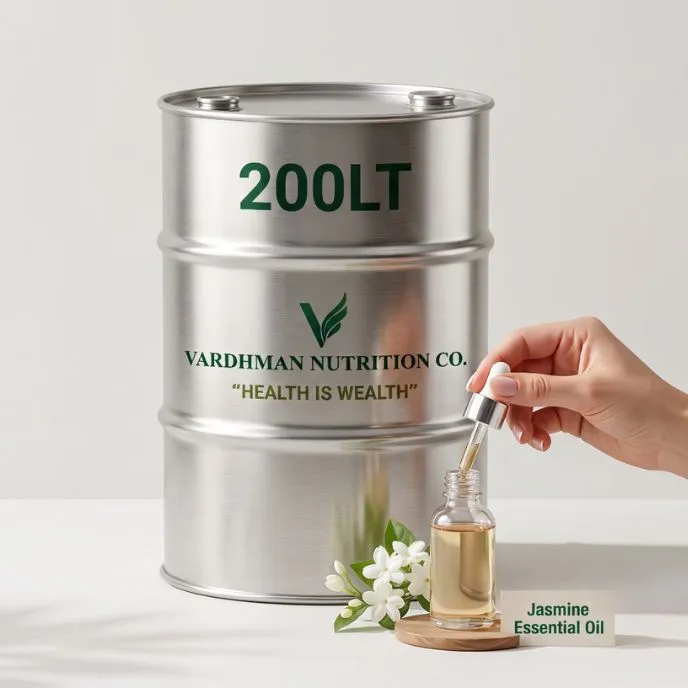
Vardhman Nutrition Co. is a reliable Jasmine Essential Oil Manufacturer in India, Jasmine Oil B2B Supplier, and international Jasmine Oil Exporter, supplying premium natural jasmine aromatic products for international commercial and industrial applications. Commonly known as Jasmine Oil, this highly valued floral ingredient is associated with the fragrant flowers of Jasminum grandiflorum, a flowering plant belonging to the Oleaceae family.
Jasmine is cultivated in several regions, including India, Egypt, Morocco, France, and China. Its rich, sweet, floral, warm, and captivating fragrance has made it one of the most valued ingredients in perfumery, cosmetics, personal care, aromatherapy, wellness, and premium fragrance formulations.
Because jasmine flowers are delicate and highly sensitive to heat, jasmine fragrance materials are commonly produced through extraction methods designed to preserve their natural aromatic profile. Jasmine Absolute is particularly important in commercial fragrance applications and is generally obtained through solvent extraction rather than conventional steam distillation.
Vardhman Nutrition Co. supports international importers, wholesalers, distributors, cosmetic manufacturers, perfume companies, aromatherapy businesses, personal care brands, and private-label manufacturers looking for Natural Jasmine Oil, Jasmine Absolute, Pure Jasmine Oil, and bulk jasmine aromatic ingredients according to their commercial requirements.
1. Jasmine Essential Oil – Botanical Origin and Natural Profile
Jasmine Essential Oil is associated with the fragrant flowers of Jasminum grandiflorum. The plant belongs to the Oleaceae family and is cultivated in different parts of the world for its highly valued flowers and aromatic characteristics.
Jasmine flowers are known for their delicate, sweet, rich, floral, and captivating fragrance. The natural aromatic profile makes jasmine particularly important for luxury fragrance and cosmetic product development.
The botanical source, geographical origin, harvesting conditions, extraction method, and processing techniques can influence the final aroma and chemical profile of jasmine aromatic products.
2. Jasmine Oil Also Known as Jasmine Absolute
Jasmine Oil is a commonly used commercial name for jasmine aromatic products. In professional fragrance and cosmetic applications, Jasmine Absolute is an important form of jasmine extract.
Unlike many essential oils that are commonly obtained through steam distillation, delicate jasmine flowers are generally processed using extraction methods that help preserve their complex fragrance.
For international B2B buyers, it is important to specify whether they require Jasmine Absolute, Jasmine Oil, or another jasmine aromatic material according to the intended application and product specification.
3. Natural Jasmine Oil Aroma and Appearance
Natural Jasmine Oil is valued primarily for its rich and sophisticated fragrance. Its aroma can be described as sweet, floral, warm, soft, intense, and captivating.
Depending on the product form and specification, jasmine aromatic material may range from pale yellow to amber or orange-brown in appearance and can have a relatively viscous consistency.
The final appearance and aroma may vary according to botanical source, extraction process, concentration, processing conditions, and storage.
4. Jasmine Absolute for Premium Fragrance Applications
Jasmine Absolute is widely appreciated in premium perfumery because it captures a concentrated representation of the characteristic fragrance of jasmine flowers.
It can be used in fine fragrances, natural perfume compositions, luxury personal care products, body fragrances, and other aromatic formulations.
Jasmine Absolute is particularly valued because jasmine flowers produce relatively small quantities of aromatic extract compared with the large amount of flowers required during processing, contributing to its premium positioning.
5. Jasmine Extraction Process – From Flower to Aromatic Extract
Jasmine flowers are delicate and require careful handling during processing. A typical Jasmine Absolute production process may involve several stages:
- Fresh jasmine flowers are carefully harvested.
- Flowers are handled to minimize unnecessary damage.
- The aromatic compounds are extracted using a suitable solvent.
- The initial extraction produces a wax-like aromatic material known as Jasmine Concrete.
- The concrete is treated with alcohol to separate waxy components.
- The aromatic fraction is separated and purified.
- The resulting Jasmine Absolute is filtered as required.
- The finished product is packed and stored under suitable conditions.
This type of extraction is designed to preserve the characteristic floral fragrance of jasmine.
6. Why Jasmine Flowers Require Special Extraction
Jasmine flowers are highly delicate and contain volatile fragrance compounds that can be affected by excessive heat.
For this reason, conventional high-temperature processing is generally not the preferred approach for obtaining the characteristic jasmine fragrance. Solvent extraction is commonly associated with the production of Jasmine Concrete and Jasmine Absolute.
This specialized processing contributes to the premium nature and distinctive aromatic complexity of jasmine extracts.
7. Key Natural Constituents of Jasmine Oil
Jasmine aromatic products contain numerous naturally occurring compounds that contribute to their characteristic fragrance.
Commonly associated constituents include:
- Benzyl Acetate
- Benzyl Benzoate
- Linalool
- Benzyl Alcohol
- Indole
- Jasmone
- Cis-Jasmone
- Methyl Jasmonate
- Farnesol
- Farnesene
- Nerolidol
- Geraniol
- Eugenol
- Phytol
- Isophytol
- Methyl Anthranilate
- Limonene
The exact composition may vary according to jasmine species, geographical origin, flower quality, extraction process, and product specification.
8. Distinctive Floral Profile of Jasmine Essential Oil
The fragrance profile of Jasmine Oil is one of its most important commercial characteristics.
Its sweet and rich floral aroma can provide elegance and depth to fragrance compositions. Jasmine is also frequently used as a valuable floral note in premium perfume development.
Its fragrance can be combined with other aromatic materials depending on the desired formulation and final product profile.
9. Jasmine Oil for Perfume and Fragrance Manufacturing
Jasmine is one of the most recognized floral ingredients in the fragrance industry.
Jasmine Oil or Jasmine Absolute may be used in:
- Fine perfumes
- Natural perfumes
- Luxury fragrances
- Eau de parfum formulations
- Body mists
- Fragrance concentrates
- Floral fragrance blends
- Personal fragrance products
- Premium aromatic products
Its distinctive floral profile makes it valuable for both traditional and modern fragrance compositions.
10. Jasmine Essential Oil for Cosmetics and Skin Care
Jasmine aromatic ingredients are commonly incorporated into cosmetic and skincare formulations where a premium floral fragrance and botanical positioning are desired.
Potential applications include:
- Face oils
- Creams
- Lotions
- Serums
- Body oils
- Massage products
- Bath products
- Premium skincare formulations
- Botanical personal care products
Manufacturers should determine the appropriate concentration, product specification, labeling requirements, and regulatory compliance for the destination market.
11. Jasmine Oil for Personal Care Products
Jasmine Oil can be incorporated into various personal care products because of its recognizable and luxurious floral fragrance.
Commercial applications may include:
- Body care products
- Bath oils
- Body lotions
- Shower products
- Soaps
- Personal fragrance products
- Body mists
- Aromatic creams
- Premium personal care products
Its floral character can help create a refined fragrance profile in finished personal care products.
12. Jasmine Oil for Hair Care Formulations
Jasmine aromatic ingredients are also used in selected hair care and cosmetic formulations.
Potential applications include:
- Hair oils
- Shampoos
- Conditioners
- Hair masks
- Scalp-care formulations
- Botanical hair products
- Fragranced hair-care products
Jasmine can contribute a pleasant floral aroma to hair-care products while supporting the premium positioning of botanical formulations.
13. Jasmine Oil for Aromatherapy and Wellness
Jasmine fragrance is widely associated with relaxation, emotional comfort, and wellness-oriented aromatic experiences.
It may be used in:
- Aromatherapy blends
- Diffuser products
- Massage oils
- Bath formulations
- Spa products
- Meditation environments
- Yoga-related aromatic products
- Wellness fragrances
Aromatherapy products should be formulated and labeled according to the applicable requirements of the target market.
14. Jasmine Oil for Spa, Massage and Bath Products
The luxurious floral aroma of Jasmine Oil makes it suitable for selected spa and wellness applications.
It may be incorporated into massage oils, bath oils, body-care formulations, spa fragrances, and other aromatic products.
Its fragrance can contribute to a relaxing and pleasant sensory experience, making jasmine a popular ingredient for premium wellness-oriented product ranges.
15. Jasmine Essential Oil for Natural and Luxury Products
Jasmine is particularly attractive to manufacturers developing premium natural and luxury product lines.
Commercial product categories may include:
- Luxury skincare
- Premium perfumes
- Natural fragrance products
- Botanical cosmetics
- Premium body care
- Aromatherapy products
- Spa products
- Private-label beauty products
- High-end personal care formulations
Its limited yield and sophisticated fragrance contribute to its premium market positioning.
16. Jasmine Oil for Soap, Candle and Aromatic Products
Jasmine fragrance materials can also be used in soap and other scented products.
Potential applications include:
- Scented soaps
- Aromatic candles
- Room fragrance products
- Incense products
- Fragrance blends
- Bath products
- Personal care products
- Decorative aromatic products
Manufacturers can select jasmine according to the desired fragrance profile and technical requirements of their finished product.
17. Jasmine Oil Blending and Fragrance Compatibility
Jasmine Oil can be incorporated into fragrance compositions alongside a variety of other aromatic materials.
It can be blended with floral, woody, citrus, and other complementary fragrance ingredients depending on the desired result.
Commonly associated blending partners may include:
- Lavender
- Sandalwood
- Lemon
- Orange
- Rose
- Other floral aromatic materials
Professional fragrance manufacturers can determine suitable ratios according to the intended fragrance profile and applicable standards.
18. Jasmine Oil Benefits and Wellness Positioning
Jasmine Oil is traditionally valued for its aromatic and cosmetic qualities. Its fragrance is often associated with relaxation, emotional comfort, and an uplifting atmosphere.
It may be included in products designed around:
- Relaxation
- Emotional wellness
- Aromatherapy
- Spa experiences
- Meditation
- Personal fragrance
- Skin-conditioning formulations
Claims relating to therapeutic or medical benefits should be appropriately supported and should comply with the regulations applicable to the destination market.
19. Scientific Research on Jasmine Aromatic Compounds
Scientific and laboratory research has investigated various jasmine aromatic compounds and fragrance-related properties.
Research has explored areas including fragrance perception, emotional responses, antioxidant activity, antimicrobial activity of selected constituents, and potential cosmetic applications.
Compounds such as Linalool and Benzyl Acetate have been investigated in laboratory and fragrance-related research. However, laboratory findings should not automatically be interpreted as evidence of clinical effectiveness for a finished product.
For commercial applications, GC-MS analysis can help identify the major volatile constituents present in a specific jasmine product.
20. Jasmine Essential Oil Quality and Technical Documentation
Quality consistency and technical documentation are important considerations for international B2B buyers.
Depending on the product and customer requirements, relevant documentation may include:
- Certificate of Analysis (COA)
- GC-MS Report
- Safety Data Sheet (SDS/MSDS)
- Technical Data Sheet (TDS)
- Product Specification
- Allergen Statement, where applicable
- IFRA-related documentation, where applicable
- Other export or compliance documents as required
Documentation availability can depend on the specific product, intended application, destination market, and buyer requirements.
21. Bulk Jasmine Oil Supply for International B2B Buyers
Vardhman Nutrition Co. supplies Bulk Jasmine Oil and Jasmine aromatic products for international B2B buyers seeking commercial quantities.
Our B2B supply is suitable for:
- Importers
- Wholesalers
- Distributors
- Cosmetic manufacturers
- Perfume companies
- Fragrance manufacturers
- Aromatherapy businesses
- Personal care brands
- Wellness companies
- Private-label manufacturers
Buyers can discuss quantity, product form, specification, packaging, documentation, and destination requirements with our export team.
22. Jasmine Essential Oil B2B Supplier from India
As a Jasmine Essential Oil B2B Supplier from India, Vardhman Nutrition Co. focuses on international commercial sourcing and export-oriented supply.
We support businesses requiring jasmine aromatic ingredients for manufacturing, formulation, distribution, fragrance development, private labeling, and other commercial applications.
Our approach is focused on dependable sourcing, product consistency, technical information, suitable packaging, and international B2B communication.
23. Jasmine Oil Exporter from India – Global Markets
Vardhman Nutrition Co. is an export-oriented Jasmine Oil Exporter from India, supporting overseas buyers with commercial sourcing requirements.
Our international B2B supply approach serves buyers in markets including:
- USA
- UK
- Europe
- Germany
- UAE
- Australia
- South Korea
We work with importers, distributors, wholesalers, manufacturers, and private-label businesses according to their product specifications, packaging requirements, documentation needs, and destination-market regulations.
24. Packaging, Storage and Shelf Life of Jasmine Oil
Jasmine Oil and Jasmine Absolute should be stored under suitable conditions to help preserve their fragrance and product quality.
Recommended storage practices include:
- Store in a cool and dry location.
- Protect from direct sunlight.
- Keep containers tightly closed.
- Minimize unnecessary air exposure.
- Protect from excessive heat and humidity.
- Use suitable dark-colored containers where appropriate.
- Follow product-specific storage instructions.
The exact shelf life should be confirmed through the relevant product specification and batch documentation. Proper storage can help maintain the characteristic aroma and quality of the product for an extended period.
25. Buy Jasmine Essential Oil in Bulk from India
If you are looking to Buy Jasmine Essential Oil in Bulk from India, Vardhman Nutrition Co. can support your international B2B sourcing requirements.
We supply Natural Jasmine Oil, Jasmine Absolute, Pure Jasmine Oil, and bulk jasmine aromatic products for commercial applications in fragrance, cosmetics, personal care, aromatherapy, wellness, and other suitable industries.
International buyers can share:
- Required quantity
- Product form
- Application
- Required specification
- Packaging preference
- Destination country
- Documentation requirements
- Target shipment schedule
Our export team can review your requirements and provide suitable product, packaging, documentation, and commercial quotation details.
Vardhman Nutrition Co. – Your B2B Partner for Jasmine Oil Bulk Supply and Export from India.








.webp)
.webp)
.webp)
.webp)