Frankincense Essential Oil Manufacturer & Bulk Exporter from India – B2B Supply
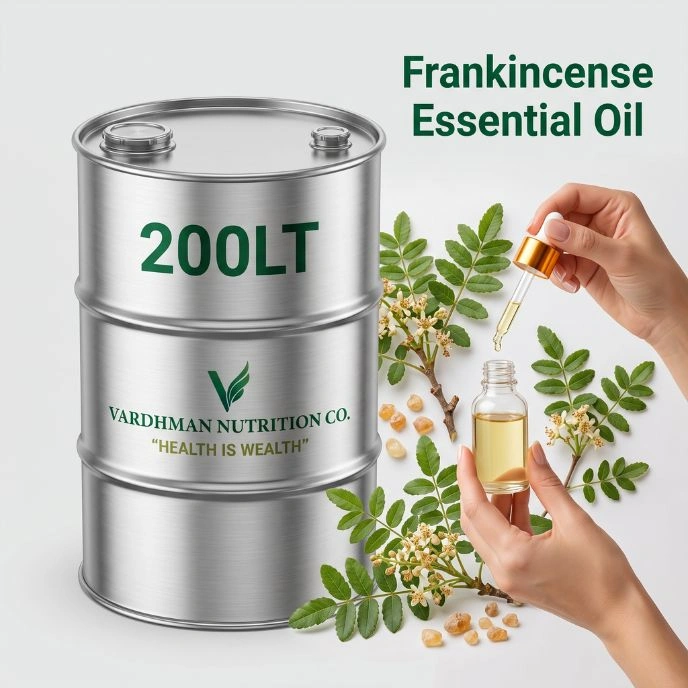
Vardhman Nutrition Co. is a reliable Frankincense Essential Oil Manufacturer in India, Frankincense Oil B2B Supplier, and international Frankincense Oil Exporter, supplying natural and export-oriented Frankincense Essential Oil to international buyers. Also known as Olibanum Oil, Frankincense Essential Oil is obtained from the resin of Boswellia species and is valued for its distinctive resinous, warm, woody, balsamic, and slightly spicy aroma.
Frankincense has a long history of use in religious ceremonies, meditation, yoga, traditional wellness practices, aromatherapy, fragrance, cosmetics, and herbal preparations. Today, its natural aromatic profile makes it a sought-after ingredient for cosmetic manufacturers, fragrance companies, aromatherapy brands, wellness businesses, personal care manufacturers, and other commercial industries.
Vardhman Nutrition Co. supplies Natural Frankincense Essential Oil, Pure Frankincense Oil, Steam Distilled Frankincense Oil, Bulk Frankincense Oil, and Wholesale Frankincense Essential Oil for international B2B requirements. Our export-focused approach supports importers, wholesalers, distributors, manufacturers, and private-label businesses looking for dependable bulk sourcing from India.
1. Frankincense Essential Oil – Botanical Origin and Natural Profile
Frankincense Essential Oil is derived from the aromatic resin of Boswellia trees. The source material is traditionally associated with regions of Africa and the Arabian Peninsula, including Somalia, Oman, Yemen, and Ethiopia.
The resin is collected after carefully making small incisions in the bark of the tree. The natural sap gradually hardens into resin tears, which can then be collected and processed for essential oil production.
Frankincense Oil is appreciated for its characteristic warm, resinous, woody, balsamic, and slightly spicy fragrance, making it suitable for a wide range of aromatic and commercial formulations.
2. Frankincense Oil Also Known as Olibanum Oil
Frankincense Essential Oil is widely known by several names, including Frankincense Oil and Olibanum Oil.
The term Olibanum is commonly associated with frankincense and its traditional aromatic use. This natural oil has historically been valued for its distinctive fragrance and its role in spiritual, cultural, and wellness practices.
For international buyers, identifying the botanical source and product specification is important when sourcing Frankincense Oil for commercial manufacturing or formulation purposes.
3. Natural Aroma and Appearance of Frankincense Oil
Natural Frankincense Essential Oil generally has a light yellow to golden appearance and a characteristic warm, resinous, woody, balsamic aroma.
Its fragrance is one of its most important commercial characteristics. Frankincense Oil can provide depth and warmth to perfume compositions, personal care products, aromatherapy blends, incense, and wellness formulations.
The exact aroma, color, and chemical profile may vary according to the botanical source, resin quality, geographical origin, extraction method, and processing conditions.
4. Steam Distilled Frankincense Essential Oil
Steam Distilled Frankincense Oil is obtained using steam distillation, a commonly used method for extracting volatile aromatic compounds from botanical materials.
During steam distillation, steam passes through the prepared frankincense resin material and carries volatile aromatic components. The vapor is then condensed and separated to obtain the essential oil.
The resulting oil can be filtered and handled according to the required commercial specification before being packed for international B2B supply.
5. Frankincense Essential Oil Extraction Process
The production of Frankincense Essential Oil generally involves several stages:
- Small cuts are made in the bark of the Boswellia tree.
- Natural resin emerges from the tree.
- The resin gradually hardens into resin tears.
- Dried resin is carefully collected.
- The resin is cleaned and prepared for processing.
- Steam distillation is used to release volatile aromatic compounds.
- The aromatic vapor passes through a condenser.
- The condensed liquid separates into essential oil and hydrosol.
- The essential oil is collected.
- The product is filtered and prepared for commercial packaging.
Careful handling throughout the process helps maintain the desired natural aromatic characteristics of the oil.
6. Key Natural Constituents of Frankincense Oil
Frankincense Essential Oil contains naturally occurring aromatic compounds. The exact composition can vary depending on the Boswellia species, geographical origin, resin characteristics, and extraction conditions.
Commonly associated constituents include:
- Alpha-Pinene
- Beta-Pinene
- Limonene
- Myrcene
- Sabinene
- Alpha-Thujene
- p-Cymene
- Caryophyllene
- Borneol
- Linalool
- Octyl Acetate
- Incensole Acetate
- Monoterpenes
- Sesquiterpenes
It is important to distinguish the essential oil from the raw resin. Boswellic acids are primarily associated with the resin and are generally present only in very small or trace amounts in the essential oil.
7. Frankincense Oil for Aromatherapy and Wellness
Frankincense Essential Oil is widely used in aromatherapy and wellness products because of its calming and distinctive natural fragrance.
Commercial applications may include:
- Aromatherapy blends
- Diffuser oils
- Massage oil blends
- Bath products
- Spa formulations
- Meditation products
- Yoga-related aromatic products
- Wellness fragrances
- Relaxation-focused products
Its warm aroma is also frequently selected for creating a peaceful and pleasant atmosphere.
8. Frankincense Essential Oil for Cosmetics and Skin Care
Frankincense Oil is commonly incorporated into cosmetic and personal care formulations because of its distinctive fragrance and botanical positioning.
It may be used in:
- Face oils
- Creams
- Lotions
- Serums
- Balms
- Body-care products
- Facial-care formulations
- Premium botanical skincare products
- Massage products
Manufacturers may select Frankincense Essential Oil for formulations designed around natural aromatic ingredients.
For cosmetic applications, concentration, labeling, allergen information, product specifications, and destination-market requirements should be considered before commercial use.
9. Frankincense Oil for Perfume and Fragrance Manufacturing
Frankincense Essential Oil has a long association with perfumery and fragrance applications.
Its warm, woody, resinous, and balsamic profile can add depth and character to fragrance compositions. It can also be blended with other essential oils and aromatic ingredients.
Frankincense Oil may be used in:
- Fine fragrances
- Natural perfumes
- Eau de parfum formulations
- Fragrance blends
- Room fragrances
- Premium aromatic products
- Incense fragrances
- Personal fragrance products
It blends well with aromatic materials such as Lavender, Sandalwood, Lemon, Orange, and other complementary essential oils.
10. Frankincense Oil for Soap and Personal Care Products
Frankincense Essential Oil is also used in soap and personal care manufacturing.
Potential applications include:
- Handmade soaps
- Commercial soaps
- Body washes
- Bath products
- Cleansing products
- Personal hygiene products
- Body oils
- Natural personal care formulations
Its recognizable fragrance can provide a premium botanical character to personal care products.
Manufacturers should formulate and label finished products according to the requirements of their target market.
11. Frankincense Essential Oil in Herbal and Traditional Formulations
Frankincense has a long history of use in traditional wellness practices, including Ayurvedic and Unani traditions, as well as spiritual and cultural applications.
Today, Frankincense Oil may be used in selected herbal and wellness product categories.
Potential applications include:
- Herbal preparations
- Traditional wellness products
- Aromatic preparations
- Botanical formulations
- Wellness blends
- Massage products
Specific therapeutic or medicinal uses depend on the formulation, product classification, and regulations of the destination market.
12. Frankincense Oil for Spiritual, Meditation and Yoga Products
Frankincense has traditionally been associated with spiritual and ceremonial practices. Its warm and resinous aroma makes it popular in meditation and yoga environments.
Commercial products may include:
- Meditation blends
- Yoga aroma products
- Incense preparations
- Prayer-related aromatic products
- Spiritual fragrance blends
- Diffuser formulations
- Wellness atmosphere products
The oil's distinctive fragrance can help create a calm and aromatic environment suitable for relaxation-oriented settings.
13. Frankincense Oil and Wellness Applications
Frankincense Essential Oil is valued in wellness products for its aromatic and calming qualities.
It is commonly incorporated into products designed around:
- Relaxation
- Meditation
- Aromatherapy
- Spa experiences
- Personal wellness
- Massage
- Natural fragrance
- Emotional well-being
While Frankincense Oil is traditionally associated with various wellness benefits, finished-product claims should be supported by appropriate evidence and comply with the regulations of the destination country.
14. Frankincense Essential Oil for Pharmaceutical and Research Applications
Frankincense and Boswellia resin have been the subject of scientific research involving their naturally occurring compounds and potential biological activities.
Research has explored areas related to inflammatory processes, skin applications, respiratory wellness, and other areas. However, research findings should not automatically be interpreted as proof of medical effectiveness for a specific finished product.
For pharmaceutical and specialized applications, buyers should select the appropriate product specification and ensure that all regulatory and quality requirements are met.
15. Frankincense Oil for Natural and Premium Products
The natural origin and distinctive aromatic profile of Frankincense Oil make it attractive for premium botanical product development.
It can be considered for:
- Natural cosmetics
- Premium skincare
- Botanical personal care
- Aromatherapy products
- Natural perfumes
- Wellness products
- Spa products
- Premium fragrance blends
- Private-label natural products
Manufacturers can incorporate the oil according to their formulation requirements and applicable standards.
16. Bulk Frankincense Essential Oil for B2B Buyers
Vardhman Nutrition Co. supplies Bulk Frankincense Essential Oil for international B2B buyers seeking commercial quantities.
Our supply is suitable for:
- Importers
- Wholesalers
- Distributors
- Cosmetic manufacturers
- Personal care companies
- Fragrance manufacturers
- Aromatherapy businesses
- Herbal product manufacturers
- Wellness brands
- Private-label companies
Bulk requirements can be discussed based on quantity, specification, packaging, destination country, documentation, and shipping requirements.
17. Frankincense Oil B2B Supplier from India
As an experienced Frankincense Essential Oil B2B Supplier, Vardhman Nutrition Co. focuses on international commercial sourcing.
We support businesses that require Frankincense Oil for manufacturing, formulation, distribution, private labeling, or further commercial processing.
Our B2B approach focuses on dependable supply, product consistency, appropriate packaging, technical documentation, and export-oriented communication.
18. Wholesale Frankincense Essential Oil Supply
Vardhman Nutrition Co. provides Wholesale Frankincense Essential Oil for international buyers requiring larger commercial quantities.
Wholesale sourcing can be considered for:
- Industrial production
- Cosmetic manufacturing
- Fragrance production
- Personal care manufacturing
- Aromatherapy brands
- Herbal product businesses
- Private-label production
- Distribution businesses
Buyers can provide their required quantity and specifications so that suitable bulk supply options can be discussed.
19. Frankincense Oil Exporter from India – Global Markets
Vardhman Nutrition Co. is an export-oriented Frankincense Oil Exporter from India, supporting international B2B sourcing requirements.
Our international supply approach is designed for buyers in markets including:
- USA
- UK
- Europe
- Germany
- UAE
- Australia
- South Korea
We work with overseas importers, distributors, manufacturers, wholesalers, and private-label companies according to their commercial requirements and destination-market regulations.
20. Quality Control and Technical Documentation
Quality and technical documentation are important for international essential oil buyers.
Depending on the product specification and customer requirements, relevant documents may include:
- Certificate of Analysis (COA)
- GC-MS Report
- Safety Data Sheet (SDS/MSDS)
- Technical Data Sheet (TDS)
- Product Specification
- Allergen Statement, where applicable
- IFRA-related documentation, where applicable
- Other export or compliance documents as required
Documentation availability depends on the specific product, application, destination market, and buyer requirements.
21. Packaging, Storage and Shelf Life of Frankincense Oil
Frankincense Essential Oil should be stored properly to help maintain its natural aromatic quality.
Recommended storage practices include:
- Store in a cool and dry place.
- Protect from direct sunlight.
- Keep containers tightly closed.
- Minimize unnecessary exposure to air.
- Protect from excessive heat and moisture.
- Use suitable dark-colored glass or appropriate commercial packaging.
- Keep away from children and unsuitable storage environments.
When properly stored, Frankincense Essential Oil can remain stable for an extended period. The exact shelf life should be confirmed through the applicable product specification and batch documentation.
22. Buy Frankincense Essential Oil in Bulk from India
If you are looking to Buy Frankincense Essential Oil in Bulk from India, Vardhman Nutrition Co. can support your international B2B sourcing requirements.
We supply Natural Frankincense Essential Oil, Pure Frankincense Oil, Steam Distilled Frankincense Oil, Bulk Frankincense Oil, and Wholesale Frankincense Essential Oil for commercial applications.
International buyers can share the following details for an export quotation:
- Required quantity
- Product application
- Required specification
- Packaging preference
- Destination country
- Documentation requirements
- Target shipment schedule
Our export team can review your requirements and provide suitable product, packaging, documentation, and commercial quotation details.
Vardhman Nutrition Co. – Your B2B Partner for Frankincense Essential Oil Bulk Supply and Export from India.


.webp)
.webp)
.webp)
.webp)