Peppermint Essential Oil Manufacturer, Bulk Supplier & Exporter from India
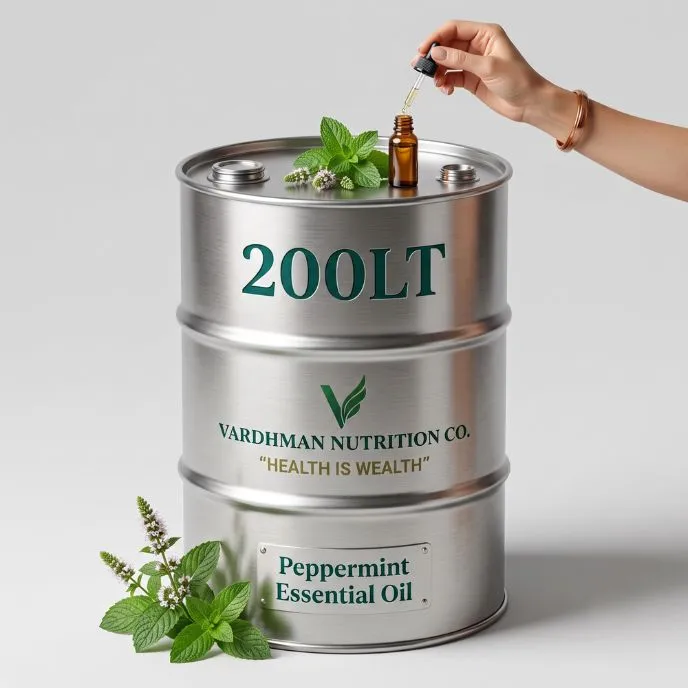
Vardhman Nutrition Co. is a trusted Peppermint Essential Oil Manufacturer, Bulk Supplier and Exporter from India, supplying natural and high-quality Peppermint Essential Oil to international B2B buyers. We supply Bulk Peppermint Essential Oil to importers, wholesalers, distributors, cosmetic manufacturers, pharmaceutical and herbal companies, personal care brands, aromatherapy businesses, fragrance manufacturers and private label companies.
Our Natural Peppermint Essential Oil is known for its distinctive fresh, minty, cooling and refreshing aroma. It is used as a botanical ingredient in cosmetics, personal care, aromatherapy, fragrance, wellness, oral care, herbal formulations and other commercial applications.
As an export-focused Peppermint Oil Supplier from India, we support international buyers with bulk quantities, suitable packaging, product specifications and relevant technical documentation according to their requirements.
We support B2B sourcing requirements in the USA, UK, Europe, Germany, UAE, Australia, South Korea and other international markets.
Pure & Natural Peppermint Essential Oil
Our Pure Peppermint Essential Oil is supplied for commercial and industrial applications where a fresh, strong and characteristic mint profile is required.
Key characteristics of Peppermint Oil include:
- Fresh and minty aroma
- Cooling aromatic character
- Natural botanical origin
- Versatile formulation applications
- High demand in personal care and fragrance products
- Suitable for bulk and wholesale sourcing
Our Steam Distilled Peppermint Essential Oil is suitable for businesses looking for a botanical raw material for manufacturing, formulation, distribution and private label applications.
Product specifications, quantity, packaging and documentation can be discussed according to the buyer's intended application and destination market.
What is Peppermint Essential Oil?
Peppermint Essential Oil is a concentrated aromatic botanical oil obtained from the leaves and flowering tops of the Mentha piperita plant. The plant belongs to the Lamiaceae family.
Peppermint is considered a natural hybrid associated with Water Mint and Spearmint. It is cultivated in different parts of the world and is recognized for its strong, fresh and cooling mint aroma.
Peppermint Oil can range from colorless to pale yellow or light green, depending on the botanical material, processing and other product characteristics.
Menthol is one of the major naturally occurring constituents of Peppermint Oil and is associated with its characteristic cooling sensation and aroma.
Peppermint has traditionally been used in aromatic applications and food flavoring. Today, Peppermint Essential Oil is widely used in cosmetics, personal care, pharmaceutical, oral care, fragrance, aromatherapy and other commercial industries.
Steam Distilled Peppermint Essential Oil
Steam Distillation is a commonly used method for obtaining essential oils from aromatic plant materials.
During the process, harvested peppermint leaves and flowering tops are placed into a distillation system. Steam passes through the plant material and carries volatile aromatic compounds. The vapors are then cooled and condensed, after which the essential oil is separated from the water phase.
The extraction process generally includes:
- Harvesting of peppermint plant material
- Preparation and partial drying of the plant material
- Loading the material into the distillation unit
- Application of steam
- Release and vaporization of volatile compounds
- Condensation of the vapors
- Separation of oil from water
- Filtration where required
- Storage in suitable containers
The resulting oil has a fresh, strong, minty and cooling aromatic profile, making it suitable for various commercial formulations.
Natural Constituents of Peppermint Essential Oil
Peppermint contains several naturally occurring aromatic compounds. Their levels can vary depending on the botanical source, cultivation conditions, harvesting stage, extraction process and other factors.
| Natural Constituent | General Function / Characteristic |
|---|---|
| Menthol | Major constituent associated with Peppermint's characteristic cooling sensation and aroma |
| Menthone | Contributes to the characteristic aromatic profile |
| Menthyl Acetate | Contributes to freshness and aroma |
| Menthofuran | Aromatic constituent of Peppermint Oil |
| 1,8-Cineole | Aromatic compound associated with fresh aromatic formulations |
| Limonene | Naturally occurring terpene contributing to the aromatic profile |
| Pulegone | Naturally occurring aromatic constituent |
| Caryophyllene | Terpene found in various aromatic plants |
| Alpha-Pinene & Beta-Pinene | Naturally occurring monoterpenes |
| Other Minor Constituents | Contribute to the overall aroma and chemical profile |
The exact chemical profile can be evaluated through appropriate product testing and batch-specific technical documentation where required.
Commercial Uses of Peppermint Essential Oil
Peppermint Essential Oil is a versatile botanical ingredient used across multiple commercial sectors because of its fresh and cooling mint aroma.
Cosmetics & Personal Care
Peppermint Oil can be used in suitable formulations such as:
- Face and body care products
- Creams and lotions
- Soaps
- Shampoos
- Hair care products
- Cleansers
- Shaving products
- Massage formulations
- Personal care products
Its refreshing aromatic profile makes it useful in products designed to provide a fresh and cooling sensory experience.
Aromatherapy & Wellness
Natural Peppermint Oil is used in:
- Aromatherapy blends
- Aroma oils
- Wellness products
- Spa formulations
- Massage oils
- Diffuser blends
- Refreshing aromatic products
Its characteristic mint fragrance is commonly associated with freshness and alertness.
Pharmaceutical & Herbal Formulations
Peppermint Oil is used as an aromatic ingredient in certain pharmaceutical and herbal formulations, depending on formulation requirements and applicable regulations.
Potential commercial applications include:
- Balms
- Digestive formulations
- Respiratory products
- Herbal formulations
- Aromatic preparations
The appropriate concentration and permitted use should be determined according to the finished product, intended application and destination-market regulations.
Oral Care
Peppermint Essential Oil is widely recognized for its fresh mint profile and is used in suitable oral-care products such as:
- Toothpaste
- Mouthwash
- Breath fresheners
- Oral-care formulations
Food & Beverage
Subject to applicable food regulations, Peppermint Oil can be used as a flavoring ingredient in suitable food and beverage applications.
- Chewing gum
- Candies
- Chocolates
- Confectionery
- Ice cream
- Beverages
- Mint-flavored food products
Fragrance & Perfume
Its strong and recognizable mint aroma makes Peppermint Oil suitable for:
- Perfume formulations
- Fragrance compositions
- Deodorants
- Aroma products
- Spa products
- Freshness-oriented fragrance applications
Home Care & Other Applications
Peppermint Oil can also be used in suitable:
- Detergent formulations
- Cleaning products
- Natural air-freshening products
- Insect-repellent formulations
- Household aromatic products
The final application should be evaluated according to relevant technical and regulatory requirements.
Benefits & Functional Applications of Peppermint Essential Oil
Peppermint Essential Oil has traditionally been valued for its refreshing, cooling and aromatic properties.
Cooling & Refreshing Effect
Menthol is associated with the characteristic cooling sensation of Peppermint Oil. Therefore, Peppermint Oil is used in products designed to provide a refreshing and cooling sensory experience.
Aromatherapy & Mental Freshness
The fresh mint aroma is commonly used in aromatherapy and wellness applications where freshness, alertness and mental refreshment are desired.
Digestive Applications
Peppermint has a long history of traditional use in digestive preparations. Peppermint Oil is also used in selected commercial digestive formulations.
Skin & Personal Care Applications
When properly diluted and appropriately formulated, Peppermint Oil can be used in suitable personal care products designed to provide a refreshing and cooling skin sensation.
Hair & Scalp Care
Peppermint Oil is used in selected hair and scalp formulations, particularly products designed around a fresh, cooling and invigorating sensory experience.
Aromatic & Fragrance Applications
Its distinctive mint aroma makes Peppermint Oil useful in fragrance compositions, spa products, aromatherapy blends and other aromatic formulations.
Important: Essential Oils are highly concentrated materials. Their use, concentration and formulation suitability should be determined according to the intended application and applicable safety and regulatory requirements.
Peppermint Essential Oil for Cosmetics & Personal Care
The fresh and cooling aromatic profile of Peppermint Essential Oil makes it a popular botanical ingredient for cosmetic and personal care manufacturers.
Manufacturers may use Peppermint Oil in suitable formulations for:
- Skincare
- Haircare
- Soaps
- Shampoos
- Cleansers
- Body care products
- Massage products
- Spa products
- Refreshing personal care formulations
For B2B manufacturers, product suitability, concentration, formulation compatibility and regulatory requirements should be evaluated according to the finished product and destination market.
Peppermint Oil for Aromatherapy, Wellness & Fragrance
Natural Peppermint Oil is widely valued for its strong, fresh and cooling mint fragrance.
It can be incorporated into suitable:
- Aromatherapy blends
- Diffuser products
- Massage oils
- Spa products
- Wellness formulations
- Fragrance compositions
- Aroma products
Businesses sourcing Pure Peppermint Essential Oil in Bulk can discuss product specifications and commercial requirements according to their intended formulation.
Bulk & Wholesale Peppermint Essential Oil
Vardhman Nutrition Co. supplies Bulk Peppermint Essential Oil and Wholesale Peppermint Oil for international B2B requirements.
We understand that commercial buyers require more than product quality. They may also need:
- Consistent product quality
- Bulk supply capability
- Suitable packaging
- Product specifications
- Technical documentation
- Shipment coordination
- Commercial sourcing support
- Reliable communication
Businesses looking to buy Peppermint Essential Oil in bulk from India can share their required quantity, intended application, packaging preference and destination country.
Peppermint Essential Oil Manufacturer & Exporter from India
Vardhman Nutrition Co. is an India-based Peppermint Essential Oil Manufacturer and Exporter focused on international B2B trade.
Our export-oriented supply model is designed for overseas businesses sourcing essential oils from India for:
- Manufacturing
- Wholesale distribution
- Cosmetic formulations
- Personal care products
- Aromatherapy products
- Fragrance applications
- Herbal formulations
- Private label production
We support B2B enquiries from:
- USA
- UK
- Europe
- Germany
- UAE
- Australia
- South Korea
- Other international destinations
Bulk quantity, product specifications, packaging, documentation and shipment requirements can be discussed according to individual buyer requirements.
Peppermint Essential Oil for Importers, Wholesalers & Distributors
International importers, wholesalers and distributors often require reliable suppliers for repeat commercial sourcing.
Vardhman Nutrition Co. supports B2B buyers looking for Peppermint Essential Oil Wholesale Supply from India for resale, distribution, manufacturing and formulation.
Our B2B supply approach focuses on:
- Natural botanical products
- Bulk and wholesale supply
- Export-oriented sourcing
- Suitable packaging options
- Technical documentation support
- Commercial sourcing assistance
- International shipment coordination
- Long-term B2B relationships
This makes our supply model suitable for businesses seeking a reliable source of Natural Peppermint Essential Oil from India.
Private Label & OEM Peppermint Oil Supply
International buyers may have different branding, packaging and manufacturing requirements.
Depending on project specifications and order requirements, Private Label, OEM and customized supply requirements can be discussed.
Buyers can provide:
- Required quantity
- Product specifications
- Intended application
- Packaging format
- Label requirements
- Destination country
- Required technical documents
- Sample requirements
Supply feasibility can then be evaluated according to the individual project.
Export Packaging Options
Suitable packaging is important for maintaining essential oil quality during storage, handling and international transportation.
Depending on order quantity and buyer requirements, Bulk Peppermint Essential Oil may be supplied in suitable commercial packaging such as:
- Aluminium bottles
- Aluminium containers
- Export-grade drums
- Bulk industrial packaging
- Customized packaging according to order requirements
Specific pack sizes, packaging materials and transportation requirements can be confirmed during commercial discussions.
Quality Control & Technical Documentation
For international B2B buyers, quality consistency and technical information are important parts of commercial sourcing.
Depending on the product, batch and customer requirements, relevant documentation may include:
- Certificate of Analysis (COA)
- GC-MS Report
- Safety Data Sheet (SDS/MSDS)
- Technical Data Sheet (TDS)
- Allergen Statement
- IFRA-related documentation, where applicable
- Other applicable product or export documentation
Documentation availability depends on the specific product, batch, intended application and buyer requirements.
Storage Guidelines for Peppermint Essential Oil
Peppermint Essential Oil is a volatile botanical product and should be stored appropriately to help maintain its aromatic and physical characteristics.
Recommended storage practices include:
- Store in a cool and dry place
- Protect from direct sunlight
- Keep containers tightly closed
- Minimize exposure to oxygen
- Protect from excessive heat and moisture
- Use suitable amber or dark-colored containers where appropriate
- Avoid unnecessary exposure to air
- Store away from incompatible materials
- Keep out of reach of children and pets
Proper storage can help preserve the oil's aroma and overall quality.
Peppermint Essential Oil Shelf Life
The shelf life of Peppermint Essential Oil depends on factors such as product quality, packaging, storage temperature, light exposure, moisture and oxygen exposure.
Under suitable storage conditions, essential oils can remain usable for an extended period. The actual shelf life should be determined according to the product specification, packaging and storage conditions.
Potential signs of deterioration may include:
- Significant change in color
- Noticeable change in aroma
- Loss of characteristic freshness
- Changes in physical consistency
Proper storage in tightly closed, suitable containers can help reduce unnecessary exposure to light, heat and oxygen.
Why Choose Vardhman Nutrition Co. for Peppermint Essential Oil?
Choosing the right supplier is important for international B2B essential oil sourcing.
Vardhman Nutrition Co. offers:
- India-based Peppermint Essential Oil manufacturing and supply
- Export-focused B2B business approach
- Bulk and wholesale supply
- Natural Peppermint Essential Oil
- Steam Distilled Peppermint Essential Oil
- Suitable commercial packaging options
- Technical documentation support
- Supply support for importers and distributors
- Supply for cosmetic and personal care manufacturers
- Private label and customized supply discussions
- International shipment coordination
- Focus on consistent product quality
- Long-term B2B sourcing relationships
Our objective is to provide dependable Peppermint Oil Supply from India for international businesses looking for consistent botanical raw material sourcing.
Buy Peppermint Essential Oil in Bulk from India
If your business is looking to buy Peppermint Essential Oil in bulk from India, Vardhman Nutrition Co. can support your commercial sourcing requirements.
We work with:
- Importers
- Wholesalers
- Distributors
- Cosmetic manufacturers
- Personal care brands
- Pharmaceutical and herbal companies
- Aromatherapy businesses
- Fragrance manufacturers
- Private label companies
- Other commercial buyers
For a commercial enquiry, buyers can provide:
- Required quantity
- Product specifications
- Intended application
- Packaging requirements
- Destination country
- Required technical documentation
- Sample requirements, if applicable
Based on these details, suitable supply options and quotation requirements can be discussed.
Frequently Asked Questions About Peppermint Essential Oil
What is Peppermint Essential Oil?
Peppermint Essential Oil is a concentrated aromatic oil obtained from the leaves and flowering tops of the Mentha piperita plant. It is recognized for its strong, fresh and cooling mint aroma.
What is the main constituent of Peppermint Essential Oil?
Menthol is one of the major characteristic constituents associated with Peppermint Oil and its cooling sensory effect. The complete chemical composition varies according to the botanical material and processing conditions.
How is Peppermint Essential Oil extracted?
Peppermint Essential Oil is commonly obtained through Steam Distillation, where steam carries volatile aromatic compounds from the plant material before condensation and oil separation.
Which industries use Peppermint Essential Oil?
Peppermint Oil is used in cosmetics, personal care, aromatherapy, fragrance, oral care, food and beverage, herbal formulations and other suitable industrial applications.
Can Peppermint Essential Oil be purchased in bulk?
Yes. Vardhman Nutrition Co. supplies Bulk and Wholesale Peppermint Essential Oil for international B2B buyers, subject to quantity, product specifications, packaging and destination requirements.
Do you supply Peppermint Oil to international buyers?
Yes. We support B2B sourcing requirements for importers, wholesalers, distributors, manufacturers and private label businesses in international markets.
Can you provide technical documents?
Relevant documentation such as COA, GC-MS, SDS/MSDS, TDS and other applicable documents may be available depending on the product, batch and buyer requirements.
Do you offer private label or OEM supply?
Private label, OEM and customized supply requirements can be discussed depending on the project, quantity, packaging, specifications and destination market.
How should Peppermint Essential Oil be stored?
It should generally be stored in a cool, dry place away from direct sunlight, excessive heat and moisture. Containers should remain tightly closed and unnecessary oxygen exposure should be minimized.
Contact Vardhman Nutrition Co. for Bulk Peppermint Essential Oil
Looking for a reliable Peppermint Essential Oil Manufacturer, Bulk Supplier and Exporter from India?
Vardhman Nutrition Co. supports international B2B buyers seeking Natural Peppermint Essential Oil, Bulk Peppermint Oil and Wholesale Peppermint Essential Oil for commercial applications.
For product specifications, bulk quantity, samples, packaging options, technical documentation or export quotation, send us your requirements along with the required quantity and destination country.
Partner with Vardhman Nutrition Co. for reliable, consistent and export-focused Peppermint Essential Oil supply from India.
.webp)
.webp)
.webp)
.webp)