Flaxseed Seed Oil Manufacturer & Global B2B Exporter from India
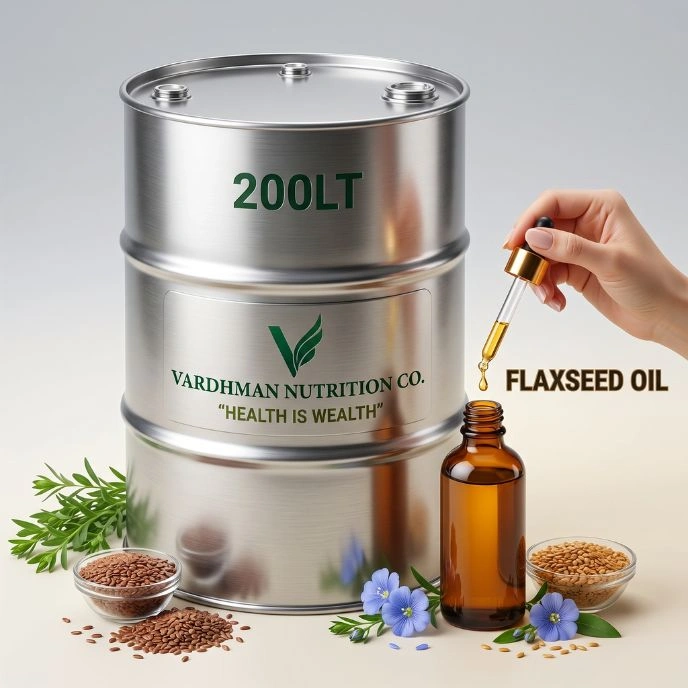
Vardhman Nutrition Co. is an India-based Flaxseed Seed Oil Manufacturer, Bulk Supplier and Global B2B Exporter, supplying natural Flaxseed Seed Oil for international commercial and manufacturing requirements. Our Flaxseed Seed Oil is obtained from selected seeds of Linum usitatissimum and can be considered for food, nutraceutical, cosmetic, personal care, herbal and selected industrial applications.
Flaxseed Seed Oil is also commonly known as Flaxseed Oil or Linseed Oil. It is a plant-derived vegetable oil naturally recognized for its Alpha-Linolenic Acid (ALA), an Omega-3 fatty acid, along with other naturally occurring fatty acids and plant compounds.
We serve international importers, wholesalers, distributors, manufacturers, food businesses, nutraceutical companies, cosmetic manufacturers, personal care companies, private-label brands, OEM businesses and industrial buyers seeking Flaxseed Seed Oil from India.
The Botanical Origin of Flaxseed Seed Oil
Flaxseed Seed Oil comes from the seeds of the flax plant, botanically identified as Linum usitatissimum. Flax is an established oilseed crop whose seeds contain naturally occurring vegetable oil.
The seeds can be processed to obtain oil for different commercial applications. The final product specification may differ according to its intended use, such as food, nutraceutical, cosmetic or industrial applications.
For international sourcing, buyers should select the appropriate product grade and specifications according to their formulation, manufacturing process and destination-market requirements.
Flaxseed Oil Production Through Mechanical Pressing
Cold Pressed Flaxseed Seed Oil can be obtained through mechanical pressing of selected flax seeds. Before extraction, the seeds are generally inspected and cleaned to remove unwanted materials.
The prepared seeds are mechanically pressed to release the oil. After extraction, filtration may be carried out to remove suspended particles and obtain a suitable oil for the specified application.
Cold pressing is commonly associated with natural seed oils where maintaining the characteristic properties of the seed-derived oil is an important consideration. Exact processing parameters should be confirmed according to the specific product specification.
Naturally Occurring Components in Flaxseed Oil
Flaxseed Seed Oil is known for its naturally occurring fatty acid profile. One of its notable components is Alpha-Linolenic Acid (ALA), an Omega-3 fatty acid.
Other naturally occurring constituents may include:
- Omega-3 fatty acids
- Linoleic Acid
- Oleic Acid
- Palmitic Acid
- Stearic Acid
- Tocopherols
- Phytosterols
- Lignans
- Other naturally occurring plant compounds
The composition of Flaxseed Seed Oil can vary depending on seed variety, geographical origin, extraction method, processing and storage conditions. Exact values should therefore be confirmed through the relevant technical specification or Certificate of Analysis.
Food Industry Opportunities for Flaxseed Seed Oil
Suitable food-grade Flaxseed Seed Oil can be considered for selected food and nutritional applications according to applicable food safety requirements.
Potential applications include:
- Salad dressings
- Specialty food products
- Food oil blends
- Smoothies
- Nutritional beverages
- Yogurt preparations
- Cold-food applications
- Nutritional formulations
Because Flaxseed Oil contains a high proportion of unsaturated fatty acids, appropriate storage and handling are important for maintaining product quality.
Food manufacturers should specify the required grade, application and destination-market requirements when sourcing the oil commercially.
Flaxseed Oil for Nutraceutical and Supplement Products
The naturally occurring ALA content of Flaxseed Seed Oil makes it relevant to selected nutraceutical and nutritional product formulations.
Commercial product categories may include:
- Dietary supplements
- Nutritional oil products
- Softgel formulations
- Omega-3 formulations
- Nutraceutical blends
- Wellness products
- Functional food products
- Plant-based nutritional products
The appropriate product grade, dosage format, concentration and regulatory requirements should be determined by the finished-product manufacturer.
Cosmetic Formulation Uses of Flaxseed Seed Oil
Natural vegetable oils are widely incorporated into cosmetic and personal care formulations. Suitable Flaxseed Seed Oil for cosmetic applications can be considered for different oil-based and botanical product concepts.
Potential applications include:
- Skin care oils
- Body oils
- Massage oil formulations
- Creams
- Lotions
- Natural cosmetics
- Botanical formulations
- Personal care products
- Oil-based cosmetic preparations
Manufacturers may combine Flaxseed Oil with other suitable plant oils and botanical ingredients according to their formulation requirements.
Skin and Body Care Product Development
Flaxseed Seed Oil can be incorporated into selected skincare and body-care formulations where a plant-derived vegetable oil is required.
Potential product categories include:
- Skin oils
- Body oils
- Moisturizing formulations
- Creams
- Lotions
- Massage oils
- Natural skincare products
- Botanical personal care products
The final formulation should be evaluated for ingredient compatibility, stability, required specifications and applicable regulations.
Hair and Scalp Care Applications
Flaxseed Seed Oil can also be considered for selected haircare and scalp-care formulations. It may be used individually or blended with other suitable vegetable oils depending on the product concept.
Potential applications include:
- Hair oils
- Hair oil blends
- Scalp-care products
- Herbal hair formulations
- Botanical haircare products
- Natural haircare formulations
- Personal care oil blends
Manufacturers should determine the appropriate inclusion level through formulation development and product testing.
Flaxseed Seed Oil in Soap Formulations
Soap manufacturers can consider Flaxseed Seed Oil as a vegetable oil ingredient in selected soap and personal care formulations.
Potential applications include:
- Natural soaps
- Herbal soaps
- Botanical soaps
- Handmade soaps
- Specialty soap formulations
- Personal care soaps
- Cleansing products
The quantity and proportion used in the final soap formulation should be determined by the manufacturer according to the desired product characteristics and processing method.
Herbal and Botanical Product Applications
Flaxseed Seed Oil can be considered for selected herbal, botanical and natural formulations where a plant-derived vegetable oil is required.
Possible applications include:
- Herbal oil formulations
- Botanical oil blends
- Natural oil preparations
- Massage oil products
- Herbal cosmetic formulations
- Botanical personal care products
- Wellness products
- Plant-based formulations
Commercial buyers should confirm the required grade, technical specifications and destination-market requirements before procurement.
Industrial Potential of Linseed Oil
In many industrial applications, Flaxseed Oil is known as Linseed Oil. Its drying characteristics make it relevant to selected manufacturing sectors where plant-based drying oils are required.
Potential industrial applications include:
- Paint manufacturing
- Varnish production
- Printing inks
- Wood finishing
- Wood polishing
- Protective coatings
- Linoleum-related applications
- Bio-based lubricant formulations
- Other drying-oil applications
Industrial buyers should specify the required technical characteristics and intended manufacturing application before sourcing.
Paint, Varnish and Wood-Finishing Uses
Flaxseed-derived Linseed Oil is valued in selected industrial applications because of its drying characteristics. This makes it relevant to manufacturers producing paints, varnishes, wood finishes and related products.
Potential applications include:
- Paint formulations
- Varnishes
- Wood-finishing products
- Wood-polishing products
- Protective coatings
- Printing ink formulations
- Drying-oil-related products
The suitability of the supplied oil should be evaluated according to the buyer's manufacturing process and technical specifications.
Understanding the Physical Characteristics of Flaxseed Oil
Depending on the product grade and processing method, Flaxseed Seed Oil may typically have a light yellow, golden or amber appearance with a mild natural seed-like aroma.
Other typical characteristics may include:
- Smooth and moderately viscous texture
- Insolubility in water
- High proportion of polyunsaturated fatty acids
- Naturally occurring ALA
- High iodine value
- Notable drying characteristics
- Higher sensitivity to oxidation than some vegetable oils
Exact characteristics can vary according to raw material, processing and storage conditions. Product-specific specifications should therefore be confirmed for commercial procurement.
Storage and Handling Considerations
Flaxseed Seed Oil is sensitive to oxidation because it contains a high proportion of unsaturated fatty acids. Proper storage is therefore important for maintaining product quality.
General storage considerations include:
- Store in a cool and dry environment
- Protect the oil from direct sunlight
- Keep containers properly sealed
- Minimize unnecessary exposure to air
- Avoid excessive heat and moisture
- Use suitable containers according to the product application
- Follow product-specific storage recommendations
Proper handling and storage conditions should be maintained throughout transportation and commercial storage.
Bulk Flaxseed Seed Oil Supply from India
Vardhman Nutrition Co. is a Bulk Flaxseed Seed Oil Supplier from India, serving international B2B buyers requiring commercial quantities.
Our potential customers include:
- Flaxseed Oil importers
- Linseed Oil buyers
- Vegetable oil importers
- Bulk oil buyers
- Food manufacturers
- Food ingredient companies
- Nutraceutical manufacturers
- Cosmetic manufacturers
- Personal care companies
- Soap manufacturers
- Herbal product companies
- Industrial manufacturers
- Private-label brands
- OEM companies
- Wholesalers
- Distributors
- International trading companies
Bulk requirements can be discussed according to quantity, product specifications, packaging, application and destination country.
Wholesale Flaxseed Oil for International Procurement
International buyers looking for Wholesale Flaxseed Seed Oil can discuss commercial sourcing requirements with our export team.
B2B supply discussions may cover:
- Bulk orders
- Wholesale quantities
- Regular procurement
- Export packaging
- Customized packaging
- Product samples
- Technical documentation
- Private-label projects
- OEM requirements
Each enquiry can be evaluated according to the buyer's specific commercial and destination-market requirements.
Private Label Flaxseed Oil for Global Brands
Companies planning to launch their own branded nutritional, natural oil or personal care products can discuss Private Label Flaxseed Seed Oil supply.
Private-label requirements may include:
- Product specifications
- Order quantity
- Packaging size
- Bulk packaging
- Customized labeling
- Packaging requirements
- Export destination
- Technical documentation
Private-label supply depends on project specifications, quantity, packaging, labeling and destination-market requirements.
OEM Flaxseed Seed Oil for Customized Projects
Businesses with customized sourcing requirements can discuss OEM Flaxseed Seed Oil supply according to their project needs.
OEM discussions may include:
- Product specifications
- Bulk quantity
- Packaging
- Labeling
- Customized requirements
- Technical documentation
- Export destination
- Long-term procurement
OEM feasibility is evaluated according to the specific project and commercial requirements.
Export Packaging for Flaxseed Seed Oil
For international B2B shipments, packaging can be selected according to order quantity, transportation conditions, product characteristics and buyer preferences.
Potential packaging options include:
- Suitable bottles
- Aluminium containers
- HDPE containers
- Export-grade drums
- Bulk industrial packaging
- Customized packaging solutions
Private-label buyers can discuss customized packaging and labeling requirements before order confirmation.
Technical Documentation for B2B Buyers
International buyers may require technical information before approving a natural oil supplier. Depending on product grade, batch and buyer requirements, relevant documents may include:
- Certificate of Analysis (COA)
- Safety Data Sheet (SDS/MSDS)
- Technical Data Sheet (TDS)
- Product Specification Sheet
- Fatty Acid Profile, where applicable
- Allergen Statement, where applicable
- Other relevant technical information
- Export documentation, where applicable
The availability of individual documents should be confirmed according to the specific product and intended application.
Flaxseed Seed Oil Exporter Serving Global Markets
Vardhman Nutrition Co. operates as a Flaxseed Seed Oil Exporter from India, providing bulk sourcing solutions for international importers, distributors, wholesalers and manufacturers.
Our export-focused business serves buyers across:
- USA
- UK
- Germany
- European markets
- UAE
- Australia
- South Korea
- Other international markets
Shipment arrangements can be discussed according to order quantity, packaging, documentation and destination requirements.
Why International Buyers Source Flaxseed Oil from India
For international businesses, sourcing directly from an India-based manufacturer can provide a practical route for commercial procurement of plant-based oils.
Vardhman Nutrition Co. focuses on:
- India-based manufacturing and sourcing
- International B2B bulk supply
- Cold Pressed Virgin Seed Oils
- Export-oriented packaging
- Wholesale procurement
- Private-label sourcing
- OEM project discussions
- Technical product information
- Export documentation support
- Long-term commercial sourcing
Our business model is focused on international B2B supply and export rather than domestic retail.
Planning Your Bulk Flaxseed Oil Requirement
Before requesting a quotation, buyers can provide:
- Required quantity
- Intended application
- Product grade or specifications
- Preferred packaging
- Destination country
- Technical documentation requirements
- Private-label or OEM requirements, if applicable
Providing complete information helps our export team evaluate the requirement and discuss appropriate supply options.
Frequently Asked Questions About Flaxseed Seed Oil
What is Flaxseed Seed Oil?
Flaxseed Seed Oil is a natural vegetable oil obtained from the seeds of the flax plant, botanically known as Linum usitatissimum.
Is Flaxseed Oil also called Linseed Oil?
Yes. Flaxseed Oil is also commonly known as Linseed Oil, particularly in many industrial applications.
What is Flaxseed Seed Oil naturally known for?
Flaxseed Seed Oil is naturally recognized for its Alpha-Linolenic Acid (ALA), an Omega-3 fatty acid. Exact composition should be confirmed through product-specific technical documentation.
Can Flaxseed Seed Oil be used in food products?
Suitable food-grade Flaxseed Seed Oil can be considered for selected food and nutritional applications, subject to applicable food safety and regulatory requirements.
Can Flaxseed Seed Oil be used in nutraceutical products?
Yes. Suitable Flaxseed Seed Oil can be considered as a plant-based oil ingredient in selected nutraceutical, dietary supplement and nutritional formulations.
Is Flaxseed Seed Oil suitable for cosmetic products?
Suitable Flaxseed Seed Oil can be incorporated into selected skincare, body-care, haircare, massage oil, soap and personal care formulations.
Is Cold Pressed Flaxseed Seed Oil available?
Cold pressing is a common mechanical extraction approach for natural seed oils. The exact extraction method should be confirmed according to the specific product supplied.
Do you supply Flaxseed Seed Oil in bulk?
Yes. Vardhman Nutrition Co. supplies bulk and wholesale Flaxseed Seed Oil for international B2B buyers.
Can you supply Flaxseed Oil for private-label products?
Private-label supply can be discussed according to product specifications, quantity, packaging, labeling and destination-market requirements.
Do you offer OEM Flaxseed Seed Oil supply?
OEM requirements can be evaluated according to product specifications, quantity, packaging, labeling and intended market.
What industrial applications use Flaxseed Oil?
Depending on the grade and technical specifications, Flaxseed Oil or Linseed Oil may be used in paints, varnishes, printing inks, wood finishes, protective coatings and other drying-oil-related applications.
Which countries do you export Flaxseed Seed Oil to?
Our international B2B export focus includes markets such as the USA, UK, Germany, European markets, UAE, Australia and South Korea, along with other international destinations.
How can I request a Flaxseed Seed Oil quotation?
International buyers can share their required quantity, product specifications, intended application, packaging preference and destination country to discuss commercial supply and quotation requirements.
Request a Bulk Flaxseed Seed Oil Quotation
If you are looking for a Flaxseed Seed Oil Manufacturer, Bulk Supplier or Global B2B Exporter from India, Vardhman Nutrition Co. can discuss your commercial sourcing requirement.
We welcome enquiries from international importers, distributors, wholesalers, food manufacturers, nutraceutical companies, cosmetic manufacturers, personal care businesses, herbal product companies, private-label brands, OEM companies and industrial buyers.
Please share your required quantity, product specifications, intended application, packaging preference and destination country with our export team.
Vardhman Nutrition Co. – Flaxseed Seed Oil Manufacturer, Bulk Supplier & Global B2B Exporter from India.






.webp)
.webp)
.webp)

.webp)