Cinnamon Essential Oil Manufacturer & Bulk Exporter from India
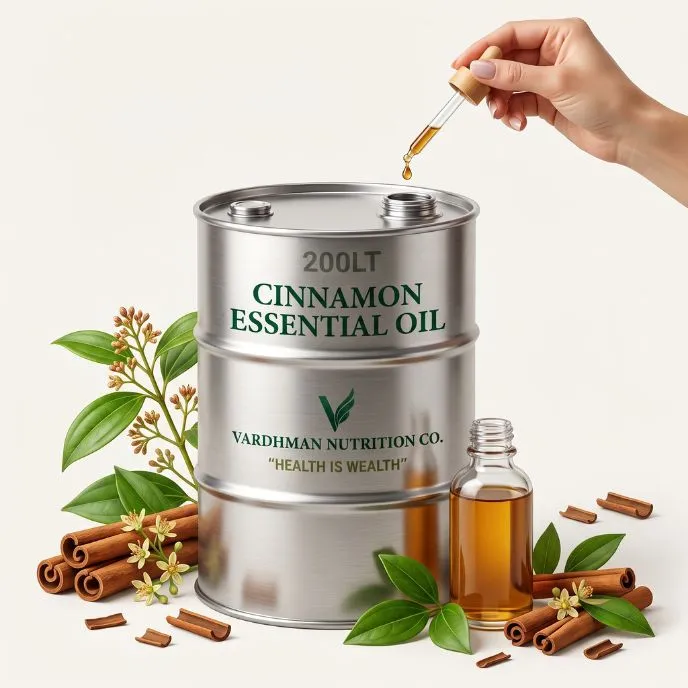
Cinnamon Essential Oil is a naturally aromatic botanical oil valued for its warm, sweet, spicy, and distinctive fragrance. It is widely used by businesses involved in cosmetics, personal care, aromatherapy, fragrance, oral care, food-related products, herbal formulations, and wellness products.
Vardhman Nutrition Co. is an India-based Cinnamon Essential Oil Manufacturer, Supplier and Exporter serving international B2B customers with bulk and wholesale requirements. We supply essential oils to importers, distributors, wholesalers, manufacturers, formulators, private-label brands, and other commercial buyers looking for reliable botanical ingredients from India.
Our Cinnamon Essential Oil is suitable for businesses that require consistent product quality, commercial quantities, export-oriented packaging, and relevant technical documentation.
Natural Cinnamon Essential Oil for Industrial & Commercial Applications
Cinnamon has been used for generations as a valuable botanical ingredient and aromatic spice. Its essential oil captures the characteristic fragrance of cinnamon in a concentrated form.
The oil is generally obtained from selected parts of Cinnamomum plants, including bark and leaves. The botanical source and plant part can influence the aroma, appearance, and chemical composition of the final oil.
For B2B applications, choosing the appropriate Cinnamon Essential Oil is important because different end products may require different aromatic profiles and specifications.
At Vardhman Nutrition Co., we focus on supplying Cinnamon Oil according to the requirements of commercial buyers and international markets.
Cinnamon Essential Oil Botanical Source
Cinnamon Essential Oil is associated with Cinnamomum species, with Cinnamomum verum and its synonym Cinnamomum zeylanicum commonly known as True or Ceylon Cinnamon.
Cinnamon botanical material can be processed to produce different types of essential oil, particularly:
- Cinnamon Bark Essential Oil
- Cinnamon Leaf Essential Oil
The two oils should not automatically be treated as identical products. Their naturally occurring constituents and aromatic characteristics can vary according to the plant part, botanical material, geographical origin, and extraction conditions.
This distinction can be important for cosmetic formulators, fragrance manufacturers, aromatherapy companies, and other professional buyers.
How Cinnamon Essential Oil Is Produced
Steam distillation is a commonly used method for extracting volatile aromatic compounds from botanical material.
The general production process involves preparing suitable cinnamon raw material and exposing it to controlled steam. The steam carries volatile aromatic components from the plant material. After condensation, the resulting liquid is separated to obtain the essential oil.
Key Production Stages
- Raw Material Selection: Suitable cinnamon material is selected according to the required product specification.
- Cleaning and Preparation: The botanical material is prepared before entering the distillation process.
- Steam Distillation: Controlled steam is used to release the volatile aromatic compounds.
- Condensation: The steam and aromatic vapors are cooled and condensed.
- Oil Separation: The essential oil is separated from the water phase.
- Quality Evaluation: The finished product can be evaluated against applicable specifications and analytical requirements.
- Packaging: The finished Cinnamon Essential Oil is filled into suitable containers for storage, transportation, and bulk export.
Aroma & Appearance of Cinnamon Oil
Cinnamon Essential Oil is recognized for its powerful aromatic character.
Depending on the source and type of oil, it may present a:
- Warm aroma
- Sweet aromatic note
- Spicy character
- Rich fragrance
- Distinctive cinnamon profile
The physical appearance may range from pale yellow to golden, amber, or darker shades depending on the botanical source and product characteristics.
As a volatile essential oil, it should be protected from excessive heat, direct light, oxygen, and unsuitable storage conditions.
Cinnamon Bark Essential Oil
Cinnamon Bark Essential Oil is particularly known for its strong and characteristic cinnamon aroma. It is commonly associated with cinnamaldehyde as one of its major naturally occurring aromatic constituents.
Because of its intense fragrance, Cinnamon Bark Oil can be used in applications where a recognizable warm and spicy cinnamon character is required.
Commercial applications may include:
- Fine fragrance
- Home fragrance
- Aromatherapy blends
- Cosmetic formulations
- Personal care products
- Flavor-related applications
- Soap and bath products
- Natural fragrance formulations
The exact chemical profile should be confirmed through the relevant batch specification and analytical documentation.
Cinnamon Leaf Essential Oil
Cinnamon Leaf Essential Oil is obtained from cinnamon leaves and can have a different aromatic and chemical profile from bark oil.
It is often associated with a comparatively stronger eugenol character and may be selected by manufacturers according to the requirements of their formulation.
For B2B purchasing, buyers should clearly specify whether they require Cinnamon Bark Oil or Cinnamon Leaf Oil when requesting a quotation.
Key Natural Components of Cinnamon Essential Oil
The chemical composition of Cinnamon Oil can vary significantly depending on the botanical source and plant part.
Commonly referenced constituents may include:
- Cinnamaldehyde
- Eugenol
- Cinnamyl Acetate
- Beta-Caryophyllene
- Linalool
- Alpha-Pinene
- Beta-Pinene
- Limonene
- Myrcene
- Coumarin
Cinnamaldehyde is commonly associated with the characteristic cinnamon aroma, particularly in bark-derived oils, while eugenol can be more prominent in leaf-derived Cinnamon Oil.
For professional B2B applications, buyers requiring a defined chemical profile should request the applicable GC-MS Report or Product Specification.
Applications of Cinnamon Essential Oil
The versatility of Cinnamon Essential Oil allows it to be used across several industries.
Cinnamon Essential Oil for Cosmetics & Personal Care
Cinnamon Oil can be incorporated into selected cosmetic and personal care formulations where its distinctive aroma is desired.
Potential applications include:
- Natural soaps
- Body care products
- Creams
- Lotions
- Scrubs
- Bath products
- Massage oils
- Hair-care formulations
- Scalp-care products
- Botanical personal care products
Because Cinnamon Essential Oil is highly concentrated, cosmetic manufacturers should determine appropriate use levels according to the finished product, intended application, safety assessment, and applicable regulations.
Cinnamon Essential Oil for Aromatherapy Products
Cinnamon Essential Oil is valued in aromatherapy for its warm and spicy fragrance.
It may be used in:
- Diffuser blends
- Aromatherapy oils
- Massage blends
- Spa products
- Wellness formulations
- Seasonal aromatic blends
- Home fragrance products
Cinnamon can be combined with citrus, spice, herb, and floral essential oils to develop customized aromatic profiles.
Cinnamon Essential Oil for Fragrance & Perfume
The strong identity of Cinnamon Oil makes it useful for fragrance development.
It can contribute a warm, sweet, spicy, and rich note to:
- Perfumes
- Fragrance oils
- Candles
- Incense
- Room fragrances
- Air fresheners
- Home fragrance products
Fragrance manufacturers can combine Cinnamon Oil with complementary oils such as Orange, Lemon, Ginger, Clove, and Cardamom.
Cinnamon Essential Oil for Oral Care
Cinnamon-derived aromatic ingredients are also relevant to selected oral-care products.
Commercial applications may include:
- Toothpaste
- Mouthwash
- Oral freshening products
- Dental-care formulations
- Herbal oral-care products
Manufacturers should determine permitted concentrations and compliance requirements according to the target market and intended use.
Cinnamon Essential Oil for Food & Beverage
Cinnamon is widely recognized as a culinary spice, and suitable Cinnamon Oil may be considered for certain food and beverage applications where permitted.
Potential applications include:
- Bakery products
- Confectionery
- Desserts
- Beverage formulations
- Tea products
- Flavor preparations
- Food manufacturing
For food applications, buyers should specify the required grade and destination-market requirements before purchasing.
Cinnamon Essential Oil for Home Care
Cinnamon Essential Oil can also be incorporated into selected household and home-fragrance formulations.
Possible applications include:
- Natural cleaning products
- Air fresheners
- Household fragrance
- Surface-care products
- Seasonal home-care formulations
Why Businesses Choose Cinnamon Essential Oil
Cinnamon Oil offers manufacturers a combination of distinctive aroma, botanical positioning, and formulation versatility.
- Warm Fragrance: Its spicy and sweet aromatic profile can create a strong sensory identity.
- Botanical Ingredient: It can support natural and botanical product concepts.
- Versatile Formulation Ingredient: It can be considered for fragrance, personal care, aromatherapy, oral care, and other applications.
- Recognizable Cinnamon Character: Its characteristic aroma makes it easy to identify in fragrance and flavor concepts.
Cinnamon Essential Oil Supplier for Bulk Buyers
Vardhman Nutrition Co. supplies Bulk Cinnamon Essential Oil for businesses that purchase botanical oils for manufacturing, distribution, repacking, and formulation.
Our B2B customers may include:
- Essential Oil Importers
- International Distributors
- Wholesale Suppliers
- Cosmetic Manufacturers
- Personal Care Companies
- Fragrance Manufacturers
- Aromatherapy Brands
- Herbal Product Manufacturers
- Wellness Companies
- Private-Label Businesses
- Contract Manufacturers
- Food-Related Manufacturers
Bulk sourcing allows businesses to plan their raw material requirements according to production volume and commercial demand.
Cinnamon Essential Oil Exporter from India
India is an important sourcing destination for botanical products and natural ingredients. Vardhman Nutrition Co. supplies Cinnamon Essential Oil to international B2B customers seeking an India-based supplier.
Our export-oriented business supports buyers who may require:
- Bulk quantities
- Commercial packaging
- Product specifications
- Technical documents
- Batch-related information
- Customized packaging
- Long-term supply arrangements
We serve international sourcing requirements for markets including the USA, UK, Europe, Germany, UAE, Australia, South Korea, and other destinations, subject to applicable import regulations.
Wholesale Cinnamon Oil for International Buyers
Wholesale buyers often require more than simply a product. They need dependable supply, suitable packaging, documentation, and communication throughout the purchasing process.
When sourcing Cinnamon Oil wholesale, buyers should consider:
- Botanical identity
- Plant part
- Extraction method
- Aroma profile
- Chemical specification
- Packaging
- Quantity
- Storage conditions
- Technical documentation
- Destination-country requirements
Vardhman Nutrition Co. works with buyers to understand these requirements before commercial supply.
Private Label Cinnamon Essential Oil
Businesses developing their own essential oil or wellness brand can explore private-label Cinnamon Essential Oil solutions.
Private-label supply can be suitable for:
- Aromatherapy Brands
- Natural Wellness Companies
- Essential Oil Brands
- Cosmetic Businesses
- Personal Care Companies
- Home Fragrance Brands
Depending on the project, requirements can be discussed for product quantity, packaging, labeling, documentation, and destination market.
Export Packaging for Cinnamon Oil
Essential oils require suitable packaging to help protect product quality during transportation and storage.
Depending on order size and customer requirements, Cinnamon Essential Oil can be supplied in suitable bulk or commercial containers.
Packaging options may include:
- Aluminium Bottles
- Aluminium Containers
- Compatible HDPE Containers
- Bulk Drums
- Export Packaging
- Customized Packaging
The appropriate packaging can be selected based on quantity, transport conditions, destination, and product requirements.
Quality & Technical Documentation
International B2B buyers may require technical documents for product evaluation, formulation, quality control, and import procedures.
Depending on the product and destination requirements, documentation may include:
- Certificate of Analysis (COA)
- GC-MS Report
- Safety Data Sheet (SDS/MSDS)
- Technical Data Sheet (TDS)
- Allergen Information
- Product Specification
- Batch Information
- IFRA-related Documentation where applicable
Documentation availability should be confirmed according to the specific product and order.
Storage Recommendations for Cinnamon Essential Oil
Proper storage helps maintain the quality and aromatic characteristics of Cinnamon Essential Oil.
- Keep the container tightly closed.
- Store in a cool, dry place.
- Protect from direct sunlight.
- Avoid excessive heat.
- Minimize unnecessary exposure to air.
- Use compatible packaging.
- Follow product-specific storage instructions.
For commercial inventory, buyers should follow the storage conditions mentioned in the relevant technical documentation.
Cinnamon Essential Oil Safety & Handling
Cinnamon Essential Oil is a concentrated aromatic material and should be handled carefully.
For professional use:
- Avoid unnecessary direct skin application.
- Dilute appropriately when used in topical formulations.
- Avoid contact with eyes.
- Follow the relevant SDS/MSDS.
- Conduct appropriate formulation and compatibility testing.
- Keep containers securely closed.
- Keep away from children and pets.
- Follow applicable regulations for the intended application.
The appropriate concentration depends on the final product and its intended use.
Buy Cinnamon Essential Oil in Bulk from India
If your business is looking for a Cinnamon Essential Oil Manufacturer in India or a reliable Bulk Cinnamon Oil Supplier, Vardhman Nutrition Co. can support your sourcing requirements.
We supply Cinnamon Essential Oil for commercial applications including cosmetics, personal care, aromatherapy, fragrance, oral care, food-related products, herbal formulations, and wellness products.
To receive product and commercial information, buyers can provide:
- Required Quantity
- Cinnamon Bark or Leaf Requirement
- Intended Application
- Destination Country
- Packaging Requirement
- Product Specification
- Documentation Requirement
- Private-Label Requirement, if applicable
This information helps us understand the requirement and provide the appropriate quotation and product details.
Frequently Asked Questions About Cinnamon Essential Oil
What is Cinnamon Essential Oil used for?
Cinnamon Essential Oil is used in cosmetics, personal care, aromatherapy, fragrance, oral care, food-related applications, household products, and selected herbal and wellness formulations.
Is Cinnamon Oil available in bulk?
Yes. Vardhman Nutrition Co. supplies Cinnamon Essential Oil for bulk and wholesale B2B requirements.
Do you supply Cinnamon Essential Oil internationally?
Yes. We supply Cinnamon Essential Oil for international B2B buyers and exporters, subject to the requirements of the destination market.
What is Cinnamon Bark Essential Oil?
Cinnamon Bark Essential Oil is an aromatic oil obtained from cinnamon bark and is commonly associated with a strong, warm, spicy cinnamon fragrance.
What is Cinnamon Leaf Essential Oil?
Cinnamon Leaf Essential Oil is obtained from cinnamon leaves and generally has a different chemical and aromatic profile from bark oil.
Can Cinnamon Essential Oil be used in cosmetics?
Yes, it can be used in suitable cosmetic and personal care formulations. The formulator must determine appropriate concentration, safety, and regulatory compliance.
Can you provide GC-MS documentation?
Applicable technical documentation such as GC-MS, COA, SDS/MSDS, and TDS can be provided according to the product specification and buyer requirements.
Do you offer private-label Cinnamon Oil?
Private-label requirements can be discussed depending on product, packaging, quantity, labeling, and destination-market requirements.
Which countries do you serve?
We focus on international B2B markets including the USA, UK, Europe, Germany, UAE, Australia, South Korea, and other global destinations.
Get a Quote for Cinnamon Essential Oil
Looking for a dependable Cinnamon Essential Oil Manufacturer, Bulk Supplier and Exporter from India?
Vardhman Nutrition Co. supplies natural botanical essential oils to international importers, distributors, wholesalers, manufacturers, formulators, and private-label businesses.
For bulk Cinnamon Essential Oil inquiries, share your quantity, application, Cinnamon Bark or Leaf requirement, packaging preference, destination country, and documentation requirements with our team.
Vardhman Nutrition Co. – Your B2B Source for Cinnamon Essential Oil from India.
.webp)
.webp)
.webp)
.webp)