Lavender Essential Oil – Natural B2B Supply from India
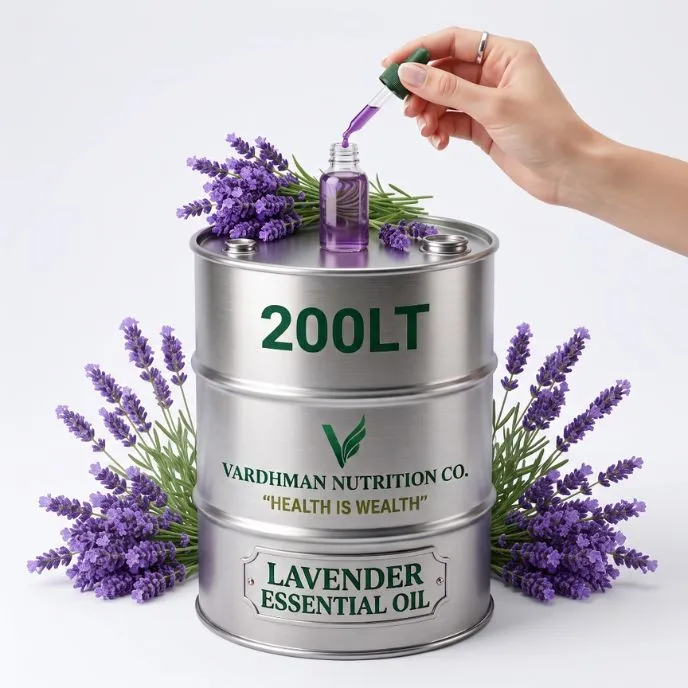
Vardhman Nutrition Co. is a trusted Lavender Essential Oil Manufacturer in India and global Lavender Essential Oil Exporter, supplying natural Lavender Oil to international B2B buyers, importers, wholesalers, distributors, manufacturers, and private-label businesses.
Our Natural Lavender Essential Oil is obtained from lavender flowers through steam distillation and is valued for its sweet, floral, fresh, and mildly herbaceous aroma. It is widely used in cosmetics, personal care, aromatherapy, perfumery, wellness products, soaps, and fragrance formulations.
We offer Bulk Lavender Essential Oil and Wholesale Lavender Essential Oil for businesses seeking reliable commercial supply from India.
Premium Lavender Essential Oil for International Buyers
Lavender is one of the most recognized aromatic botanicals used in the fragrance, beauty, wellness, and personal-care industries. Lavender Essential Oil is primarily associated with Lavandula angustifolia and other commercially cultivated lavender varieties.
Our 100% Pure Natural Lavender Essential Oil is handled with attention to aroma, appearance, consistency, and commercial requirements. The oil is generally clear to pale yellow and has the characteristic floral fragrance associated with lavender.
For international businesses, Lavender Oil can serve as a versatile botanical ingredient across multiple product categories and formulations.
Steam Distilled Lavender Essential Oil for Commercial Applications
Our Steam Distilled Lavender Essential Oil is produced using steam distillation, a commonly used extraction technique for obtaining volatile aromatic compounds from botanical plant material.
During the process, steam passes through harvested lavender flowers and carries the volatile oil components into a condenser. The vapour is cooled and converted into a liquid mixture of essential oil and floral water. The oil is then separated, filtered, and stored under suitable conditions.
Proper extraction and handling are important for maintaining the natural aromatic characteristics and commercial quality of the oil.
Where Lavender Essential Oil Fits Across Modern Industries
Lavender Essential Oil is valued for its versatile fragrance and botanical origin, making it suitable for a broad range of commercial applications.
Cosmetics and Personal Care
Lavender Oil is commonly incorporated into creams, lotions, soaps, body oils, face-care products, shampoos, conditioners, body washes, and other personal-care formulations.
Aromatherapy and Wellness
Its familiar floral aroma makes Lavender Essential Oil popular in diffusers, aroma blends, massage oils, spa products, bath preparations, and wellness formulations.
Perfumery and Fragrance
Lavender is an important botanical fragrance material used in perfumes, deodorants, body sprays, soaps, fragrance blends, and other scented products. It can also be combined with other essential oils to develop customized aromatic profiles.
Skin and Hair Care
Lavender Oil is frequently used as an ingredient in cosmetic skin-care and hair-care formulations. It can be blended with carrier oils and other botanical ingredients according to the requirements of the finished product.
Soap and Household Products
Its pleasant aroma makes it suitable for soaps, bath products, linen sprays, air fresheners, natural fragrance products, and selected household formulations.
Lavender Oil for Cosmetics, Personal Care & Wellness Formulations
For formulators and manufacturers, Lavender Essential Oil provides a natural aromatic ingredient that can be incorporated into different types of finished products.
Depending on the formulation, it may be used in:
- Face and body-care products
- Massage and spa oils
- Aromatherapy blends
- Shampoos and conditioners
- Soaps and bath products
- Perfumes and fragrances
- Natural personal-care products
- Wellness formulations
- Private-label products
The appropriate concentration and application should always be determined according to the finished product, formulation requirements, and applicable regulations.
Aromatic Profile and Natural Constituents of Lavender Oil
The chemical composition of Lavender Essential Oil can vary depending on the lavender variety, geographical origin, cultivation conditions, harvesting practices, and extraction method.
Common naturally occurring constituents associated with Lavender Oil include:
- Linalool – An important aromatic component contributing to the characteristic lavender fragrance.
- Linalyl Acetate – A significant fragrance constituent associated with sweet and floral notes.
- Camphor – Contributes to the overall aromatic profile.
- 1,8-Cineole – A naturally occurring component found in certain lavender oils.
- Terpinen-4-ol – A naturally occurring terpene alcohol.
- Beta-Ocimene – Contributes fresh and green aromatic notes.
- Geraniol – Adds to the overall fragrance profile.
- Lavandulol and Lavandulyl Acetate – Naturally occurring constituents associated with lavender's characteristic aroma.
For commercial requirements, the actual composition and quality parameters can be confirmed through appropriate batch-specific analysis.
Commercial Uses of Lavender Essential Oil
Our Commercial Lavender Essential Oil can be supplied for a variety of industries and applications, including:
- Aromatherapy and wellness
- Cosmetics and personal care
- Skin-care products
- Hair-care formulations
- Perfumes and fragrances
- Soap and bath products
- Spa and massage products
- Herbal and botanical formulations
- Natural and organic products
- Private-label manufacturing
- Household fragrance products
Product suitability depends on the intended application, formulation, concentration, regulatory requirements, and destination market.
Reliable Bulk Lavender Oil Supply for Global Businesses
Vardhman Nutrition Co. supplies Bulk Lavender Essential Oil for businesses that require commercial quantities for manufacturing, formulation, distribution, or resale.
We understand that international B2B sourcing requires more than product availability. Buyers also look for consistent quality, suitable packaging, technical documentation, clear communication, and dependable shipment coordination.
Our bulk supply is suitable for:
- Importers
- International distributors
- Wholesalers
- Cosmetic manufacturers
- Fragrance companies
- Personal-care brands
- Aromatherapy businesses
- Private-label companies
Bulk quantities and packaging requirements can be discussed according to individual business needs.
Wholesale Lavender Essential Oil for Importers & Distributors
Our Wholesale Lavender Essential Oil supply is intended for buyers purchasing Lavender Oil for resale, distribution, manufacturing, or further formulation.
We work with businesses seeking dependable sourcing relationships from India and can discuss requirements related to:
- Commercial quantity
- Packaging format
- Product specifications
- Samples
- Technical documents
- Shipment requirements
- Export quotations
This makes our supply suitable for businesses planning regular or long-term procurement of Lavender Essential Oil.
Sourcing Lavender Essential Oil from India for Global Markets
Vardhman Nutrition Co. operates with an international B2B and export-oriented business approach.
As a Lavender Essential Oil Exporter from India, we serve buyers in international markets including USA, UK, Europe, Germany, UAE, Australia, and South Korea, subject to destination-country requirements and applicable regulations.
Our focus is on providing professional sourcing support for importers, wholesalers, distributors, manufacturers, and other commercial buyers looking for Lavender Essential Oil from India.
We can coordinate product requirements, packaging, documentation, and export-related details according to the buyer's needs.
Quality Documents for Professional Lavender Oil Buyers
Technical documentation can be an important part of international essential oil sourcing. Depending on product specifications, application, and customer requirements, relevant documents may include:
- Certificate of Analysis (COA)
- GC-MS Report
- Safety Data Sheet (SDS/MSDS)
- Technical Data Sheet (TDS)
- Allergen Statement
- IFRA-related documentation, where applicable
The availability of specific documents depends on the product, intended use, destination market, and buyer requirements.
How to Store Lavender Essential Oil for Better Stability
Proper storage helps maintain the aromatic characteristics and quality of essential oil.
Lavender Oil should be stored in tightly sealed containers and protected from direct sunlight, excessive heat, moisture, and unnecessary exposure to air. Cool and dry storage conditions are generally preferred.
Dark-colored containers can help reduce light exposure. After opening, the container should be properly resealed to minimize contact with oxygen.
For commercial applications, buyers should follow the storage conditions and shelf-life information specified in the relevant product documentation.
What Makes Vardhman Nutrition Co. a Reliable B2B Supplier?
Vardhman Nutrition Co. is focused on providing dependable B2B Lavender Essential Oil supply from India for international businesses.
- Lavender Essential Oil Manufacturer in India
- Global Lavender Essential Oil Exporter
- Bulk and wholesale supply
- Natural and steam-distilled Lavender Oil
- International B2B sourcing support
- Supply for importers and distributors
- Packaging and shipment coordination
- Technical documentation support
- Focus on consistent commercial quality
- Long-term international business approach
Lavender Essential Oil for Long-Term International Sourcing
If you are looking for a dependable Lavender Essential Oil B2B Supplier in India, Vardhman Nutrition Co. can support your commercial sourcing requirements.
We supply Natural Lavender Essential Oil, Steam Distilled Lavender Essential Oil, Bulk Lavender Essential Oil, and Wholesale Lavender Essential Oil for international businesses involved in cosmetics, personal care, perfumery, aromatherapy, wellness, soap manufacturing, and other commercial applications.
Whether you are an importer, wholesaler, distributor, manufacturer, fragrance company, or private-label business, our team can discuss your required quantity, product specifications, packaging, documentation, and export requirements.
Request a Bulk Lavender Essential Oil Quotation from India
Looking to Buy Lavender Essential Oil in Bulk from India?
Contact Vardhman Nutrition Co. for bulk supply, wholesale requirements, samples, technical documentation, packaging options, and export quotations.
We aim to build reliable, transparent, and long-term B2B partnerships with international buyers seeking quality Lavender Essential Oil from India.


.webp)
.webp)
.webp)
.webp)