Aloe Vera Gel Manufacturer and International Bulk Supplier from India
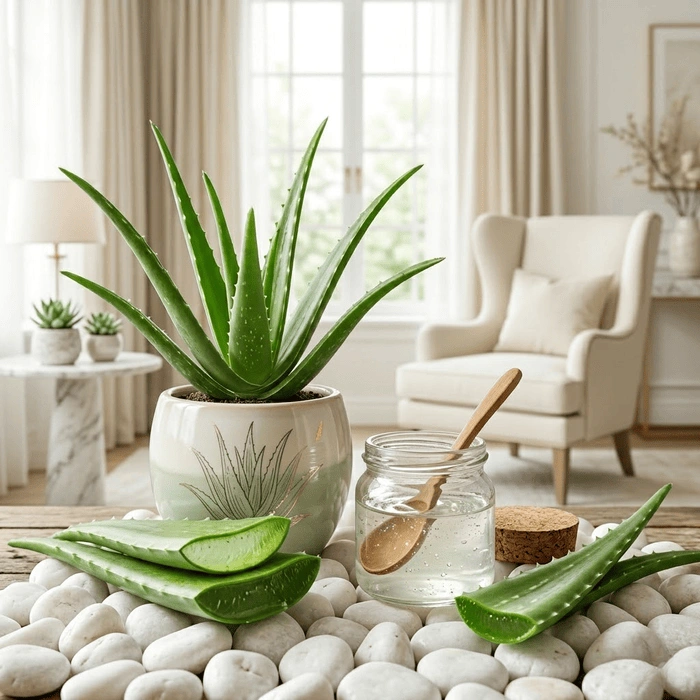
Vardhman Nutrition Co. is an India-based Aloe Vera Gel Manufacturer, Supplier and Global B2B Exporter offering India-origin botanical ingredients to overseas buyers. Aloe Vera Gel is obtained from the inner leaf portion of Aloe barbadensis Miller, commonly known as Aloe Vera. It is an important plant-based ingredient used across cosmetic, personal-care, skin-care, hair-care, herbal and selected wellness product formulations.
Our Natural Aloe Vera Gel from India is intended for commercial and industrial buyers looking for botanical raw materials for further manufacturing and formulation. Vardhman Nutrition Co. focuses on international B2B supply rather than retail distribution and works with importers, wholesalers, distributors, cosmetic manufacturers, personal-care companies, herbal businesses, nutraceutical organizations and private-label brands.
For international sourcing, buyers can discuss bulk quantity, product grade, physical characteristics, processing requirements, packaging, intended application, destination country and technical documentation.
Indian-Origin Aloe Vera Gel for Commercial Formulators
Aloe Vera Gel is valued as a versatile botanical ingredient because of its smooth gel form and plant-derived origin. Manufacturers can incorporate it into suitable cosmetic and personal-care systems depending on their formulation objectives and technical requirements.
The commercial characteristics of Aloe Vera Gel can vary according to the source of the Aloe leaves, harvesting conditions, processing, filtration, stabilization, preservation and storage. Therefore, professional buyers should evaluate the specifications of the particular grade before incorporating it into a finished product.
Vardhman Nutrition Co. provides an India-based sourcing option for companies searching for an Aloe Vera Gel Supplier from India, particularly those requiring commercial quantities and export-oriented B2B support.
Botanical Characteristics of Aloe barbadensis Miller
Aloe Vera is a succulent plant with thick, fleshy leaves containing an inner gel material. The commonly used botanical name is Aloe barbadensis Miller, and the plant belongs to the Asphodelaceae family.
The inner leaf portion is separated from the outer leaf material and processed according to the intended commercial grade. The resulting Aloe Vera Gel can then be evaluated for physical, chemical and microbiological characteristics relevant to its application.
Basic Product Identification
- Product: Aloe Vera Gel
- Common Name: Aloe Vera
- Botanical Name: Aloe barbadensis Miller
- Family: Asphodelaceae
- Plant Part: Inner Leaf Gel
- Physical Form: Gel
- Origin: India
Correct botanical identification is particularly important for international buyers sourcing Aloe barbadensis Gel Supplier from India or Aloe barbadensis Miller Gel Exporter services.
Why Aloe Vera Gel Is Widely Used in Formulation Development
The versatility of Aloe Vera Gel makes it suitable for a variety of formulation concepts. Cosmetic and personal-care manufacturers may select it where a botanical gel component is required.
Depending on the grade and formulation system, commercial applications can include:
- Facial gels
- Moisturizing products
- Skin-conditioning formulations
- Face masks
- Body-care products
- After-sun formulations
- Cosmetic lotions
- Personal-care gels
- Hair-care products
- Botanical beauty preparations
The suitability of the material should always be assessed against the finished-product formulation, compatibility requirements, stability expectations and destination-market regulations.
Aloe Vera Gel for Modern Skin-Care Formulations
Aloe Vera Gel for Skin Care Products is commonly considered by manufacturers developing products focused on moisturizing, refreshing and conditioning applications.
The gel may be incorporated into facial formulations, body-care systems and other topical products where a botanical ingredient is desired. Its smooth consistency allows formulators to develop different product textures depending on the overall formulation.
Potential commercial categories include:
- Hydrating face gels
- Moisturizing creams
- Facial masks
- Body lotions
- Skin-conditioning gels
- Cooling cosmetic products
- Botanical skin-care formulations
- After-sun products
The final formulation should undergo suitable stability, compatibility and microbiological evaluation before commercial launch.
Cosmetic Industry Applications of Aloe Vera Gel
Aloe Vera Gel for Cosmetic Industry applications extend across beauty and personal-care manufacturing. Cosmetic companies may use this ingredient in formulations designed around plant-based positioning and topical care.
Common product categories include:
- Face washes
- Facial gels
- Moisturizers
- Skin creams
- Cosmetic masks
- Body lotions
- Sunscreen-related formulations
- Lip-care products
- Makeup preparation products
- Botanical beauty products
The exact suitability of Aloe Vera Gel depends on its grade, processing characteristics and the other ingredients used in the finished formulation.
Cosmetic manufacturers should also ensure that finished-product claims are supported by appropriate evidence and comply with the regulatory framework applicable in their target market.
Personal-Care Product Development with Aloe Vera
The use of botanical ingredients in personal-care products continues to create opportunities for Aloe Vera-based formulations. Aloe Vera Gel for Personal Care can be considered for a range of body and skin applications.
Potential uses include hand-care products, bath formulations, moisturizing systems, skin-conditioning gels and herbal personal-care preparations.
For manufacturers, the ingredient can be evaluated according to:
- Desired texture
- Formulation compatibility
- pH requirements
- Viscosity
- Stability
- Microbiological quality
- Preservation system
- Packaging requirements
These technical parameters should be established according to the finished product rather than assumed universally for every Aloe Vera Gel grade.
Hair and Scalp Formulation Possibilities
Aloe Vera is also used in selected hair-care and scalp-care formulations. Manufacturers looking for botanical ingredients for hair products may consider Aloe Vera Gel for Hair Care applications.
Possible product categories include:
- Hair gels
- Hair masks
- Conditioning products
- Scalp-care formulations
- Botanical shampoos
- Herbal hair-care products
- Hair styling preparations
The performance and suitability of the ingredient will depend on the formulation system, processing conditions and desired final-product characteristics.
For commercial development, buyers should communicate their intended application so the appropriate product grade and technical requirements can be evaluated.
Traditional Botanical Background and Wellness Positioning
Aloe Vera has been used historically in several traditional botanical practices for skin care and general wellness. Its long-standing use has contributed to its continued presence in modern botanical and natural-product markets.
Today, Aloe-derived ingredients can be found in selected herbal and wellness formulations. Depending on the grade and regulatory classification, Aloe Vera Gel may be considered for particular botanical applications.
Traditional use should not be interpreted as proof of a medical effect. Similarly, finished products should not make therapeutic claims unless those claims are supported and legally permitted in the destination market.
This distinction is especially important for exporters and international manufacturers developing products for different regulatory jurisdictions.
Natural Components Present in Aloe Vera Gel
Aloe Vera contains a diverse range of naturally occurring plant constituents. Depending on the raw material and processing method, Aloe-derived material may contain:
- Polysaccharides
- Acemannan-related fractions
- Organic acids
- Enzymes
- Amino acids
- Minerals
- Naturally occurring sugars
- Other plant-derived compounds
The natural composition may vary according to botanical source, cultivation conditions, harvesting practices, processing method, stabilization and storage.
For this reason, specific constituent concentrations should be determined through appropriate laboratory analysis rather than assumed from general descriptions of Aloe Vera.
B2B customers requiring particular analytical parameters can communicate their testing and documentation requirements before commercial procurement.
Processing Approach for Commercial Aloe Vera Gel
Controlled processing is important for preparing Aloe Vera Gel for commercial applications. The general process begins with the selection of suitable Aloe Vera leaves followed by cleaning and removal of unsuitable outer portions.
The inner leaf material is then collected and may undergo filtration or purification where applicable. Depending on the intended grade, additional processing and stabilization steps can be applied before quality evaluation and packaging.
A typical processing sequence may involve:
- Selection of suitable Aloe Vera leaves
- Cleaning of incoming raw material
- Removal of unsuitable outer leaf portions
- Collection of inner leaf material
- Filtration or purification where applicable
- Processing and stabilization
- Quality evaluation
- Filling into suitable containers
- Final packaging
- Storage under recommended conditions
Processing details can differ between grades and applications, so commercial buyers should confirm the specific production specifications before ordering.
Technical Parameters for Aloe Vera Gel Buyers
Professional manufacturers may require detailed information before approving a botanical ingredient. Depending on the grade and intended use, Aloe Vera Gel may be evaluated for:
- Botanical identity
- Appearance
- Colour
- Odour
- pH
- Viscosity
- Moisture or solids content
- Microbiological parameters
- Total plate count
- Yeast and mould
- Heavy metals where applicable
- Pesticide residue requirements where applicable
- Preservative information where applicable
- Stability-related parameters
Exact specifications depend on the product grade, intended application and buyer requirements. Batch-specific documentation should therefore be used for commercial quality verification.
Bulk Aloe Vera Gel Procurement from India
Vardhman Nutrition Co. provides Bulk Aloe Vera Gel Supplier from India solutions for professional buyers requiring commercial quantities.
Bulk procurement can be relevant to:
- Cosmetic manufacturers
- Personal-care companies
- Herbal product brands
- Beauty-product manufacturers
- Botanical ingredient distributors
- International importers
- Wholesale buyers
- Private-label organizations
- Contract manufacturers
Buyers can discuss their required quantity, product grade, application, packaging format, specifications and destination before finalizing a commercial supply arrangement.
The B2B approach is intended for companies that purchase Aloe Vera Gel as a manufacturing or formulation ingredient.
Aloe Vera Gel Wholesale Supply for Overseas Businesses
Businesses searching for an Aloe Vera Gel Wholesale Supplier can source India-origin material for larger commercial requirements. Wholesale procurement may involve recurring orders, bulk shipments, customized packaging, technical documentation and application-specific specifications.
Vardhman Nutrition Co. works with international buyers who may require consistent communication regarding quantity, packaging, product grade and destination-market requirements.
The exact commercial terms can be discussed according to the buyer's procurement program.
B2B Aloe Vera Gel Manufacturer for International Sourcing
Vardhman Nutrition Co. operates as an Aloe Vera Gel B2B Supplier supporting importers, distributors, manufacturers, wholesalers and private-label businesses.
Companies searching for an Aloe Vera Gel B2B Manufacturer or Aloe Vera Gel B2B Exporter from India can discuss requirements related to:
- Bulk orders
- Product grade
- Technical specifications
- Packaging
- Private-label supply
- Contract supply
- Export documentation
- Destination-market requirements
The company focuses on international B2B procurement rather than retail distribution.
India-Based Supplier for Aloe barbadensis Gel
For international search intent, buyers may use several commercial keywords when looking for an India-origin supplier. These include:
- Aloe Vera Gel Manufacturer in India
- Aloe Vera Gel Supplier from India
- Aloe Vera Gel Exporter from India
- Indian Aloe Vera Gel Supplier
- Indian Aloe Vera Gel Exporter
- Natural Aloe Vera Gel Supplier in India
- Bulk Aloe Vera Gel Supplier from India
- Aloe Vera Gel Wholesale Supplier in India
- Aloe Vera Gel B2B Supplier
- Aloe Vera Cosmetic Ingredient Supplier
- Aloe barbadensis Gel Supplier from India
- Aloe barbadensis Miller Gel Exporter
These keyword variations reflect different commercial searches used by overseas importers and manufacturers looking for botanical ingredients from India.
Aloe Vera Gel Export from India to Global Markets
Vardhman Nutrition Co. supports international B2B enquiries for India-origin Aloe Vera Gel. Export requirements can vary according to the destination, product grade, application, documentation and importing regulations.
Aloe Vera Gel Export to USA
Businesses searching for Aloe Vera Gel Export to USA can discuss commercial requirements with Vardhman Nutrition Co. US importers, cosmetic manufacturers, personal-care companies and ingredient distributors can provide their desired grade, quantity, packaging and technical specifications.
Aloe Vera Gel Export to UK and Europe
For businesses seeking Aloe Vera Gel Export from India to UK and Europe, commercial discussions can cover botanical identity, product specifications, quality parameters, packaging and supporting documentation.
Aloe Vera Gel Export to Germany
International buyers searching for Aloe Vera Gel Export from India to Germany can communicate their product grade, intended use, quantity and documentation requirements for commercial evaluation.
Aloe Vera Gel Export to UAE, Australia and South Korea
Vardhman Nutrition Co. can also discuss B2B enquiries for buyers in the UAE, Australia and South Korea. Destination-specific product and import requirements should be established before shipment.
Private Label Aloe Vera Gel and OEM Requirements
Private-label brands may require Aloe Vera Gel as a botanical ingredient for their own cosmetic, personal-care or wellness product lines.
Vardhman Nutrition Co. can discuss:
- Aloe Vera Gel Private Label
- Aloe Vera Private Label Supplier
- Aloe Vera Gel Private Label Manufacturer
- Customized packaging
- OEM botanical ingredient supply
- Contract supply
- Buyer-specific labeling
Private-label requirements should be finalized according to the finished-product concept, packaging specifications, order quantity and regulations of the destination market.
Export Packaging and Documentation Support
Suitable packaging is important for maintaining product integrity during storage and international transportation. Packaging requirements may vary according to product grade, order volume, transportation conditions and buyer preferences.
Depending on the commercial transaction and destination, buyers may request:
- Certificate of Analysis (COA)
- Technical Data Sheet (TDS)
- Material Safety Data Sheet (MSDS), where applicable
- Certificate of Origin
- Microbiological analysis
- Product specification sheet
- Buyer-specific technical documents
The final documentation package should be confirmed before shipment according to the product grade and destination-market requirements.
Storage Conditions for Aloe Vera Gel
Appropriate storage is important for maintaining the quality of Aloe Vera Gel. Storage conditions depend on the product grade, stabilization system, preservation method and packaging.
General considerations include:
- Follow the manufacturer's recommended storage conditions.
- Protect the material from excessive heat.
- Keep away from direct sunlight.
- Keep containers tightly closed.
- Prevent contamination during handling.
- Avoid unnecessary exposure to air.
- Maintain hygienic storage conditions.
- Follow batch-specific storage instructions.
Because different grades can have different stabilization and preservation systems, the manufacturer's specific recommendations should take priority.
Shelf-Life Factors for Commercial Aloe Vera Gel
The shelf life of Aloe Vera Gel cannot be assigned as one universal period for every product. It can depend on several factors, including:
- Raw-material quality
- Processing method
- Stabilization
- Preservation system
- Packaging
- Storage conditions
- Product grade
Therefore, international buyers should refer to the applicable batch specification and manufacturer documentation for the actual shelf-life information rather than relying on a generic period.
Vardhman Nutrition Co. as an India-to-Global Supply Partner
Vardhman Nutrition Co. is an India-based manufacturer and global B2B exporter of natural ingredients, including Essential Oils, Cold Pressed Virgin Seed Oils and Botanical Herbs.
Established in 2018, the company serves international importers, distributors, cosmetic manufacturers, nutraceutical businesses, herbal companies and private-label organizations.
The company operates with an ISO 9001:2015 quality management system and follows a quality-focused approach to manufacturing and packaging activities.
For companies searching for an Aloe Vera Gel Manufacturer, Aloe Vera Gel Supplier or Aloe Vera Gel Exporter from India, Vardhman Nutrition Co. provides an India-based option for commercial B2B sourcing.
Frequently Asked Questions for Aloe Vera Gel Importers
What is Aloe Vera Gel?
Aloe Vera Gel is a botanical material obtained from the inner leaf portion of Aloe Vera, commonly identified as Aloe barbadensis Miller.
What is the botanical name of Aloe Vera Gel?
The commonly used botanical name is Aloe barbadensis Miller. Buyers should verify the botanical identity specified for the particular commercial grade.
What industries use Aloe Vera Gel?
Aloe Vera Gel can be used in cosmetic, skin-care, personal-care, hair-care, herbal and selected botanical formulations depending on the product grade.
Can I buy Bulk Aloe Vera Gel from India?
Yes. Vardhman Nutrition Co. focuses on international B2B sourcing enquiries for bulk Aloe Vera Gel from India.
Do you supply Aloe Vera Gel to cosmetic manufacturers?
Yes. Cosmetic manufacturers can discuss their required grade, application, quantity, specifications, packaging and documentation requirements.
Is Natural Aloe Vera Gel available for international buyers?
India-origin Natural Aloe Vera Gel can be discussed according to the required commercial grade and intended application.
Can you provide private-label Aloe Vera Gel?
Private-label and OEM requirements can be discussed according to the buyer's product concept, quantity, packaging and destination-market requirements.
Do you export Aloe Vera Gel to the USA and Europe?
International B2B export enquiries can be discussed for the USA, UK, Europe, Germany, UAE, Australia and South Korea, subject to product and destination requirements.
What technical documents can be provided?
Depending on the grade and destination, documents may include COA, TDS, MSDS where applicable, Certificate of Origin and relevant quality documentation.
What information should I provide for a quotation?
International buyers should provide the required quantity, product grade, intended application, specifications, packaging preference, destination country and technical-documentation requirements.
Request a Bulk Aloe Vera Gel Quotation from India
International buyers searching for a Bulk Aloe Vera Gel Supplier, Aloe Vera Gel Wholesale Supplier, Aloe Vera Gel B2B Supplier, Aloe Vera Gel B2B Exporter from India, Natural Aloe Vera Gel Supplier, Aloe Vera Cosmetic Ingredient Supplier or Aloe barbadensis Gel Supplier from India can contact Vardhman Nutrition Co. for commercial sourcing discussions.
For a quotation, please provide:
- Required quantity
- Product grade
- Intended application
- Preferred specifications
- Packaging requirements
- Destination country
- Technical documentation requirements
Vardhman Nutrition Co. supports overseas buyers seeking India-origin Aloe Vera Gel for professional cosmetic, personal-care, herbal and botanical applications.
Product Information Disclaimer
Traditional uses and general botanical information presented on this page are provided for informational purposes only. They should not be interpreted as medical advice, disease treatment claims or guaranteed health outcomes. Finished-product claims, labeling, formulation and regulatory compliance must be evaluated according to the laws and requirements of the destination market.
.webp)



.webp)
.webp)
.webp)
.webp)
.webp)
.webp)
.webp)
.webp)
.webp)
.webp)
.webp)
.webp)
.webp)