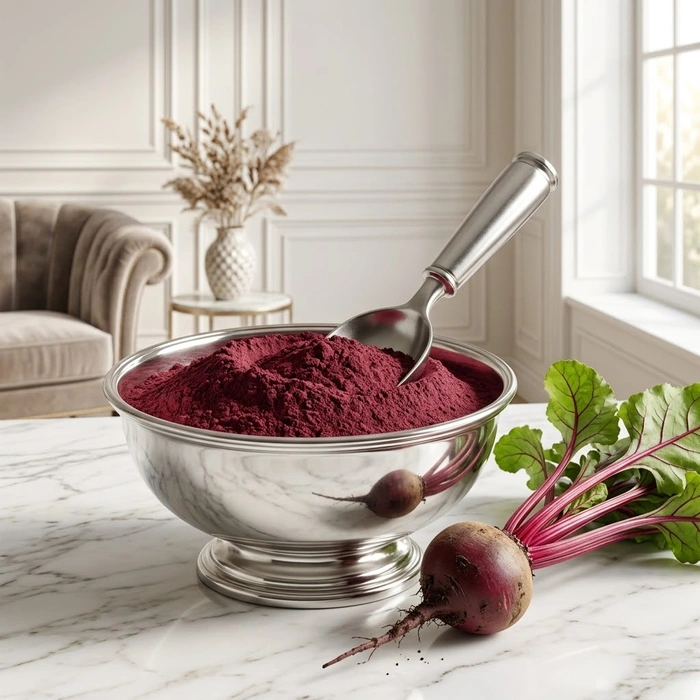
Beetroot Root Powder for International B2B Supply and Export from India
Beetroot Root Powder is a dry botanical ingredient prepared from mature roots of Beta vulgaris. The roots are cleaned, sliced, dried under controlled conditions and finely milled to obtain a convenient powdered raw material. Its naturally deep red-to-purple appearance, earthy flavour and botanical composition make it relevant to food manufacturing, beverages, sports nutrition, nutraceutical formulations, dietary supplements, cosmetics, personal-care products and selected natural pigment applications.
The powdered format offers practical handling advantages compared with fresh beetroot. It is easier to store, transport, measure and incorporate into commercial formulations. Naturally occurring betalains, dietary nitrates, vitamins, minerals, dietary fiber and antioxidant compounds contribute to the interest of this botanical material among international manufacturers and ingredient buyers.
For businesses searching for Beetroot Root Powder from India, the ingredient can be evaluated for commercial manufacturing, wholesale distribution, private-label development, ingredient trading and international B2B procurement. Product suitability should always be assessed according to the intended application, technical specification and destination-market requirements.
Origin, Species and Root Material
The botanical identity of the ingredient is Beta vulgaris. Beetroot belongs to the Amaranthaceae family, and the root is the commercially important plant part used for powder preparation. Mature roots are selected and processed through cleaning, cutting, drying and milling.
This transformation converts the fresh agricultural material into a dry botanical ingredient suitable for easier commercial handling. The final appearance is generally deep red to purple, while the flavour profile can have mild sweetness with an earthy character.
Botanical Identification
- Botanical name: Beta vulgaris
- Plant part: Root
- Product form: Dry botanical powder
- Typical colour: Deep red to purple
- Main natural pigment: Betanin
- Plant family: Amaranthaceae
The composition and physical characteristics can vary according to cultivation conditions, root maturity, drying method and processing conditions. Buyers requiring defined technical parameters should therefore evaluate the applicable product specification.
Red-Purple Pigmentation and Betalain Profile
One of the most distinctive characteristics of beetroot is its natural pigmentation. Betalain compounds contribute to the characteristic red and purple shades associated with the root.
Important pigments identified in beetroot include betanin, isobetanin and vulgaxanthin. Their presence makes the material relevant to manufacturers interested in botanical sources of colour for suitable formulations.
The behaviour of these pigments can change according to pH, temperature, light, oxygen, storage and the composition of the finished formulation. Consequently, commercial manufacturers should conduct application-specific trials before establishing a final formulation.
Nutrient Spectrum of Dried Beetroot
Beetroot contains naturally occurring inorganic nitrates along with a range of vitamins, minerals, dietary fiber and other plant compounds. These constituents contribute to its interest as a botanical raw material for nutritional product development.
Naturally Occurring Nitrates
Dietary nitrates are one of the components for which beetroot has attracted attention, particularly within sports nutrition and scientific research involving nitric oxide pathways.
Vitamins and Minerals
Reported vitamins include vitamin C, vitamin B6 and vitamin B9. Mineral constituents include potassium, magnesium, iron, calcium, phosphorus, manganese and copper.
Additional Plant Constituents
The source identifies flavonoids, polyphenols, phenolic compounds, saponins, amino acids, natural sugars, soluble fiber, insoluble fiber and antioxidant compounds among the naturally occurring constituents.
The concentration of individual constituents may vary according to cultivation, maturity, drying and processing conditions. Buyers seeking a particular nutritional profile should confirm the relevant commercial specification.
Food Product Formulation Possibilities
The food sector represents an important application area for beetroot powder. Its colour, botanical identity, mild sweetness and nutritional profile allow it to be considered in a range of food formulations.
Potential applications include smoothies, juices, shakes, soups, sauces, dressings, bakery products, cakes, cookies, muffins, bread, functional foods and nutritional blends.
Manufacturers can evaluate the powder in both dry and selected wet formulations. The appropriate inclusion level and processing conditions depend on the final product, desired colour, flavour profile, dispersion characteristics and technical requirements.
Natural Colouring Ingredient for Food Manufacturers
Beetroot Powder for natural food coloring is relevant to manufacturers seeking plant-derived colouring materials for appropriate food applications.
Beetroot-derived pigments may be considered for confectionery, bakery products, beverages, sauces and other processed foods. The material can provide red-to-purple shades depending on the formulation environment.
Beetroot-derived colouring is associated with E-162 terminology. Regulatory acceptance, permitted use and labelling requirements can differ by country and finished-product category, so international manufacturers should verify the applicable rules before commercial use.
Heat, light and oxygen may influence pigment stability. Application trials are therefore important for manufacturers requiring consistent colour performance.
Beverage Development with Beetroot Ingredients
Beetroot Powder for beverages can be evaluated for powdered drink mixes and liquid beverage concepts where its natural colour and botanical profile are suitable.
Potential categories include functional beverages, sports drinks, energy drinks, nutritional shakes, smoothie mixes, wellness beverages, detox-style drinks and plant-based beverage blends.
Manufacturers should assess dispersion, sedimentation, colour retention, flavour balance and processing compatibility during development. The appropriate specification can differ between instant powders, concentrates and ready-to-drink products.
Active Nutrition and Exercise Product Development
Beetroot Root Powder for sports nutrition can be considered for pre-workout formulations, endurance products, sports beverages, energy blends and exercise-oriented nutritional powders.
The naturally occurring nitrate content has been investigated in relation to nitric oxide production, blood flow, exercise performance, endurance and oxygen utilization.
Research outcomes can vary according to product formulation, quantity, study design and other factors. Therefore, scientific findings should not be represented as guaranteed results for every finished product or consumer.
Manufacturers targeting international markets should establish product claims according to appropriate evidence and the regulatory requirements of each destination.
Nutraceutical Manufacturing Applications
Beetroot Root Powder for nutraceutical products can be evaluated by manufacturers developing botanical nutritional formulations.
Potential finished formats include capsules, tablets, powdered supplements, nutritional blends, functional foods, wellness formulations and dietary supplement products.
Its betalains, nitrates, vitamins, minerals, dietary fiber and antioxidant-related compounds contribute to its relevance as a plant-derived ingredient. Formulation requirements should be established according to the intended product category and target market.
Dietary Supplement and Wellness Concepts
Beetroot Powder for dietary supplements can be incorporated into nutritional formulations designed around botanical ingredients and balanced nutrition.
The ingredient may be evaluated in powdered blends, capsules, tablets and other supplement formats. Its natural composition makes it relevant to manufacturers developing products for general wellness and active-lifestyle positioning.
Nutritional characteristics should be distinguished from medical treatment claims. Finished products should be marketed according to the applicable regulations of the intended country.
Scientific Interest in Antioxidant Compounds
Beetroot contains betalains, polyphenols and other compounds that have been investigated for antioxidant activity. Scientific research has also explored their interaction with oxidative processes and inflammatory pathways.
These areas represent ongoing research interest. Commercial product descriptions should therefore avoid unsupported therapeutic promises and should distinguish scientific investigation from confirmed clinical outcomes.
Nitrate and Circulation Research
Naturally occurring nitrates are among the most researched components of beetroot. Scientific studies have examined relationships involving nitric oxide availability, blood flow and blood-pressure-related parameters.
Results can vary according to dosage, preparation, study design and individual factors. This research background contributes to the interest in beetroot ingredients for sports-oriented and functional nutrition products, while finished-product claims require appropriate evidence and regulatory review.
Beauty Formulations Using Botanical Beetroot
Beetroot Root Powder for cosmetics can be considered by cosmetic manufacturers developing botanical beauty and personal-care formulations.
Potential applications include face masks, face packs, lip balms, blush formulations, botanical skincare products, natural beauty preparations and herbal personal-care products.
Its deep red-purple appearance can be useful in selected formulations where botanical pigmentation is desired. Compatibility, concentration, stability and finished-product performance should be established through formulation testing.
Personal-Care and Hair Formulation Opportunities
Beetroot Powder for personal care can be evaluated for botanical beauty concepts involving skin and hair-care preparations.
Potential product concepts include facial masks, botanical skin formulations, natural colour cosmetics and selected hair-care preparations. The suitability of the powder depends on the formulation system, processing conditions and desired finished-product characteristics.
Manufacturers should conduct their own stability and compatibility assessments before commercial production.
Nutritional and Health-Product Manufacturing
Beetroot is identified as a botanical raw material for nutritional preparations, botanical supplements, health-support products, capsules, tablets and functional powders.
Research has examined areas including blood pressure, circulation, exercise performance, antioxidant activity and liver-related biological processes. These areas remain research subjects and should not be presented as established disease-treatment claims.
Animal Feed Ingredient Considerations
Beetroot Powder for animal nutrition can be evaluated as a botanical ingredient for selected animal-feed formulations.
Its naturally occurring minerals, carbohydrates, fiber and plant compounds may be relevant to nutritional product development. Suitability depends on animal species, formulation objectives, inclusion requirements and applicable feed regulations.
Textile and Natural Pigment Possibilities
The natural pigmentation of beetroot has also generated interest in selected non-food applications. Beetroot-derived pigments can be investigated for textile and natural-colour concepts.
Industrial users should conduct application-specific trials because colour performance depends on concentration, substrate, processing conditions and pigment stability.
Commercial Characteristics for Ingredient Buyers
For international buyers evaluating the material, relevant characteristics can include deep red-purple colour, betalain content, betanin, dietary nitrates, vitamins, minerals, dietary fiber, antioxidant-related compounds, mild sweet earthy flavour, water dispersibility and ease of blending.
The source also identifies vegetarian suitability, vegan suitability, generally gluten-free characteristics and availability from non-GMO sources. Exact attributes should be confirmed against the applicable commercial specification rather than assumed for every batch.
Botanical Raw Material for Global Product Developers
Beetroot botanical ingredient can be considered by manufacturers developing food, beverage, nutrition, sports, cosmetic and personal-care products.
Its combination of natural pigmentation and nutritional constituents gives product developers multiple ways to evaluate the material within different formulation categories. Final suitability depends on product design, processing conditions, technical specifications and destination-market regulations.
Bulk Procurement for International B2B Buyers
Bulk Beetroot Root Powder is relevant to companies requiring commercial quantities for manufacturing, formulation, distribution and private-label programs.
Potential buyers include:
- Food manufacturers
- Beverage companies
- Nutraceutical brands
- Sports nutrition businesses
- Dietary supplement manufacturers
- Cosmetic companies
- Personal-care brands
- Pharmaceutical businesses
- Ingredient distributors
- Private-label companies
- Wholesale botanical traders
International buyers can communicate their required quantity, intended application, packaging preference, product specification, destination country and documentation requirements before placing a commercial order.
Indian Supplier for Overseas Manufacturing Programs
Businesses searching for a Beetroot Root Powder supplier from India can evaluate potential supply according to botanical identity, raw-material quality, drying practices, milling consistency, packaging and commercial availability.
A professional procurement discussion can include order volume, application, packaging format, technical requirements, destination and documentation. This information helps align the botanical ingredient with the buyer's manufacturing program.
Indian Manufacturing Source for Beetroot Powder
A Beetroot Root Powder manufacturer in India can support overseas businesses seeking Indian-origin botanical material for commercial formulation and distribution.
Buyers can evaluate the manufacturing source based on product identity, raw-material handling, drying and milling practices, powder consistency, packaging suitability and ability to meet commercial requirements.
For international procurement, the intended application and destination-market requirements should be communicated before finalizing the product specification.
Export-Oriented Beetroot Ingredient Supply
Beetroot Powder exporter India is a commercial search term used by overseas businesses looking for Indian botanical ingredients for manufacturing and distribution.
The material can be considered for international B2B supply programs serving importers, distributors, manufacturers and private-label companies. Documentation and import requirements can vary according to destination country and application.
International Markets Served from India
Indian-origin beetroot ingredients can be evaluated for overseas procurement in markets including the USA, UK, Germany, Europe, UAE, Australia and South Korea, along with other international destinations.
For each destination, buyers should establish the applicable import, food, supplement, cosmetic or other product-specific requirements before commercial shipment.
Wholesale Ingredient Distribution
Wholesale Beetroot Powder supplier programs can be relevant to ingredient distributors, botanical traders, manufacturers and businesses purchasing material for further commercial distribution.
Wholesale requirements may vary according to order quantity, packaging, product specification, application and destination. Buyers should communicate these parameters during procurement discussions.
Private-Label and OEM Development
Beetroot Powder private label programs can support businesses developing their own branded food, beverage, nutrition, supplement or cosmetic products.
For companies requiring customized manufacturing arrangements, Beetroot Powder for OEM development can be evaluated according to product specifications, packaging requirements, quantity and intended market.
Private-label and OEM projects should establish the exact raw-material specification and commercial requirements before production.
Bulk Export Supply from India
Bulk Beetroot Powder from India can be considered by importers, distributors and manufacturers requiring commercial quantities of an Indian-origin botanical ingredient.
The appropriate supply arrangement can depend on required volume, packaging, application, destination and documentation. International buyers should communicate these details clearly to support accurate commercial evaluation.
Wholesale and Import Procurement Requirements
Businesses involved in Beetroot Powder wholesale export can evaluate the ingredient for food, beverage, nutraceutical, sports nutrition, cosmetic and personal-care markets.
Importers and distributors can provide their expected order volume, application, packaging requirements and destination market so the material can be assessed against their procurement program.
Quality Review Before Commercial Ordering
Before purchasing Beetroot Root Powder in bulk, professional buyers commonly evaluate botanical identity, mature-root source, colour, particle size, moisture, aroma, flavour, cleanliness, contamination control, packaging and batch consistency.
For food, nutraceutical and cosmetic applications, the required specification should correspond to the formulation and target-market requirements.
Key Procurement Parameters
- Botanical identity
- Raw-material maturity
- Colour characteristics
- Particle-size uniformity
- Moisture level
- Aroma and flavour
- Cleanliness
- Contamination control
- Packaging integrity
- Batch consistency
Storage During International Transportation
Commercial storage should protect the powder from excessive heat, humidity, light and oxygen. The source recommends approximately 15°C to 25°C with relative humidity below 60%.
Airtight, moisture-resistant packaging should be used where appropriate. During international transportation and warehousing, exposure to unsuitable environmental conditions should be minimized.
Shelf Stability and Physical Condition
Under suitable packaging and storage conditions, the source indicates an approximate shelf-life range of 12–24 months.
Quality retention depends on raw-material condition, drying method, moisture, packaging, temperature, humidity, light and oxygen exposure.
Potential signs of deterioration can include fading or dulling of colour, unusual odour, moisture-related lumps, changes in taste, mould or visible contamination. Material showing questionable quality should not be used.
Procurement for Importers and Distributors
Beetroot Powder for importers can be considered by international businesses sourcing botanical ingredients for further manufacturing or distribution.
Beetroot Powder for distributors can also be evaluated for ingredient portfolios serving food, beverage, nutrition, sports, cosmetic and personal-care manufacturers.
Buyers should define the product application, quantity, packaging and destination requirements before final procurement.
B2B Ingredient Supply for International Manufacturers
Beetroot Powder for B2B buyers is relevant to companies purchasing botanical material for commercial formulation, ingredient distribution and private-label manufacturing.
An Indian-origin supply program can be evaluated according to the buyer's technical specification, order volume, packaging requirement, intended application and destination-market conditions.
Frequently Asked Questions for International Buyers
What is Beetroot Root Powder?
It is a finely processed dry botanical material obtained from mature roots of Beta vulgaris.
What is the botanical name of beetroot?
The botanical name is Beta vulgaris.
What gives beetroot its natural red-purple colour?
Betalain pigments, particularly betanin, contribute to the characteristic colour, with isobetanin and vulgaxanthin also identified among the pigments.
Can beetroot be used for natural food colouring?
Yes. Beetroot-derived pigments can be evaluated for suitable food applications, including beverages, bakery products, confectionery and sauces.
Can it be used in sports nutrition?
Yes. Its naturally occurring nitrate content has attracted scientific interest in sports and exercise-related formulations.
Can it be used in cosmetics?
Yes. It can be evaluated for suitable face masks, face packs, lip-care products, colour cosmetics and botanical skincare formulations.
Can international businesses purchase commercial quantities?
Yes. The ingredient can be evaluated for bulk manufacturing, wholesale distribution, private-label development and international B2B procurement.
Which international markets can be considered?
Potential markets identified in the source include the USA, UK, Germany, Europe, UAE, Australia and South Korea, subject to the applicable destination-market requirements.
What information should an overseas buyer provide?
Buyers should ideally provide required quantity, application, packaging preference, technical specification, destination country and documentation requirements.
What storage conditions are recommended?
Approximately 15–25°C, relative humidity below 60%, airtight moisture-resistant packaging and protection from excessive heat, humidity, light and oxygen are recommended.
What is the indicative shelf life?
The source indicates approximately 12–24 months under suitable packaging, storage and handling conditions.
India-Origin Beetroot Ingredient for Global Product Development
Beetroot Root Powder combines botanical identity, naturally occurring pigmentation, dietary nitrates, vitamins, minerals, fiber and other plant compounds in a convenient dry format. These characteristics make it relevant to international product developers working across food, beverages, sports nutrition, nutraceuticals, dietary supplements, cosmetics, personal care and selected natural pigment applications.
For overseas procurement, buyers can evaluate the material according to botanical identity, physical characteristics, intended application, packaging, quantity, documentation and destination-market requirements. The ingredient can therefore be considered by importers, distributors, manufacturers, private-label businesses, OEM developers and wholesale botanical traders seeking Indian-origin material for international markets.






.webp)



.webp)
.webp)
.webp)
.webp)
.webp)
.webp)
.webp)
.webp)
.webp)
.webp)
.webp)
.webp)

.webp)