.webp)
Gorakhmundi Powder – India-Origin Botanical Raw Material for Global B2B Export
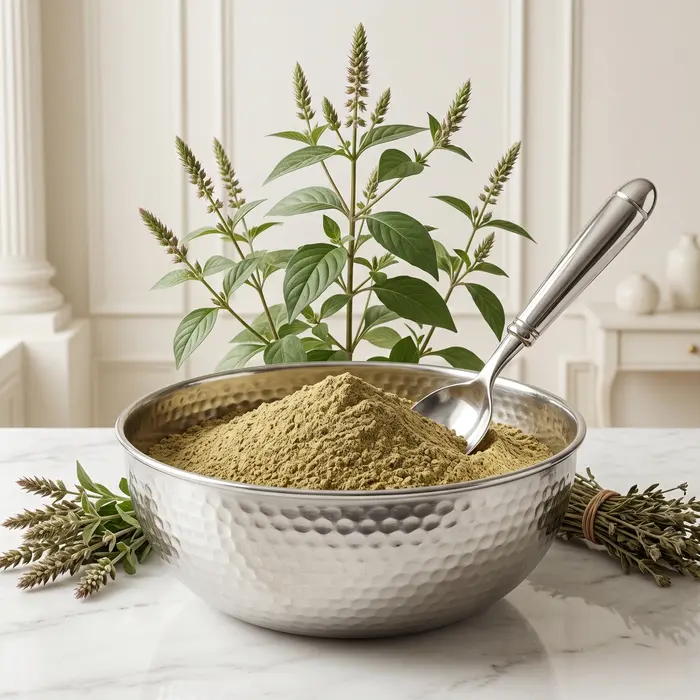
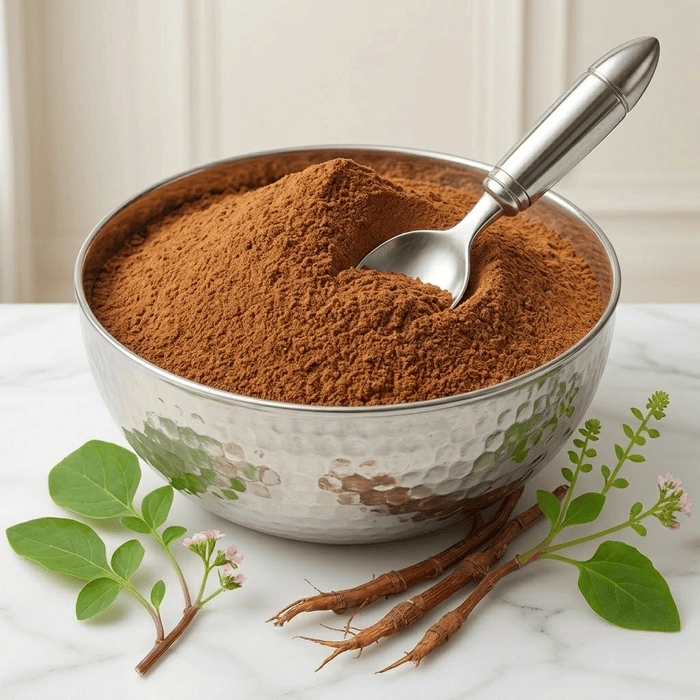
Gorakhmundi Powder is a botanical ingredient prepared from the dried material of Sphaeranthus indicus, a traditional herb belonging to the Asteraceae family. It is commonly known as Gorakhmundi, Gorakh Mundi, Mundi, Shravani and East Indian Globe Thistle. The plant is naturally aromatic and recognized by its distinctive rounded pinkish-purple flower heads. Different parts of the herb, including flowers, leaves, stems and roots, have been valued in traditional herbal practices.
For international B2B procurement, this India-origin botanical material can be considered by Ayurvedic manufacturers, herbal product companies, nutraceutical businesses, cosmetic manufacturers, personal-care brands, botanical distributors, private-label companies, wholesalers and overseas importers. The powdered form provides a practical raw material for formulation, blending and further manufacturing.
Understanding the Botanical Origin
The accepted botanical identity of Gorakhmundi is Sphaeranthus indicus, a member of the Asteraceae family. Botanical authentication is important for commercial procurement because different herbs may have similar regional names. Correct identification supports consistency in formulation and downstream processing.
International buyers may encounter this material under several commercial and traditional names, including Gorakh Mundi Powder, Gorakhmundi Herbal Powder, Gorakhmundi Botanical Powder, Gorakhmundi Ayurvedic Powder, and Ayurvedic Gorakhmundi Powder.
Scientific and international ingredient terminology includes Sphaeranthus indicus Powder, East Indian Globe Thistle Powder, Mundi Powder, and Shravani Powder. These descriptions can help buyers identify the botanical material when reviewing supplier catalogs, technical documents or procurement specifications.
For commercial formulation, the material can be positioned as a Gorakhmundi Herbal Ingredient, Gorakhmundi Botanical Ingredient, or Gorakhmundi Ayurvedic Ingredient, depending on the buyer's product category and intended application.
Role in Ayurvedic Product Manufacturing
Gorakhmundi has a long history within Ayurveda and traditional herbal practice. The powdered material can be incorporated into different formulation formats, including Ayurvedic churna, herbal powders, capsules, tablets, syrups, tonics, traditional decoctions, botanical blends and wellness preparations.
A commercial buyer may evaluate the product as a Gorakhmundi Herbal Supplement for appropriate plant-based wellness formulations. The powdered form provides a convenient raw material for weighing, blending and incorporation into different manufacturing systems.
Traditional Ayurvedic descriptions associate the herb with Kapha and Vata balancing applications, digestive support, skin wellness and general herbal care. These traditional associations should be distinguished from clinically established medical claims.
Digestive Formulation Opportunities
Traditional applications of Gorakhmundi include digestive-oriented herbal preparations. Ayurvedic formulations may incorporate it into products developed around normal digestion, appetite and intestinal comfort. Traditional use also includes occasional indigestion, gas, bloating and constipation.
For international formulation businesses, the dry botanical powder can be evaluated during product development, pilot manufacturing and larger-scale production. Its suitability for a particular formulation should be determined through the manufacturer's own technical evaluation.
Because the product is supplied as a dry powdered raw material, buyers can establish their desired mesh size, packaging quantity, moisture specification and other technical parameters according to their manufacturing process.
Botanical Applications in Skin Care
Gorakhmundi has traditionally been associated with skin-related herbal preparations. The material can be evaluated in face packs, botanical face washes, natural creams, herbal cleansing products, scrubs and other botanical personal-care concepts.
For cosmetic manufacturers, Gorakhmundi Skin Care Ingredient can describe its role within an appropriate botanical skincare formulation. The material may also be evaluated as a Gorakhmundi Cosmetic Ingredient for selected cosmetic product-development programs.
Traditional use has included preparations associated with itching, irritation, acne, boils and other skin concerns. These traditional applications should not be presented as guaranteed medical or dermatological treatment claims.
Hair and Scalp Formulation Potential
The botanical is also relevant to selected hair and scalp preparations. Potential uses include herbal hair masks, hair powders, scalp-care preparations, anti-dandruff formulations, botanical hair-care blends and herbal cleansing products.
For international personal-care companies, Gorakhmundi Hair Care Ingredient can be used as a product-development description when the material is being assessed for hair-related applications.
Manufacturers can determine how the botanical is incorporated into a finished formulation based on compatibility, desired characteristics, processing requirements and the regulations applicable to the destination market.
Nutraceutical and Herbal Supplement Development
The plant contains naturally occurring flavonoids, phenolic compounds, terpenoids, sterols, saponins, tannins and other phytochemicals. These constituents have generated scientific interest in antioxidant and other biological activities.
For suitable product-development projects, the material can be considered as a Gorakhmundi Nutraceutical Ingredient. It may be evaluated for botanical nutrition blends, herbal wellness products, antioxidant-oriented formulations, plant-based dietary supplements and functional herbal combinations.
Businesses developing supplement concepts may also evaluate Gorakhmundi Herbal Supplement material according to their intended formulation. Final dosage, composition, claims and labelling should be established by the finished-product manufacturer in accordance with destination-market requirements.
Respiratory and Liver-Wellness Concepts
Traditional herbal practices have incorporated Gorakhmundi into formulations associated with respiratory wellness. Potential commercial formats include herbal powders, capsules, traditional syrups, botanical blends and Ayurvedic respiratory formulations.
Scientific and traditional interest also extends to liver-related applications. Research has investigated hepatoprotective properties associated with Sphaeranthus indicus and its extracts. However, laboratory and animal findings should not be represented as definitive evidence of clinical treatment.
Phytochemical Profile of the Botanical Material
Gorakhmundi contains a diverse range of naturally occurring botanical constituents. Reported flavonoids include quercetin, luteolin and rutin, while alkaloid constituents include sphaeranthine and other naturally occurring alkaloids.
The plant also contains sesquiterpene lactones, eudesmanolides and various terpenoid compounds. Naturally occurring aromatic constituents include geraniol, farnesol, citral and eugenol.
Other reported components include phenolic compounds, beta-sitosterol, stigmasterol, saponins, tannins, glycosides, carbohydrates, proteins, minerals, vitamin C and B-complex vitamins. The level of individual compounds can vary according to cultivation, geographical location, plant maturity and processing conditions.
For technical procurement, buyers requiring specific analytical parameters should communicate their requirements before commercial supply.
Traditional Characteristics and Scientific Interest
Traditional Ayurvedic descriptions associate the herb with bitter, astringent and sweet tastes, light and dry qualities, hot potency and a pungent post-digestive effect. It is traditionally described in relation to Kapha and Vata balance.
Modern research has investigated antioxidant, anti-inflammatory, antimicrobial, antifungal and hepatoprotective activities. Other experimental areas include analgesic, antipyretic, immunomodulatory and metabolic effects.
The available research should be interpreted carefully because findings can vary according to plant part, extraction technique, concentration and experimental model. Additional standardized human clinical research is required before definitive health conclusions can be established.
Manufacturing Process for Export-Grade Powder
Commercial processing begins with selection of authenticated botanical material. Unwanted foreign matter is removed, followed by cleaning, sorting, controlled drying, inspection, grinding and sieving according to the required particle size. Quality evaluation and suitable packaging follow the processing stage.
An experienced Gorakhmundi Powder Manufacturer should maintain attention to botanical authenticity, raw-material selection, controlled drying, powder consistency and quality evaluation.
For B2B procurement, consistent batches are important because changes in moisture, colour, aroma or particle size can influence formulation and manufacturing operations. Buyers should therefore agree technical specifications before placing regular commercial orders.
Quality Specifications for International Procurement
International buyers may request botanical identity, plant-part identification, appearance, colour, aroma, moisture content, foreign matter, particle size, microbiological parameters, heavy-metal limits, pesticide-residue requirements and packaging specifications.
A Gorakhmundi Powder Supplier can supply according to mutually agreed specifications, quantity and packaging requirements. For specialized applications, buyers should communicate analytical and documentation requirements at the enquiry stage.
This approach is particularly useful for importers purchasing botanical materials for further manufacturing because technical specifications can be aligned with their own quality-control procedures.
Bulk Supply for International Buyers
For commercial procurement, a Gorakhmundi Powder Bulk Supplier can support businesses requiring larger quantities for ongoing manufacturing or distribution.
A Gorakhmundi Powder Wholesale Supplier can serve importers, distributors, manufacturers and other commercial buyers seeking a ready-to-process powdered botanical ingredient.
For wholesale purchasing programs, Gorakhmundi Powder Wholesale requirements may include quantity, mesh size, packaging format, moisture specification, testing requirements, documentation and private-label needs.
Potential B2B customers include Ayurvedic manufacturers, herbal product companies, nutraceutical businesses, cosmetic manufacturers, personal-care brands, supplement companies, botanical ingredient distributors, private-label businesses and wholesale importers.
India-Origin Manufacturing and Export Positioning
India has a long tradition of botanical herb use and Ayurvedic product development. For overseas procurement, an India-based Gorakhmundi Powder Manufacturer in India can support sourcing requirements involving botanical identity, controlled processing, product consistency and commercial documentation.
International buyers looking for a Gorakhmundi Powder B2B Supplier can specify the desired quantity, application, packaging and destination requirements before procurement.
For companies sourcing through international trade channels, Gorakhmundi Powder Exporter from India represents the India-origin export supply category. Export conditions can vary according to destination, product classification and intended application, so applicable documentation, testing, packaging and labelling should be confirmed before shipment.
Export Opportunities Across Global Markets
For American buyers, Gorakhmundi Powder Export to USA can be evaluated according to the intended application, product specifications, analytical documentation and applicable requirements.
For British importers, Gorakhmundi Powder Export to UK can be considered for suitable Ayurvedic, herbal, botanical, cosmetic and wellness product-development programs.
For buyers across the European market, Gorakhmundi Powder Export to Europe may support sourcing for botanical formulations, herbal products, Ayurvedic concepts, supplements and personal-care applications.
For German purchasers, Gorakhmundi Powder Export to Germany can be evaluated according to technical specifications, documentation and destination-market requirements.
For Middle Eastern procurement, Gorakhmundi Powder Export to UAE can be considered for suitable B2B botanical sourcing programs.
Australian buyers may evaluate Gorakhmundi Powder Export to Australia according to their intended application, technical specifications and applicable import conditions.
For Asian markets, Gorakhmundi Powder Export to South Korea can similarly be considered subject to buyer specifications and destination regulations.
Private Label and OEM Manufacturing Support
International brands may require customized packaging, product specifications, particle size, documentation or labelling. Such requirements can be established according to the commercial project and intended application.
A Gorakhmundi Powder Private Label program can be considered by brands requiring customized packaging and product presentation.
Businesses seeking manufacturing-oriented sourcing can evaluate a Gorakhmundi Powder OEM Supplier arrangement based on their product specifications, packaging requirements, documentation and order volume.
For companies purchasing the herb specifically as a production input, Gorakhmundi Herbal Raw Material provides a clear description for commercial procurement.
Export Packaging, Storage and Shelf Life
Suitable packaging is important for international transportation of powdered botanical materials. Packaging should protect the material from moisture, humidity, direct sunlight, excessive heat, contamination and external odours.
Depending on the destination and application, international buyers may request a Certificate of Analysis, Technical Data Sheet, Safety Data Sheet and other relevant commercial documentation.
Storage should be carried out in an airtight container in a cool, dry and clean environment. Protection from sunlight, moisture and excessive heat can help preserve the natural aroma, colour and physical characteristics of the material.
Shelf life depends on raw-material quality, drying conditions, moisture level, packaging and storage environment. The applicable batch specification should be followed for the exact expiry period. Before use, the powder should be checked for unusual colour changes, abnormal odour, moisture absorption, mould, insect infestation or excessive clumping.
International B2B Procurement
Businesses seeking Gorakhmundi Raw Herb Powder can evaluate the material according to their required quantity, powder fineness, packaging format, quality parameters and destination market.
An India-origin botanical supply program can support manufacturers and importers seeking a consistent raw material for Ayurvedic, herbal, nutraceutical, cosmetic, personal-care and wellness applications. The appropriate product specification should always be established according to the final application and applicable destination-country requirements.
With its established traditional identity, recognized botanical classification and powdered raw-material format, Gorakhmundi can be evaluated by international buyers as part of their botanical ingredient sourcing requirements. Final product claims, dosage, labelling and regulatory compliance should always be determined according to the laws and requirements of the target market.





.webp)



.webp)
.webp)
.webp)
.webp)
.webp)
.webp)
.webp)
.webp)
.webp)
.webp)
.webp)
.webp)