Ashwagandha Roots
Premium Ashwagandha Roots from India – Bulk B2B Supplier, Manufacturer & Global Exporter
Ashwagandha Roots (Withania somnifera) are one of India's well-known botanical herbs, traditionally valued in Ayurveda and widely used as a botanical raw material in herbal and wellness formulations. Also known as Indian Ginseng and Winter Cherry, Ashwagandha is increasingly sourced by international buyers for use in botanical, Ayurvedic, nutraceutical and natural product applications.
Vardhman Nutrition Co. is an India-based Ashwagandha Root Manufacturer, Supplier and Exporter, providing Bulk Ashwagandha Roots for international B2B buyers. We work with importers, wholesalers, distributors, herbal product manufacturers, nutraceutical companies, pharmaceutical businesses, cosmetic manufacturers, private-label brands and OEM buyers looking for reliable Ashwagandha Supplier India solutions.
We can discuss commercial requirements for Whole Ashwagandha Roots, Dried Ashwagandha Roots, Cut Ashwagandha Roots and Ashwagandha Root Powder according to buyer specifications.
About Ashwagandha Root – Withania somnifera
Ashwagandha, scientifically known as Withania somnifera, belongs to the Solanaceae family. It is a medicinal plant traditionally cultivated and used in India, particularly in dry and semi-arid regions.
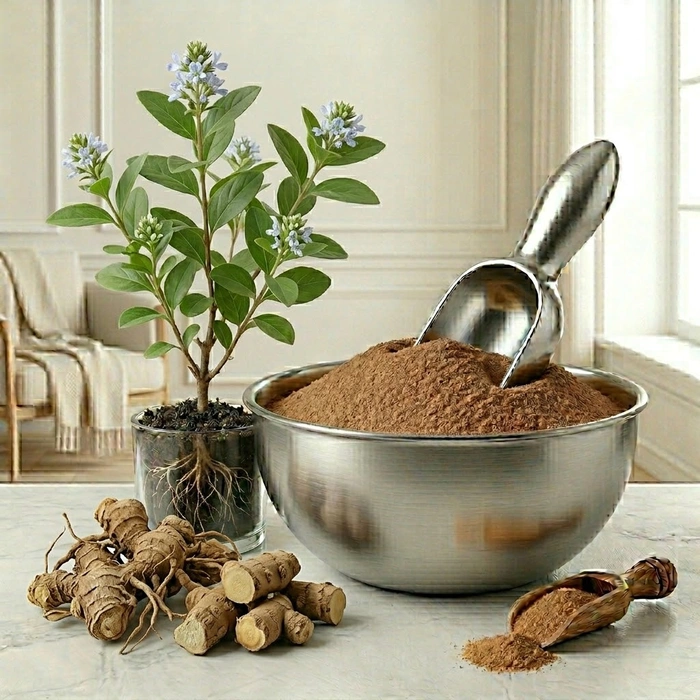
The thick, light-brown roots are the most commercially important part of the plant and are used as a botanical raw material for traditional preparations, herbal products and further processing.
The name Ashwagandha is traditionally associated with the Sanskrit words "Ashwa" and "Gandha", referring to the characteristic aroma of the root.
Today, Withania somnifera Root is sourced by manufacturers and ingredient buyers in different forms depending on their processing and formulation requirements.
Ashwagandha Roots Supplier from India
India has a long history of Ashwagandha cultivation and botanical ingredient processing. As an Ashwagandha Supplier India, Vardhman Nutrition Co. focuses on supplying selected botanical raw materials to international B2B customers.
Our sourcing and preparation approach focuses on:
- Selection of suitable Ashwagandha Roots
- Botanical identity and raw material suitability
- Cleaning and sorting
- Controlled drying
- Grading and handling
- Product-specific processing
- Batch consistency
- Quality evaluation
- Export-oriented packaging
Our objective is to support buyers looking for a dependable Ashwagandha Root Supplier for commercial manufacturing and botanical ingredient sourcing.
Bulk Ashwagandha Roots for International B2B Buyers
International buyers may search for Bulk Ashwagandha Roots, Ashwagandha Root Bulk Supplier, Ashwagandha Roots Wholesale Supplier or Wholesale Ashwagandha Roots when sourcing commercial quantities.
Vardhman Nutrition Co. provides B2B supply solutions for:
- Importers
- Wholesalers
- Distributors
- Herbal product manufacturers
- Nutraceutical companies
- Pharmaceutical businesses
- Cosmetic manufacturers
- Private-label brands
- OEM buyers
- Botanical ingredient traders
For buyers planning to Buy Ashwagandha Roots in Bulk or Import Ashwagandha Roots from India, commercial specifications, quantity, product form, packaging and destination requirements can be discussed before order finalisation.
Available Ashwagandha Root Forms
Different manufacturers require different raw material formats. Therefore, our Ashwagandha Roots Supplier service can support requirements for several product forms.
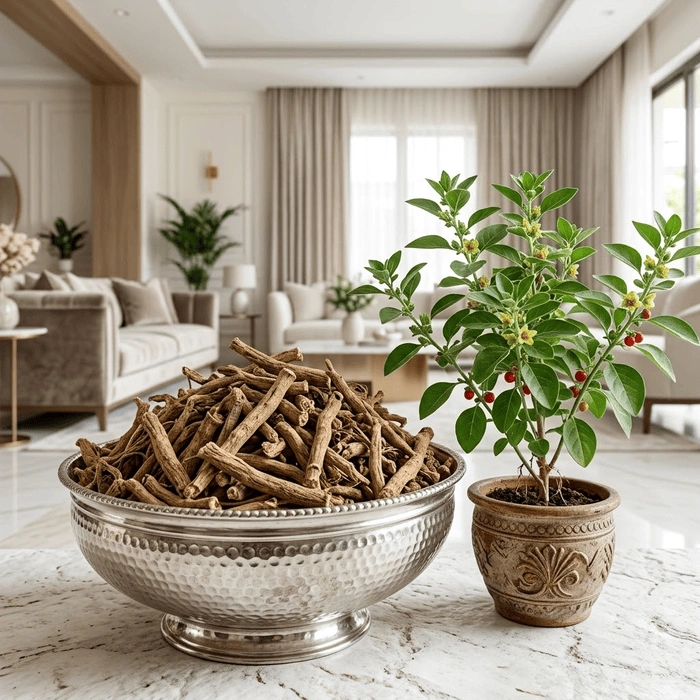
Whole Ashwagandha Roots
Whole Ashwagandha Root is suitable for buyers who require complete dried roots for further cutting, grinding, extraction or formulation processing.
Dried Ashwagandha Roots
Dried Ashwagandha Roots are supplied as botanical raw material for traditional preparations and further industrial processing, subject to buyer specifications.
Cut Ashwagandha Roots
Cut Ashwagandha Roots can be prepared according to required dimensions for herbal preparations, extraction processes and other manufacturing applications.
Ashwagandha Root Powder
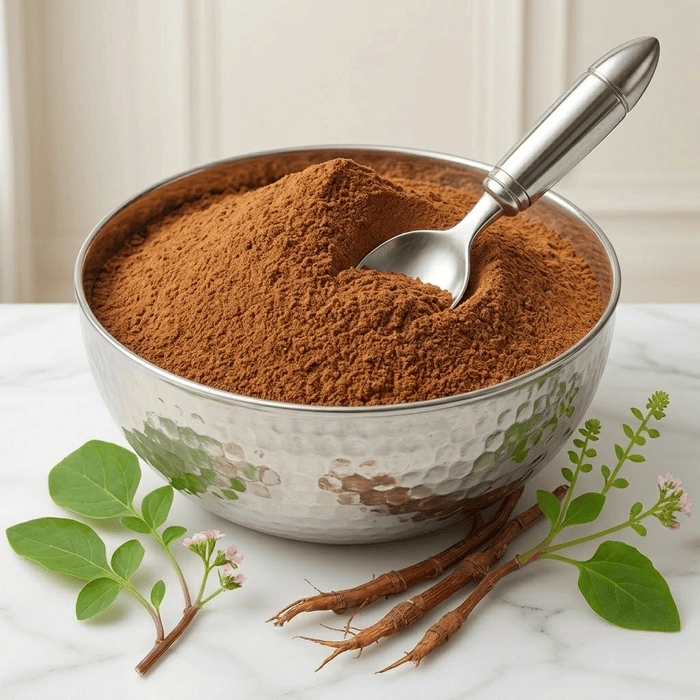
Ashwagandha Root Powder is a convenient format for manufacturers requiring a powdered botanical ingredient.
For buyers searching for an Ashwagandha Root Powder Supplier or Ashwagandha Root Powder Manufacturer, powder mesh size, packaging, moisture requirements and other technical specifications can be discussed according to the intended application.
Ashwagandha Root Powder Manufacturer & Exporter
Powdered botanical ingredients require appropriate grinding, handling and specification control. As an Ashwagandha Root Powder Manufacturer and Exporter, we discuss product requirements according to buyer specifications.
Potential commercial requirements may include:
- Powder mesh size
- Moisture specification
- Packaging format
- Bulk quantity
- Quality parameters
- Required documentation
Final specifications can be agreed upon according to the buyer's manufacturing and destination-market requirements.
Natural Constituents of Withania somnifera Root
Ashwagandha Roots contain naturally occurring plant constituents, including withanolides, alkaloids, saponins and other phytochemical compounds.
Withanolides are among the principal bioactive constituents associated with Ashwagandha. Scientific research has examined compounds including Withaferin A, Withanolide A and other withanolide compounds.
The natural constituent profile can vary according to botanical variety, cultivation conditions, geographical origin, harvesting, drying and processing methods. For commercial procurement, buyers can specify their required quality parameters and testing requirements.
Traditional Uses of Ashwagandha Roots
Ashwagandha has a long history of traditional Ayurvedic use and has traditionally been associated with general vitality, strength and wellness.
Modern research has investigated Withania somnifera and its constituents in areas including stress response, sleep, physical performance, antioxidant activity and other physiological functions.
Research findings may vary depending on the extract, preparation, dosage and study conditions. Ashwagandha products should not be considered a substitute for professional medical treatment.
Industrial Applications of Ashwagandha Roots
Ayurvedic and Herbal Industry
Ashwagandha Roots can be used in:
- Ayurvedic formulations
- Herbal powders
- Traditional preparations
- Decoctions
- Herbal oils
- Botanical blends
Herbal Supplement Industry
Ashwagandha Roots for Herbal Supplements may be sourced by manufacturers producing plant-based wellness formulations and botanical supplement products.
Nutraceutical Industry
Ashwagandha Roots for Nutraceuticals can be used as a botanical ingredient in various nutritional and wellness formulations, subject to applicable formulation and regulatory requirements.
Pharmaceutical Industry
Ashwagandha Roots for Pharmaceutical Industry may be used as botanical raw material in certain herbal and plant-based formulations where permitted by applicable regulations.
Cosmetic and Personal Care Industry
Ashwagandha botanical material may be incorporated into selected cosmetic and personal care formulations where natural plant-derived ingredients are required.
Botanical Extract Industry
Manufacturers searching for Ashwagandha Roots for Herbal Extracts may use dried or cut roots as raw material for further extraction and processing, depending on their extraction method and specifications.
Ashwagandha Botanical Ingredient Supplier
The global natural-products industry increasingly relies on reliable botanical ingredient sourcing. Buyers often look for suppliers that can provide suitable product forms, specifications, documentation and commercial quantities.
As an Ashwagandha Botanical Ingredient Supplier, Vardhman Nutrition Co. offers sourcing and supply discussions for dried roots, cut roots and powder according to buyer requirements.
Our approach is focused on supporting importers, manufacturers and distributors looking for Ashwagandha Raw Material Supplier and Botanical Raw Material Supplier India solutions.
Quality Evaluation of Ashwagandha Roots
Quality consistency is an important consideration when sourcing natural botanical raw materials for international B2B applications.
Depending on product specifications and buyer requirements, quality evaluation may include:
- Botanical identification
- Purity assessment
- Moisture content
- Foreign matter examination
- Microbiological parameters
- Heavy metal analysis
- Pesticide residue testing
- Other applicable quality parameters
Specific testing requirements can be discussed during the procurement process.
Ashwagandha Roots Testing and Export Documentation
International buyers may require technical and export documentation for product evaluation, procurement and import procedures.
Depending on the product, destination country and buyer requirements, documentation may include:
- Certificate of Analysis (COA)
- Technical Data Sheet (TDS)
- Material Safety Data Sheet (MSDS)
- Laboratory / Testing Reports
- Certificate of Origin
- Phytosanitary Certificate, where applicable
- Other applicable export documentation
Documentation availability may vary according to product specifications, destination-market requirements and applicable regulations.
Ashwagandha Root Export from India
Buyers searching for Ashwagandha Root Export from India, Ashwagandha Roots Supplier India or Ashwagandha Root Exporter can discuss their requirements with Vardhman Nutrition Co.
For international procurement, important factors may include:
- Product form
- Required quantity
- Product specifications
- Packaging
- Documentation
- Destination-country requirements
- Shipment coordination
Our focus is to provide reliable Ashwagandha Roots for Export to international B2B customers based on agreed commercial and product requirements.
Ashwagandha Roots Wholesale Supplier
Distributors, traders and manufacturers looking for Wholesale Ashwagandha Roots can discuss bulk procurement requirements with our team.
As an Ashwagandha Root Wholesale Supplier, we can discuss Whole, Cut and Powder forms according to order volume and product specifications.
Buyers are encouraged to share their required quantity, preferred form, quality specifications, packaging requirements and destination country for a more accurate commercial discussion.
Customized Ashwagandha Root Specifications
Every international buyer may have different raw material requirements. Customized specifications for Ashwagandha Roots can therefore be discussed according to the intended application.
Potential requirements may include:
- Whole Root specifications
- Specific Cut Root size
- Powder Mesh Size
- Moisture requirements
- Packaging configuration
- Bulk packing
- Private-label packaging
- OEM supply requirements
- Export-oriented packaging
Final specifications are determined according to buyer requirements and applicable product standards.
Ashwagandha Roots for Private Label and OEM
Private-label companies and OEM manufacturers can discuss Ashwagandha Roots Private Label Supply and customized commercial requirements.
Depending on the project, product form, packaging configuration, quantity and applicable documentation can be discussed before order confirmation.
Ashwagandha Root Samples for Product Evaluation
For international buyers sourcing Ashwagandha Roots for the first time, product evaluation can be an important part of the procurement process.
Ashwagandha Root samples may be available on request, subject to product availability and sample policy.
Buyers can share:
- Required product form
- Desired specification
- Intended application
- Required quantity
- Packaging preference
- Destination country
Sample availability and shipping charges may vary according to the requirement and destination.
Storage Requirements for Dried Ashwagandha Roots
Proper storage helps maintain the quality of Dried Ashwagandha Roots and powdered botanical material.
- Store in a cool and dry location.
- Protect from direct sunlight.
- Keep away from excessive moisture.
- Use suitable sealed packaging.
- Maintain a clean and hygienic storage environment.
- Protect from insects and contamination.
- Avoid excessive heat and humidity.
Storage requirements may vary according to the product form, packaging and environmental conditions.
Ashwagandha Roots Shelf Life
The shelf life of Dried Ashwagandha Root and Ashwagandha Root Powder depends on factors such as drying method, moisture level, packaging, handling and storage conditions.
Whole dried roots and powdered material may have different stability characteristics. For commercial procurement, buyers should refer to product-specific shelf-life information based on the applicable batch, packaging and storage conditions.
Global Ashwagandha Roots Supply
International buyers searching for an Ashwagandha Roots Global Supplier generally consider product quality, supply consistency, documentation, packaging and communication when selecting a supplier.
Vardhman Nutrition Co. works with buyers in the USA, UK, Europe, Germany, UAE, Australia and South Korea and other international markets according to their sourcing requirements.
Our B2B supply approach focuses on:
- Consistent product quality
- Reliable sourcing
- Proper handling
- Batch consistency
- Suitable export packaging
- Quality evaluation support
- Technical documentation assistance
- Shipment coordination
- Responsive B2B communication
Why Choose Vardhman Nutrition Co. for Ashwagandha Roots?
Vardhman Nutrition Co. is focused on serving international buyers seeking a reliable Ashwagandha Root Manufacturer, Supplier and Exporter from India.
- India-based Ashwagandha Root Manufacturer and Exporter
- Bulk Ashwagandha Roots supply
- B2B wholesale supply solutions
- Selected botanical raw materials
- Whole, Cut and Powder forms
- Withania somnifera Root sourcing
- Controlled cleaning and processing
- Quality evaluation support
- Buyer-specific specifications
- Export-oriented packaging
- Technical documentation assistance
- Private-label and OEM supply options
- International shipment coordination
- Competitive bulk pricing discussion
- Long-term B2B supply relationships
Request a Quote for Ashwagandha Roots
If you are looking for an Ashwagandha Roots Supplier India, Ashwagandha Root Manufacturer, Ashwagandha Root Exporter, Bulk Ashwagandha Roots Supplier or Ashwagandha Root Powder Supplier, Vardhman Nutrition Co. is ready to discuss your sourcing requirements.
Whether you require Whole Ashwagandha Roots, Dried Ashwagandha Roots, Cut Ashwagandha Roots or Ashwagandha Root Powder, our team can discuss suitable supply options according to your product form, specification, quantity, packaging and destination market.
For a commercial inquiry, international buyers can share:
- Required Ashwagandha Root form
- Desired quantity
- Cut size or powder mesh
- Quality specifications
- Packaging requirements
- Intended application
- Destination country
Providing these details helps us understand your requirement and discuss the appropriate product and export configuration.
Contact Vardhman Nutrition Co. for bulk Ashwagandha Roots from India and discuss your international B2B sourcing requirements.






.webp)



.webp)
.webp)
.webp)
.webp)
.webp)
.webp)
.webp)
.webp)
.webp)
.webp)
.webp)
.webp)
.webp)