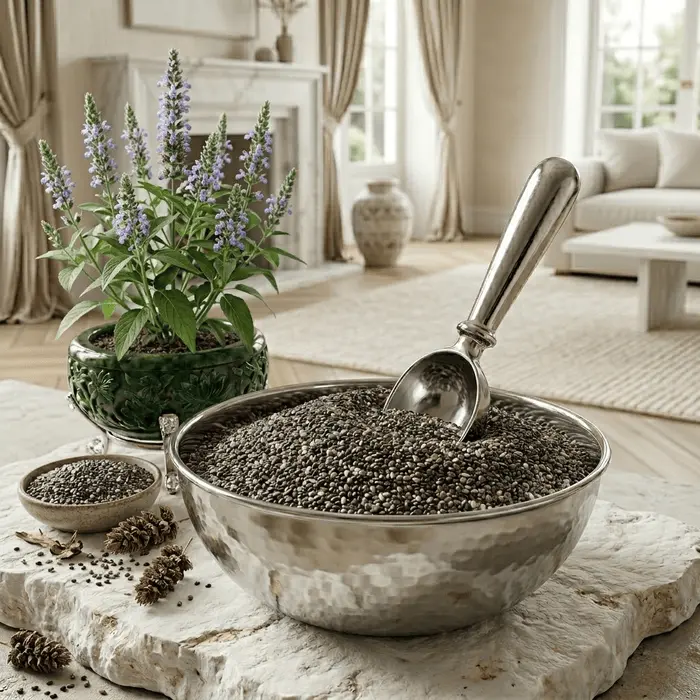
Product Name: Chia Seeds - Chia Beej - Tokma Dana
Botanical Name : Salvia Hispanica
Form : Dried Raw Herb
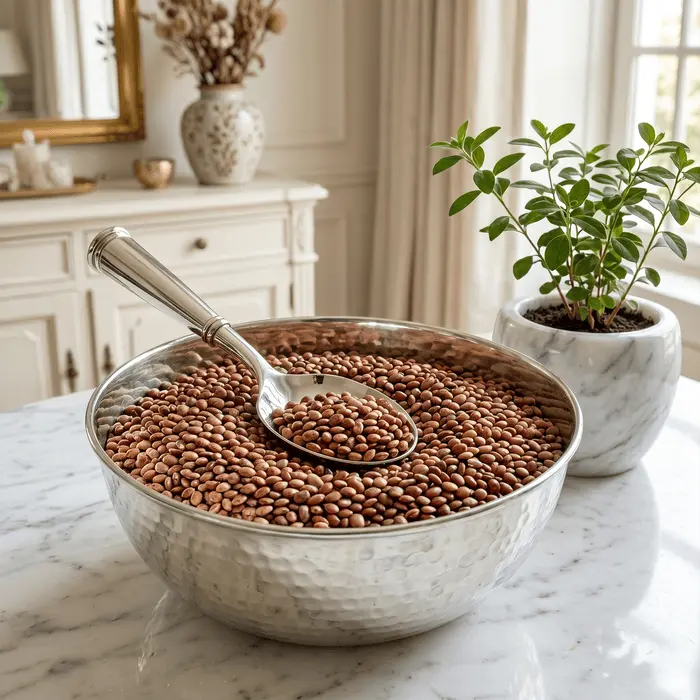
Chia Seeds, botanically known as Salvia hispanica, are small edible seeds that have become an important ingredient in the food, nutrition and wellness sector. They naturally contain dietary fibre, plant-based protein, Omega-3 fatty acids, minerals and antioxidant compounds, making them relevant to manufacturers developing nutrition-focused and functional food products.
One of the most distinctive characteristics of Chia Seeds is their ability to absorb water and develop a soft mucilaginous coating. This natural property gives the seeds a unique texture and makes them suitable for applications such as Chia pudding, beverages, breakfast foods, nutritional mixes and selected bakery formulations.
Vardhman Nutrition Co. is an India-based Chia Seeds Manufacturer and Supplier, offering whole Chia Seeds for commercial requirements. The product can be considered by food manufacturers, nutraceutical companies, health-food brands, ingredient distributors, wholesalers and private-label businesses.
Bulk requirements can be discussed according to quantity, intended application, packaging preference, quality requirements and destination.
Chia has a long history of human consumption. The plant is historically associated with Mexico and Central America and was valued by ancient Maya and Aztec civilizations as an important food source.
Traditional references connect the name “Chia” with concepts such as strength and energy. The seeds were valued because they could provide substantial nourishment in a relatively small quantity.
Modern food science has brought renewed attention to this traditional seed. Today, Chia is used in food products ranging from breakfast cereals and bakery goods to beverages, nutrition bars and functional foods.
Its popularity has expanded because of its nutritional composition, convenient whole-seed format and distinctive hydration behaviour.
Chia Seeds are obtained from Salvia hispanica, an annual herbaceous plant belonging to the Lamiaceae family.
The commercially recognized material is generally supplied as dried whole seeds. Natural variation in colour and appearance may occur depending on variety, agricultural conditions and origin.
Chia Seeds can appear in shades of black, brown, greyish and white. Minor visual variation does not necessarily indicate a quality problem because natural botanical materials can differ between lots.
For commercial procurement, the botanical identity and required physical characteristics should be clearly defined in the purchasing specification.
The ability of Chia Seeds to absorb water is one of their most recognizable functional characteristics.
When exposed to water or another suitable liquid, the seed develops a transparent or semi-transparent mucilaginous coating. The hydrated material produces a soft gel-like texture that can alter the consistency of the food preparation.
This property is particularly useful in products such as:
The actual degree and speed of hydration may depend on seed characteristics, liquid composition, temperature, processing conditions and formulation.
Manufacturers should therefore conduct their own product trials before establishing commercial processing parameters.
The commercial value of Chia is strongly connected with its nutritional composition.
Whole Chia Seeds naturally contain:
The actual composition can vary depending on variety, cultivation, origin, harvesting, processing and storage conditions.
For food manufacturers requiring precise nutritional declarations, the values used on the final label should be based on appropriate analytical testing of the applicable material or finished product.
Chia Seeds are particularly recognized for their naturally occurring alpha-linolenic acid (ALA).
ALA is an essential plant-based Omega-3 fatty acid and is one of the reasons Chia has gained strong recognition in functional-food and plant-based nutrition markets.
Manufacturers can incorporate Chia into nutrition-focused foods where plant-derived Omega-3 is a desired nutritional characteristic.
However, ALA should not be confused with EPA or DHA. Although the body can convert ALA into longer-chain Omega-3 fatty acids, the conversion is limited.
For this reason, product descriptions should accurately identify ALA as the primary Omega-3 associated with Chia Seeds.
Dietary fibre represents another important component of Chia Seeds.
The seed contains both soluble and insoluble fibre. The soluble fraction contributes to the mucilage that forms around the seed during hydration.
This combination gives Chia both nutritional and functional interest.
Food manufacturers may use the seeds in products where fibre content is an important nutritional consideration, including:
Precise fibre content should be verified through applicable analytical testing whenever a regulated nutritional claim is being considered.
Chia provides plant-based protein and a range of naturally occurring amino acids.
This makes it relevant to manufacturers producing plant-based and nutrition-focused foods. Chia can be combined with other protein-containing ingredients such as nuts, grains, legumes or seeds to create broader nutritional formulations.
Its protein contribution can be particularly relevant in nutrition bars, breakfast mixes, sports-oriented foods and functional snacks.
The actual protein percentage should be established through batch-specific testing where nutritional labeling requires an exact value.
Chia Seeds naturally contain several minerals that contribute to their overall nutritional profile.
These include:
The presence of these minerals adds to the nutritional versatility of the ingredient.
Manufacturers can use Chia as part of broader nutrient-dense formulations rather than positioning it as a sole source of any particular mineral.
Chia also contains naturally occurring B-group vitamins and vitamin E.
B1, B2 and B3 are among the vitamins associated with the nutritional composition of the seed. Vitamin E contributes to its broader micronutrient profile.
Alongside vitamins and minerals, Chia contains fatty acids, protein, fibre and various plant compounds.
This combination helps explain why Chia has become popular in products positioned around whole-food nutrition and plant-based ingredients.
Chia contains naturally occurring phytochemicals, including phenolic compounds, polyphenols and flavonoids.
Reported compounds associated with Chia include:
These compounds have contributed to scientific interest in the antioxidant characteristics of the seed.
Research findings can provide useful background for product development, but laboratory antioxidant activity should not automatically be interpreted as a therapeutic effect in humans.
Commercial claims should always be based on suitable evidence and the regulatory requirements applicable to the target market.
Breakfast foods are among the most practical applications for whole Chia Seeds.
Manufacturers can incorporate them into:
The seeds can be mixed with grains, nuts, dried fruits and other ingredients to create products with varied nutritional and textural characteristics.
Their small size also allows them to distribute relatively easily through dry mixtures.
Chia can be incorporated into granola and muesli products as a visible seed ingredient.
Its inclusion can complement oats, nuts, dried fruits, grains and other seeds.
For manufacturers, the ingredient can contribute nutritional diversity while also providing a recognizable visual feature associated with natural and plant-based foods.
Processing conditions should be assessed carefully to ensure that the desired texture, flavour and appearance are maintained in the finished product.
Hydrated Chia can be incorporated into yoghurt and suitable dairy-alternative formulations.
The mucilaginous coating can contribute to the texture of spoonable products. This makes Chia relevant to product concepts such as breakfast cups, plant-based yoghurt alternatives and nutritional desserts.
Manufacturers should assess hydration behaviour, storage stability, ingredient compatibility and sensory characteristics during development.
Chia pudding demonstrates the seed's gel-forming behaviour particularly well.
When mixed with a suitable liquid and allowed to hydrate, the seeds form a thick preparation that can be flavoured with fruits, cocoa, vanilla, spices or other food ingredients.
Commercial opportunities include:
For industrial production, manufacturers should establish appropriate hydration ratios and processing conditions based on their own formulation trials.
Chia Seeds can be incorporated into a variety of bakery products.
Potential applications include:
They can be used as a whole-seed inclusion, visible topping or nutritional ingredient.
Hydrated Chia may also contribute binding characteristics in selected recipes.
However, the exact effect depends on flour composition, hydration, baking conditions, inclusion level and other ingredients.
Chia Seeds are naturally gluten-free and can be considered for suitable gluten-free product concepts.
Their hydration characteristics may help provide binding or texture-related functionality in selected recipes.
Manufacturers can explore their use in gluten-free bread, crackers, baked snacks and nutrition mixes.
Businesses producing certified gluten-free foods must maintain appropriate controls throughout raw-material handling, processing and packaging to prevent cross-contact with gluten-containing materials.
Chia Seeds can be incorporated into a variety of beverage concepts.
Possible applications include:
When hydrated, the seeds develop their characteristic mucilaginous coating and create a distinctive mouthfeel.
Traditional preparations such as Chia Fresca have also contributed to consumer awareness of Chia as a beverage ingredient.
For commercial beverage development, manufacturers should evaluate suspension stability, hydration time, mouthfeel and finished-product shelf stability.
Chia can be used in nutrition bars and snack products where manufacturers want to incorporate a combination of fibre, plant protein and naturally occurring fatty acids.
Possible products include:
Chia can be combined with oats, nuts, dried fruits and other seeds to create differentiated formulations.
The inclusion level should be established through formulation testing based on the desired nutritional and sensory characteristics.
The nutritional profile of Chia has made it relevant to sports and active-lifestyle food products.
Manufacturers can evaluate Chia for use in:
Its combination of plant protein, fibre, ALA and minerals can complement other ingredients in a balanced formulation.
Specific claims regarding athletic performance, recovery or endurance should only be used where supported by appropriate evidence and permitted by applicable regulations.
Chia Seeds naturally fit into plant-based food development.
They can be incorporated into vegan and vegetarian products such as breakfast foods, bakery items, nutrition bars, beverages and seed mixes.
Their mild flavour allows them to work with many plant ingredients, including:
This versatility makes Chia an attractive ingredient for brands developing plant-focused product ranges.
Whole Chia Seeds can also be used as a visible topping.
They may be sprinkled over salads, bakery products, yoghurt preparations, smoothie bowls and breakfast foods.
Their small size and distinctive appearance provide an attractive ingredient presentation while adding nutritional value.
For industrial food manufacturing, the suitability of Chia as a topping depends on processing, packaging and moisture conditions.
Chia Seeds can be incorporated into various nutraceutical and functional nutrition concepts.
Potential applications include:
Whole seeds may be suitable for certain food-based applications, while other product formats may require milling, extraction or further processing.
Manufacturers should select the appropriate form according to the intended dosage format and production technology.
Chia is frequently included in food products designed around satiety and fibre-rich nutrition.
Its ability to absorb liquid and its dietary-fibre content have contributed to its popularity in meal-support products and nutrition-focused foods.
However, Chia should not be represented as a standalone weight-loss treatment. Individual responses to food ingredients vary, and product claims should comply with applicable regulatory standards.
The fibre content of Chia contributes to its relevance in digestive-wellness-oriented food products.
It can be incorporated into fibre-rich breakfast foods, smoothies, nutrition bars and other products intended to provide dietary fibre as part of the overall diet.
Its mucilage-forming ability adds another dimension to its food functionality.
Manufacturers should ensure that serving recommendations and nutrition claims are based on the composition of the finished product.
Chia has attracted scientific interest because of its ALA Omega-3 fatty acids, fibre and overall nutritional composition.
Research has investigated potential relationships between Chia consumption and lipid-related parameters, although findings can vary according to study design and population.
The seed should therefore be considered a nutrient-rich food ingredient rather than a treatment for cardiovascular conditions.
Any cardiovascular-related marketing communication should be reviewed carefully for evidence and regulatory compliance.
Scientific studies have also examined Chia in relation to post-meal glucose response and other metabolic parameters.
Its fibre content and hydration characteristics are among the factors that have generated research interest.
Available evidence is not sufficient to treat Chia as a medical intervention. Manufacturers should distinguish between nutritional properties and therapeutic claims.
For regulated products, claims should be supported by suitable evidence and meet the requirements of the intended market.
Calcium, magnesium and phosphorus are naturally present in Chia Seeds and are important minerals associated with normal bone function.
This mineral composition contributes to the seed's overall nutritional value.
Food manufacturers can incorporate Chia into broader nutrient-rich formulations rather than positioning it as a sole source of bone-related nutrition.
Exact mineral declarations should be supported by appropriate analysis.
The antioxidant properties of Chia and its phenolic constituents have been investigated in scientific studies.
Laboratory research has identified antioxidant activity associated with various compounds present in the seed.
Such findings help explain the scientific interest surrounding Chia but should not be presented as proof of a specific disease-prevention or treatment effect.
Commercial product communication should remain accurate and appropriate for the relevant regulatory environment.
The combination of soluble and insoluble fibre has made Chia interesting for food products associated with digestive and gut-focused nutrition.
Manufacturers can combine Chia with oats, fruits, grains, nuts and other fibre-containing ingredients to create nutrient-rich food concepts.
Research into the prebiotic potential of dietary fibres continues to develop, and product claims should reflect the level of scientific evidence available.
Chia has also been considered in selected animal nutrition applications.
Whole seeds may be evaluated for poultry, livestock and other feed formulations where plant-based nutrients and fatty acids are relevant.
The suitability of Chia for a particular animal feed depends on species, formulation, inclusion level and local feed regulations.
Feed manufacturers should perform appropriate nutritional and safety evaluations before commercial use.
The Chia plant has also attracted interest in the cosmetic industry.
Chia-derived materials, particularly Chia Oil, may be considered in formulations such as:
It is important to distinguish whole Chia Seeds from Chia Seed Oil because their physical properties and formulation applications are different.
Whole seeds are primarily associated with food applications, while extracted oil represents a concentrated lipid fraction.
For B2B procurement, buyers should clearly specify whether they require whole seeds or Chia Oil.
Whole Chia retains its fibre, protein, minerals and other natural components. Chia Oil primarily represents the lipid fraction obtained through extraction.
The two materials therefore have different applications, specifications, packaging requirements and commercial characteristics.
Clear product identification helps avoid confusion during purchasing.
Before bulk packing, Chia Seeds may undergo suitable cleaning, sorting, grading and inspection procedures.
These steps help prepare the raw material for commercial applications and reduce unwanted foreign material.
Depending on the buyer's requirement, quality evaluation may consider:
The precise quality requirements should be finalized according to the intended application and destination market.
Commercial buyers generally need to assess the material according to their own manufacturing requirements.
Important considerations can include seed appearance, cleanliness, moisture condition, odour, foreign matter and microbiological quality.
Because Chia is an agricultural product, some natural variation between batches is possible.
For this reason, numerical values should not be treated as universal unless they are confirmed through applicable testing and the purchasing specification.
Professional buyers may require technical and commercial documents for their procurement process.
Depending on the order and destination, documentation may include:
The required documents can vary according to the destination country's regulations and buyer requirements.
Food manufacturers requiring commercial quantities can source Chia Seeds for regular production programs.
Bulk supply can support businesses producing cereals, bakery products, beverages, nutrition bars, snacks and functional foods.
Before placing a large order, buyers can establish clear requirements regarding quantity, packaging, quality parameters, documentation and destination.
This helps create a more predictable procurement process for recurring business.
Wholesale Chia Seeds can be relevant to distributors and importers serving food manufacturers and nutrition businesses.
Distributors can include Chia within a broader portfolio of seeds, herbs, oils and botanical ingredients.
For businesses purchasing larger quantities for onward distribution, packaging, storage conditions and expected turnover should be considered when planning procurement.
India has a well-established ecosystem for botanical, plant-based and food ingredients. Buyers looking for an India-based supply source can consider Chia as part of their plant-based ingredient procurement.
Vardhman Nutrition Co. supplies Chia Seeds from India for commercial requirements, serving professional buyers according to their agreed specifications.
Our export markets include the USA, UK, Europe, Germany, UAE, Australia and South Korea, along with other destinations where applicable requirements can be fulfilled.
Destination-specific regulations should always be confirmed before shipment.
Packaging is particularly important for whole seeds because shipments may experience extended storage and transportation conditions.
Suitable packaging should help minimize exposure to:
Packaging configurations can be discussed according to order quantity, transportation method, destination and buyer requirements.
For humid climates, additional moisture-control measures may be considered where appropriate.
Chia Seeds should be stored in a cool, clean and dry environment.
They should be protected from excessive humidity, direct sunlight, high temperatures and strong odours.
After opening, airtight storage can help reduce exposure to oxygen and moisture.
Clean and dry utensils should be used during handling. Storage areas should also be maintained under suitable hygienic conditions.
For warm and humid climates, refrigeration may be considered where appropriate, especially after opening.
Chia naturally contains oils, making proper storage particularly important.
Extended exposure to heat, oxygen and light may affect the sensory quality of the material.
Moisture can also create conditions that encourage mold development and other quality problems.
For industrial storage, businesses may consider suitable protective packaging technologies such as vacuum packaging or nitrogen flushing where appropriate to their product and supply-chain requirements.
The actual shelf life of Chia Seeds depends on several factors, including packaging, storage environment, moisture exposure, temperature, oxygen exposure and handling.
Whole seeds stored in suitable unopened packaging can generally have a longer usable period than material exposed repeatedly to air and humidity.
Rather than applying one fixed shelf-life period to every shipment, commercial buyers should follow the shelf-life information supplied for the specific batch and packaging configuration.
Routine inspection is useful for maintaining warehouse quality.
Potential warning signs include:
If such changes are detected, the affected material should be isolated and evaluated according to the buyer's quality-control procedure.
Private-label businesses can source Chia Seeds for developing their own branded food products.
Possible private-label concepts include:
Bulk raw material can provide a foundation for brands that want to create differentiated packaging and market positioning.
Finished-product labeling and claims should be developed according to the regulations applicable to the destination market.
OEM businesses can use Chia Seeds as an ingredient for customized food and nutrition product development.
The seed can be incorporated into breakfast foods, nutrition bars, beverages, bakery products, functional foods and other suitable concepts.
OEM requirements may involve customized packaging, product specifications, quantities, documentation and delivery arrangements.
All technical and commercial conditions should be agreed before production or shipment.
A sample provides an opportunity for a new buyer to evaluate the material before placing a larger order.
Manufacturers may assess:
Sample evaluation is particularly useful when the ingredient will become part of a new commercial formulation.
Once the buyer approves the sample and confirms the required specification, regular procurement can be planned.
One of the strongest commercial characteristics of Chia is its versatility.
The same whole seed can be explored across several categories:
This versatility allows manufacturers to develop multiple products around a single recognizable botanical ingredient.
The food market continues to show interest in recognizable plant-based ingredients with nutritional value and functional characteristics.
Chia fits this trend because it combines whole-seed appeal with fibre, plant protein, ALA Omega-3, minerals and hydration functionality.
For brands developing plant-focused product concepts, Chia can be incorporated into a broad range of recipes.
Product positioning should always reflect the actual composition and applicable regulatory requirements.
Chia provides several characteristics that make it attractive to food and nutrition manufacturers.
These characteristics allow manufacturers to explore different product concepts while retaining the recognizable identity of the ingredient.
Vardhman Nutrition Co. is an India-based Chia Seeds Manufacturer, Supplier and Global B2B Exporter serving professional buyers seeking commercial quantities of plant-based ingredients.
Our business is focused on export-oriented supply for importers, wholesalers, distributors, food manufacturers, nutraceutical companies, nutrition brands and private-label businesses.
We understand that different markets and applications can require different purchasing conditions. Therefore, buyers can discuss quantity, intended use, packaging, documentation and destination requirements before placing an order.
Our focus is on dependable commercial sourcing for customers seeking an India-based supply partner.
International importers can source Chia Seeds for manufacturing, distribution, repacking or private-label programs.
Depending on the destination and business model, procurement discussions can include:
Clear communication before order confirmation helps align the supply with the buyer's commercial expectations.
Food and nutraceutical businesses can evaluate whole Chia Seeds according to their intended product category.
Food manufacturers may use the seeds directly in recipes, while nutraceutical companies may incorporate them into suitable functional nutrition products.
The appropriate processing, serving size, labeling and claims depend on the finished product and destination-market regulations.
For businesses managing multiple plant-based raw materials, Chia can be a useful addition to a broader ingredient portfolio.
Its established consumer recognition, nutritional profile and functional hydration behaviour provide manufacturers with several opportunities for product development.
Vardhman Nutrition Co. supports buyers looking for an India-based supply source for commercial Chia Seeds requirements.
If your business is looking for Bulk Chia Seeds, Whole Chia Seeds, Salvia hispanica Seeds or Chia Seeds from India, Vardhman Nutrition Co. can discuss your requirement.
Whether you are a food manufacturer, nutraceutical company, importer, distributor, wholesaler or private-label brand, you can share your intended application and purchasing requirement.
The material can then be evaluated according to the agreed commercial and technical conditions.
Importers, distributors, wholesalers, food manufacturers, nutraceutical companies and private-label brands can contact Vardhman Nutrition Co. with their sourcing requirements.
Please provide details such as required quantity, intended application, preferred packaging, destination country and specific quality or documentation requirements.
Based on the information provided, the appropriate commercial supply arrangement can be discussed.
Vardhman Nutrition Co. – India-Based Chia Seeds Manufacturer, Supplier and Global B2B Exporter for Food, Nutraceutical and Plant-Based Ingredient Markets.





.webp)



.webp)
.webp)
.webp)
.webp)
.webp)
.webp)
.webp)
.webp)
.webp)
.webp)
.webp)
.webp)
.webp)