.webp)
Triphala Powder from India for International B2B Buyers
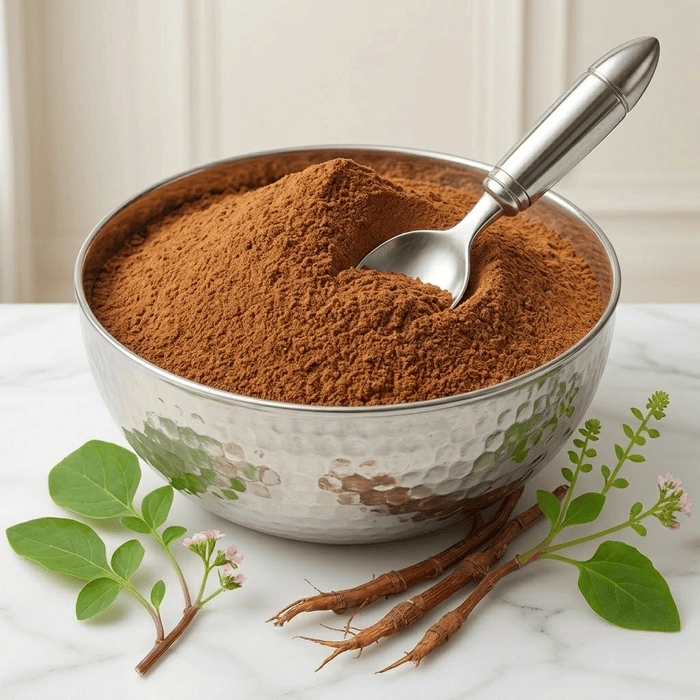
Vardhman Nutrition Co. is an India-based botanical ingredient company supplying natural raw materials to international buyers for commercial manufacturing, formulation and distribution. Triphala Powder is a traditional three-fruit botanical blend prepared from Amalaki, Haritaki and Bibhitaki and processed into a powdered form suitable for herbal, Ayurvedic, nutraceutical, wellness and selected personal-care applications.
The three botanical fruits used in this traditional combination are Amalaki (Phyllanthus emblica), Haritaki (Terminalia chebula) and Bibhitaki (Terminalia bellirica). Each fruit is separately handled and processed before the required combination is prepared according to the applicable product specification.
For overseas businesses, sourcing a botanical raw material involves more than selecting a product name. Importers, manufacturers and distributors may require information about botanical identity, plant part, composition, particle size, moisture, appearance, packaging, documentation and destination requirements. Vardhman Nutrition Co. supports specification-based procurement for international B2B customers.
The company serves botanical importers, wholesalers, distributors, herbal manufacturers, Ayurvedic product companies, nutraceutical brands, cosmetic manufacturers, pharmaceutical organizations and private-label businesses looking for India-origin botanical ingredients.
Traditional Three-Fruit Composition for Commercial Use
The distinctive identity of this botanical material comes from the combination of three dried fruits. Amalaki, Haritaki and Bibhitaki each have their own botanical identity and characteristics, while their combination creates the traditional Triphala formulation.
The raw fruits are processed before being converted into a finished powdered material. Depending on raw-material origin, fruit maturity, drying conditions, processing methods and formulation proportions, the final appearance, colour, aroma, taste and texture may naturally differ.
For commercial procurement, buyers can establish their desired composition and technical requirements before placing an order. This is particularly relevant for international manufacturers that need consistency between the raw material they purchase and the specifications used for their finished products.
Vardhman Nutrition Co. can discuss requirements concerning botanical identity, ingredient composition, particle size, mesh, moisture, appearance, packaging, application and destination.
Amalaki, Haritaki and Bibhitaki in One Botanical Blend
The traditional formulation consists of three fruits rather than a single botanical ingredient.
Amalaki Fruit
Amalaki is derived from Phyllanthus emblica and is commonly associated with Indian Gooseberry. It contributes one of the three botanical identities defining the blend.
Haritaki Fruit
Haritaki is obtained from Terminalia chebula and forms another important component of the traditional combination.
Bibhitaki Fruit
Bibhitaki comes from Terminalia bellirica and completes the three-fruit formulation.
For professional buyers, confirming the botanical identity of all three materials is an important part of technical procurement. Buyers requiring a particular formulation ratio can communicate that requirement before commercial supply.
India-Origin Botanical Ingredient for Overseas Procurement
India is an important sourcing location for traditional botanical ingredients, and international buyers may seek direct supply from Indian manufacturers and exporters.
Indian Triphala Powder can be considered by overseas businesses that require an India-origin three-fruit botanical material for suitable commercial formulations.
A professional sourcing discussion may cover the required quantity, product grade, particle size, packaging, technical documents, intended application and destination country.
As a Triphala Powder Manufacturer in India, Vardhman Nutrition Co. supports specification-based discussions with international customers rather than treating the product as a standard retail commodity.
The company also works with businesses searching for a Triphala Powder Supplier from India where the requirement involves commercial quantities, technical specifications and international shipment considerations.
Botanical Powder Processing for Consistent Supply
Preparing a dried botanical blend for commercial use involves multiple stages. The exact process can vary according to product grade, raw material and buyer requirements.
Suitable fruits are first selected before cleaning and sorting. Unsuitable material can be removed during grading and inspection. The selected botanical material is then dried under appropriate conditions before size reduction and grinding.
Once the individual botanical materials have reached the required processing stage, they can be combined according to the specified formulation. Sieving may be used to achieve the required particle-size range.
Processing Stages
- Raw-material selection
- Cleaning
- Sorting
- Grading
- Controlled drying
- Size reduction
- Grinding
- Blending
- Sieving
- Foreign-matter control
- Quality evaluation
- Final packaging
Particle Size and Product Specification for Manufacturers
Different manufacturers may require different particle-size characteristics depending on their formulation process.
A buyer producing powder blends may have one requirement, while a capsule or tablet manufacturer may specify another. Hair-care or cosmetic applications may also require a particular texture for incorporation into the finished formulation.
For this reason, Triphala Herbal Powder procurement can be based on a defined technical specification rather than simply the common product name.
Commercial requirements may include desired mesh, particle size, botanical composition, moisture level, appearance, colour, aroma, taste, foreign matter limits, microbiological parameters and applicable analytical requirements.
Botanical Material for Ayurvedic Product Development
Triphala has a longstanding association with Ayurveda and traditional Indian herbal practices. Its three-fruit composition makes it relevant to businesses developing traditional botanical product ranges.
Manufacturers may evaluate the ingredient for suitable Ayurvedic formulations in formats such as powders, capsules, tablets, traditional blends and multi-botanical preparations.
A business looking for Ayurvedic Triphala Powder may require specific information regarding botanical composition, processing, particle size and documentation before approving the ingredient for its own product development.
The suitability of the material depends on the finished product and the regulations governing that product in the destination market.
Herbal Formulations Using a Three-Fruit Botanical Material
Herbal manufacturers may use botanical powders as individual ingredients or as components of broader formulations.
The three-fruit blend can be considered for suitable herbal products where the formulation requirements are compatible with the material.
A Triphala Herbal Powder Manufacturer must consider not only the common product name but also botanical identity, processing method, formulation ratio and physical specifications required by the customer.
Nutraceutical Manufacturing and Botanical Formulations
The nutraceutical industry uses botanical raw materials across multiple finished formats. Powders, capsules, tablets and multi-botanical blends can require different technical characteristics.
Triphala Powder for Nutraceutical Industry applications may be considered where the raw material meets the manufacturer's formulation and quality requirements.
A nutraceutical company may evaluate botanical identity, ingredient composition, particle size, moisture, microbiological quality, heavy metals where applicable, pesticide residues where applicable, analytical markers, packaging and documentation.
Botanical Ingredient for Cosmetic Manufacturing
Botanical materials are also used in cosmetic and personal-care product development.
The three fruits used in the blend have a traditional association with Indian beauty and personal-care practices. Manufacturers may evaluate the material for suitable botanical formulations where its characteristics fit the intended product.
A company sourcing Triphala Powder for Cosmetic Industry applications may specify the desired particle size, packaging, documentation and formulation requirements before commercial supply.
Hair-Care Products and Botanical Powder Applications
Botanical powders are used in various hair-care formulations, particularly where manufacturers are developing herbal or traditional product ranges.
Triphala Hair Powder can be considered by businesses developing suitable hair masks, botanical hair packs, scalp-care preparations, herbal shampoos, hair-conditioning products and other botanical hair-care formats.
The finished formulation may combine the material with other compatible botanical ingredients according to the manufacturer's own product concept.
Selected Food and Beverage Formulations
Some food and beverage manufacturers may evaluate botanical powders for formulations where the ingredient's characteristics are suitable.
Possible concepts include herbal beverages, botanical drink mixes, traditional beverage preparations, herbal tea combinations and selected functional food formulations.
The suitability of the ingredient for a food application must be independently assessed by the manufacturer against the laws and requirements applicable in the destination country.
Bulk Supply for International Manufacturing Operations
International manufacturers generally purchase botanical raw materials in commercial quantities rather than consumer-sized packs.
Bulk Triphala Powder can be considered by importers, distributors, manufacturers, wholesalers, private-label businesses and other professional buyers requiring larger quantities for production or distribution.
The required quantity can vary according to the buyer's production volume, finished-product demand and procurement cycle.
Wholesale Procurement for Importers and Distributors
Importers and distributors may require botanical materials for onward supply to manufacturers or finished-product businesses in their own markets.
As a Triphala Powder Wholesale Supplier, Vardhman Nutrition Co. can discuss commercial requirements involving quantities, packaging, product specifications and documentation.
Wholesale procurement may involve regular purchasing, repeat shipments, contract supply or buyer-specific specifications.
B2B Supply for Global Botanical Ingredient Buyers
The international botanical ingredient market includes several types of professional buyers. These can include importers, distributors, wholesalers, herbal manufacturers, nutraceutical companies, cosmetic organizations and private-label businesses.
A Triphala Powder B2B Supplier supports this type of professional sourcing by discussing technical and commercial requirements before shipment.
A buyer may need to provide the intended application, quantity, particle size, packaging requirement, destination and documentation checklist.
India-Based Export Supply for International Markets
Vardhman Nutrition Co. operates with an international B2B focus and supplies India-origin botanical ingredients to overseas buyers.
Businesses searching for a Triphala Powder Exporter from India can communicate their commercial requirements, including quantity, product specification, destination country and required documentation.
International buyers may be located in different regions and may have different procurement expectations. Therefore, the exact specification and documentation should be established according to the destination and intended use.
Supply for USA-Based Importers and Manufacturers
The United States is among the international markets for which commercial enquiries can be considered.
A Triphala Powder Export to USA requirement may come from an importer, botanical distributor, herbal manufacturer, nutraceutical business or private-label company.
Before shipment, the buyer can communicate the required quantity, product specification, packaging preference, intended application and documentation requirements.
Supply to UK, European and German Buyers
International businesses in the United Kingdom and Europe may require detailed technical information when evaluating botanical ingredients.
A Triphala Powder Export from India to UK, Europe and Germany enquiry can involve product composition, particle size, quality parameters, packaging, technical documents and destination-specific requirements.
German and other European buyers may establish their own internal specifications before approving a raw material.
Commercial Enquiries from UAE, Australia and South Korea
Vardhman Nutrition Co. also supports enquiries associated with the UAE, Australia and South Korea.
A buyer from these markets can provide the required quantity, intended application, preferred packaging and technical requirements for commercial evaluation.
For every destination, the final documentation and shipment requirements should be established according to the buyer's market and the nature of the finished product.
Private-Label and OEM Botanical Supply
Businesses developing their own branded herbal, wellness, Ayurvedic or nutraceutical products may require private-label botanical ingredients.
A Triphala Powder Private Label Manufacturer arrangement can involve customized packaging, buyer-specific labelling, OEM botanical supply or contract requirements.
A Triphala Private Label Supplier discussion may include packaging format, product specification, label requirements, quantity, documentation, destination and contract supply requirements.
Export Packaging Designed for Commercial Handling
Dried botanical powders need suitable packaging for storage and international transportation.
The packaging requirement can depend on order quantity, transportation conditions, destination, storage environment and buyer preference.
International customers may discuss pack size, packaging format, inner protection, outer protection, batch identification, product labelling, storage information and shipping requirements.
Documentation for International Botanical Shipments
Professional importers may require technical and commercial documents before approving a botanical raw material.
Depending on the product and destination, documentation may include Certificate of Analysis (COA), Technical Data Sheet (TDS), Material Safety Data Sheet (MSDS) where applicable, Certificate of Origin, phytosanitary documentation where applicable, microbiological analysis and buyer-specific technical documents.
The exact documentation package should be confirmed with the buyer before shipment.
Quality Parameters for Importer Evaluation
International buyers may evaluate a botanical powder through several technical parameters, including botanical identity, composition, plant part, appearance, colour, aroma, taste, particle size, mesh, moisture, foreign matter and microbiological parameters.
Depending on the market and application, buyers may also require information concerning heavy metals, pesticide residues or specified botanical and nutritional markers.
Exact acceptance limits should be established in the product specification. Where a particular analytical value is important, batch-specific laboratory results should be used.
Storage Conditions for Imported Botanical Material
After arrival at the destination, appropriate storage can help maintain the quality of dried botanical material.
General considerations include keeping the product in a clean and dry environment, protecting it from excessive humidity, using suitable airtight packaging, avoiding direct sunlight and excessive heat, and preventing contamination during handling.
The material should also be kept away from strong-smelling substances where appropriate, and opened packaging should be resealed properly.
Factors Affecting Botanical Powder Shelf Life
The storage life of a dried botanical material can be influenced by multiple factors rather than by product name alone.
These include raw-material quality, fruit maturity, drying conditions, processing method, moisture level, botanical composition, packaging, storage environment and microbiological quality.
For commercial procurement, buyers should therefore rely on the applicable batch-specific product specification instead of assuming a universal shelf-life period.
Procurement Information for International Buyers
Businesses interested in commercial sourcing can make the enquiry process more efficient by providing their basic requirements at the beginning.
An importer can communicate the required quantity, preferred particle size or mesh, botanical composition, intended application, packaging preference, destination country and technical documentation needs.
If the requirement involves private label or OEM supply, those details can also be shared during the initial discussion.
Vardhman Nutrition Co. as an India-Based Botanical Supplier
Vardhman Nutrition Co. is an India-based manufacturer and global B2B exporter of Botanical Herbs serving international buyers.
Established in 2018, the company supplies natural botanical ingredients to importers, distributors, herbal manufacturers, nutraceutical businesses, cosmetic organizations and pharmaceutical companies.
The company identifies itself as an ISO 9001:2015 certified organization and focuses on quality management across production and packaging activities.
Choosing the Appropriate Specification for Your Application
The same botanical material may be used by different industries, but technical requirements can vary significantly.
An Ayurvedic manufacturer may focus on botanical identity and formulation composition. A nutraceutical company may have additional analytical requirements. A cosmetic manufacturer may focus on physical characteristics and formulation compatibility. An importer or distributor may prioritize packaging, documentation and repeat-supply requirements.
Therefore, buyers should communicate the final application before confirming a commercial specification.
Long-Term International B2B Supply
Businesses with recurring procurement requirements may benefit from establishing a clear product specification for repeat purchasing.
Long-term supply discussions can involve agreed product characteristics, packaging requirements, documentation, expected quantities and purchasing schedules.
For international customers, maintaining clear communication about destination, application and technical requirements can support more consistent procurement across future orders.
Frequently Asked Questions About International Sourcing
What is Triphala Powder made from?
It is traditionally prepared from three fruits: Amalaki, Haritaki and Bibhitaki. Their botanical names are Phyllanthus emblica, Terminalia chebula and Terminalia bellirica.
Is the product available from India for international buyers?
Vardhman Nutrition Co. supports international B2B enquiries for India-origin botanical ingredients and can discuss commercial requirements with overseas buyers.
Can buyers request a specific mesh?
Yes. Particle size and mesh can be discussed according to the buyer's formulation and technical specification.
Can this material be purchased in commercial quantities?
Yes. Bulk procurement can be discussed with importers, manufacturers, distributors, wholesalers and other professional businesses.
Which applications can be considered?
Depending on the product grade and applicable regulations, the material can be considered for Ayurvedic, herbal, nutraceutical, wellness, cosmetic, personal-care and selected food or beverage formulations.
Can private-label businesses source it?
Private-label, OEM and customized packaging requirements can be discussed according to the finished product, quantity and destination-market requirements.
What documents may be available?
Depending on the product and destination, documents may include COA, TDS, MSDS where applicable, Certificate of Origin, microbiological analysis and other buyer-specific technical documentation.
Can international buyers request customized packaging?
Packaging requirements can be discussed according to quantity, destination, application and buyer specification.
Request Bulk Supply from India
International buyers looking for an India-origin botanical ingredient can submit their requirements directly for commercial evaluation.
When making an enquiry, it is useful to provide the required quantity, preferred particle size, botanical composition, intended application, packaging requirement, destination country and documentation needs.
For private-label or OEM projects, buyers can additionally provide their packaging and labelling requirements.
International B2B Enquiry for Triphala Powder
Businesses searching for a Triphala Powder B2B Exporter, an India-origin manufacturer or a commercial botanical supplier can contact Vardhman Nutrition Co. with their procurement requirements.
Whether the requirement is for bulk manufacturing, wholesale distribution, herbal formulation, Ayurvedic product development, nutraceutical production, cosmetic applications or private-label supply, the specification should be established according to the intended application and destination market.
For an overseas buyer, the commercial enquiry can include required quantity, mesh, botanical composition, application, packaging, destination and documentation requirements.
Connect with Vardhman Nutrition Co.
Vardhman Nutrition Co. is an India-based Manufacturer & Global B2B Exporter of Botanical Herbs, serving professional buyers seeking India-origin botanical ingredients for international markets.
For businesses requiring commercial quantities, customized specifications, export packaging, technical documentation or private-label supply, the company can discuss the requirements according to the intended application and destination.
Send your Triphala Powder bulk enquiry from your target international market and share your product specifications, quantity, packaging requirements and destination country for commercial discussion.






.webp)




.webp)
.webp)
.webp)
.webp)
.webp)
.webp)
.webp)
.webp)
.webp)
.webp)
.webp)
.webp)

.webp)